AthenaHQ vs Otterly Comparison: Which Tool is Better? (2026)
.png)
- AthenaHQ: Best for enterprise teams, larger brands, and agencies that want deeper AI search tracking, stronger reporting, and more advanced optimization workflows.
- Otterly AI: Best for smaller teams, consultants, and marketers who want a simpler, lower-cost way to track AI mentions, citations, and competitor visibility.
- WorkDuo: Best for brands and agencies that want real-time tracking, flexible scaling, and a clearer view of how AI search engines actually show and compare their brand.
- Choose Otterly AI or WorkDuo: Pick Otterly AI if you want a lighter and more affordable setup. Pick WorkDuo if you want more accurate live tracking and more room to scale.
- Choose AthenaHQ or WorkDuo: Pick AthenaHQ if you need deeper enterprise-style reporting and optimization features. Pick WorkDuo if you want strong tracking and flexibility without heavier enterprise pricing.
The question is no longer whether AI summaries matter; it’s whether your team can measure them reliably. With about 80% of search users relying on AI summaries for at least 40% of their searches, AthenaHQ vs Otterly becomes a choice about consistency, workflow, and reporting confidence. In this comparison, we break down features, pricing, ease of use, customer support, integrations, and best-fit use cases to help you pick the better tool.
AthenaHQ vs Otterly AI vs WorkDuo Comparison
Who Is AthenaHQ Best For?
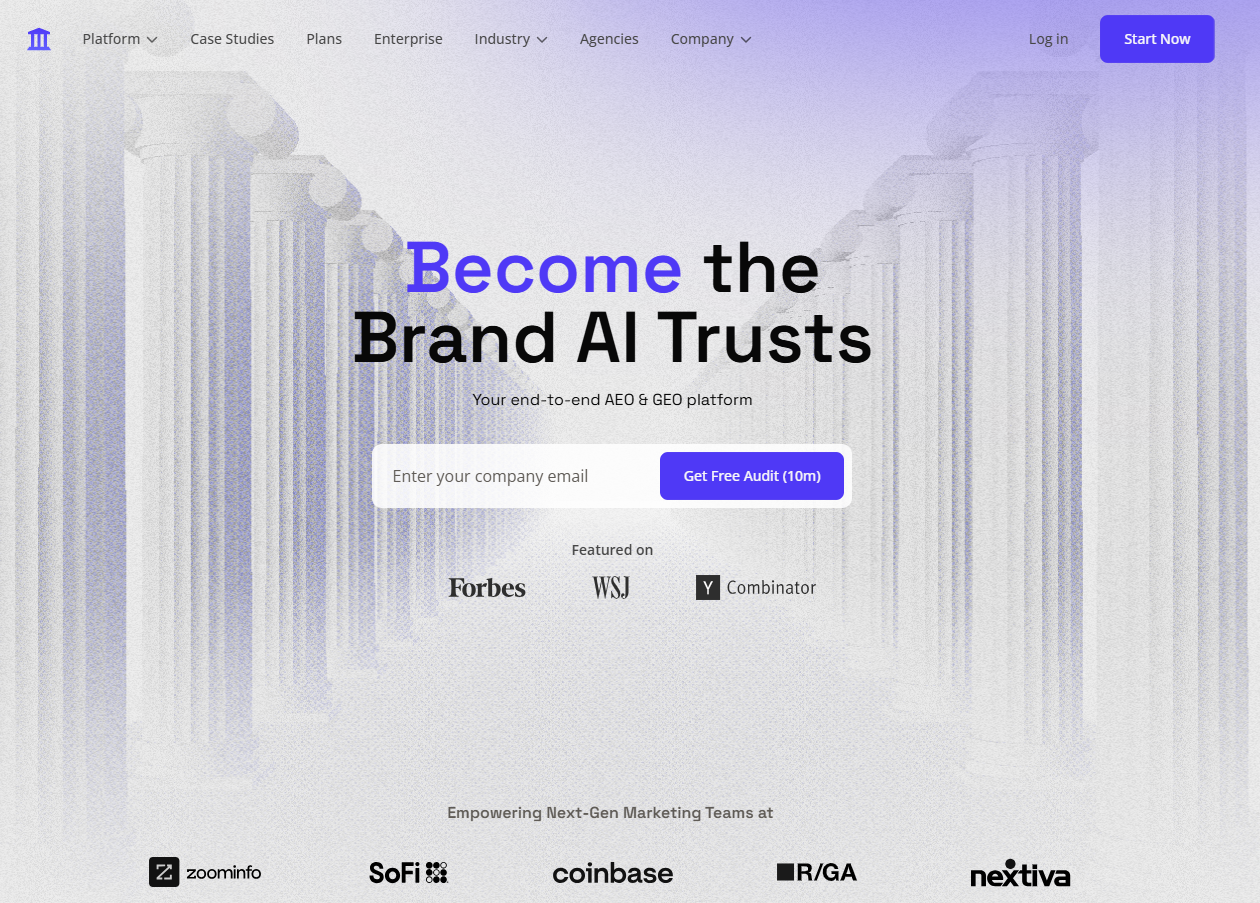
AthenaHQ is a strong fit for:
- AEO/GEO managers and SEO teams: Teams that want a single platform for tracking AI visibility, spotting content gaps, watching competitors, and getting recommendations to improve performance.
- Agencies: Teams handling several clients that need a more organized setup for client management, pitch-focused workspaces, Google Analytics connections, and added agency support.
- Shopify-based e-commerce brands: Teams that want to create content for AI search while also tying visibility data more closely to sales and revenue through Shopify integration.
- Enterprise marketing leaders and CMOs: Teams that need clearer ROI reporting, presentation-ready dashboards, and enterprise-level support for security and compliance.
Who Is Otterly AI Best For?
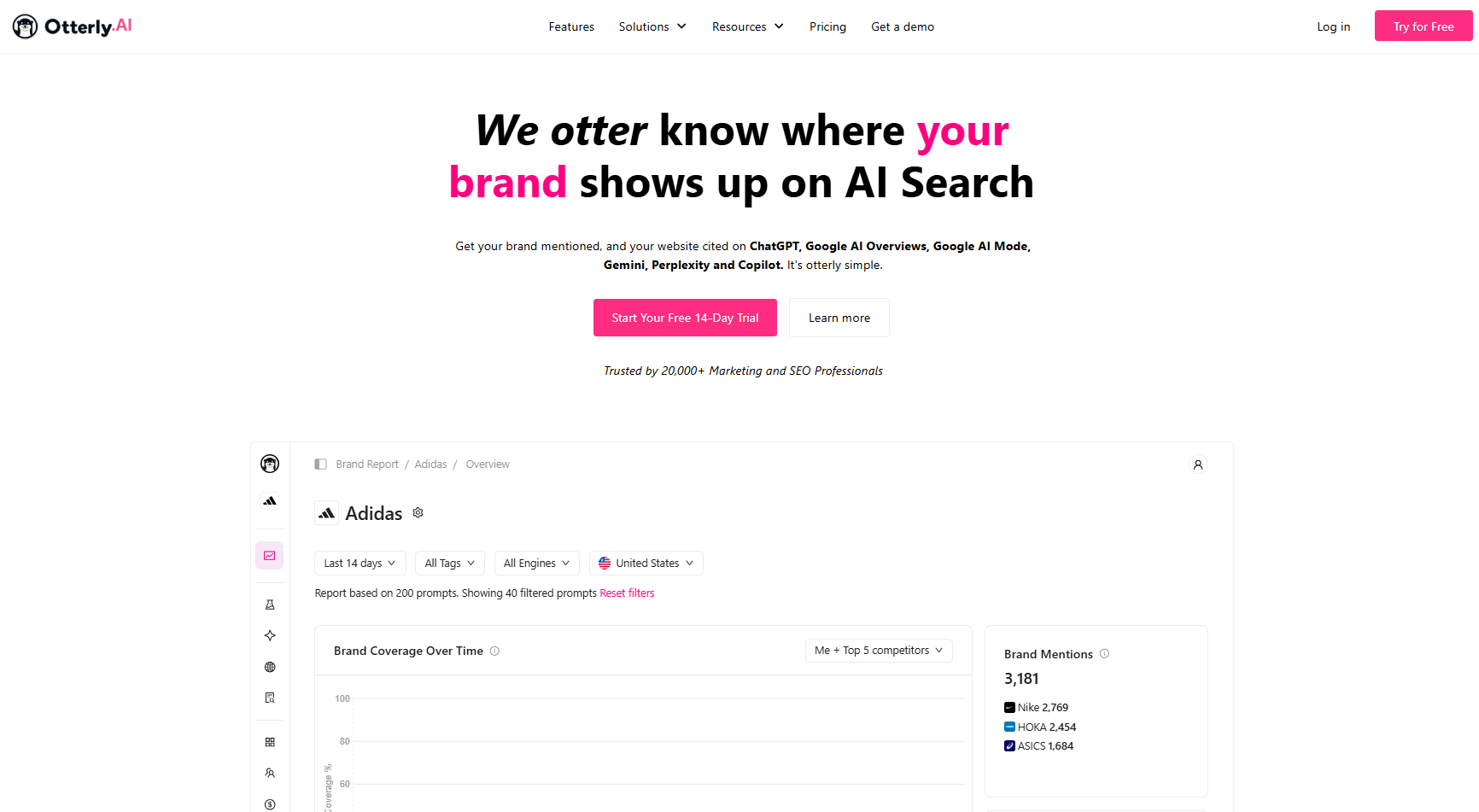
Otterly AI is usually a good fit for:
- In-house marketing and SEO teams: Teams that want an easier way to monitor brand mentions and website citations across major AI platforms like ChatGPT, Google AI Overviews, AI Mode, Perplexity, Gemini, and Copilot.
- Marketing agencies and consultants: Agencies managing multiple clients that need a scalable way to track AI visibility, organise client workspaces, handle several brands, and produce automated reports more efficiently.
- Teams focused on GEO audits and competitor benchmarking: Organisations that want deeper visibility analysis across several AI platforms, with tools that help measure share of presence, compare competitors, and uncover useful optimization opportunities.
WorkDuo: Affordable AI Search Visibility Compared with AthenaHQ & Otterly
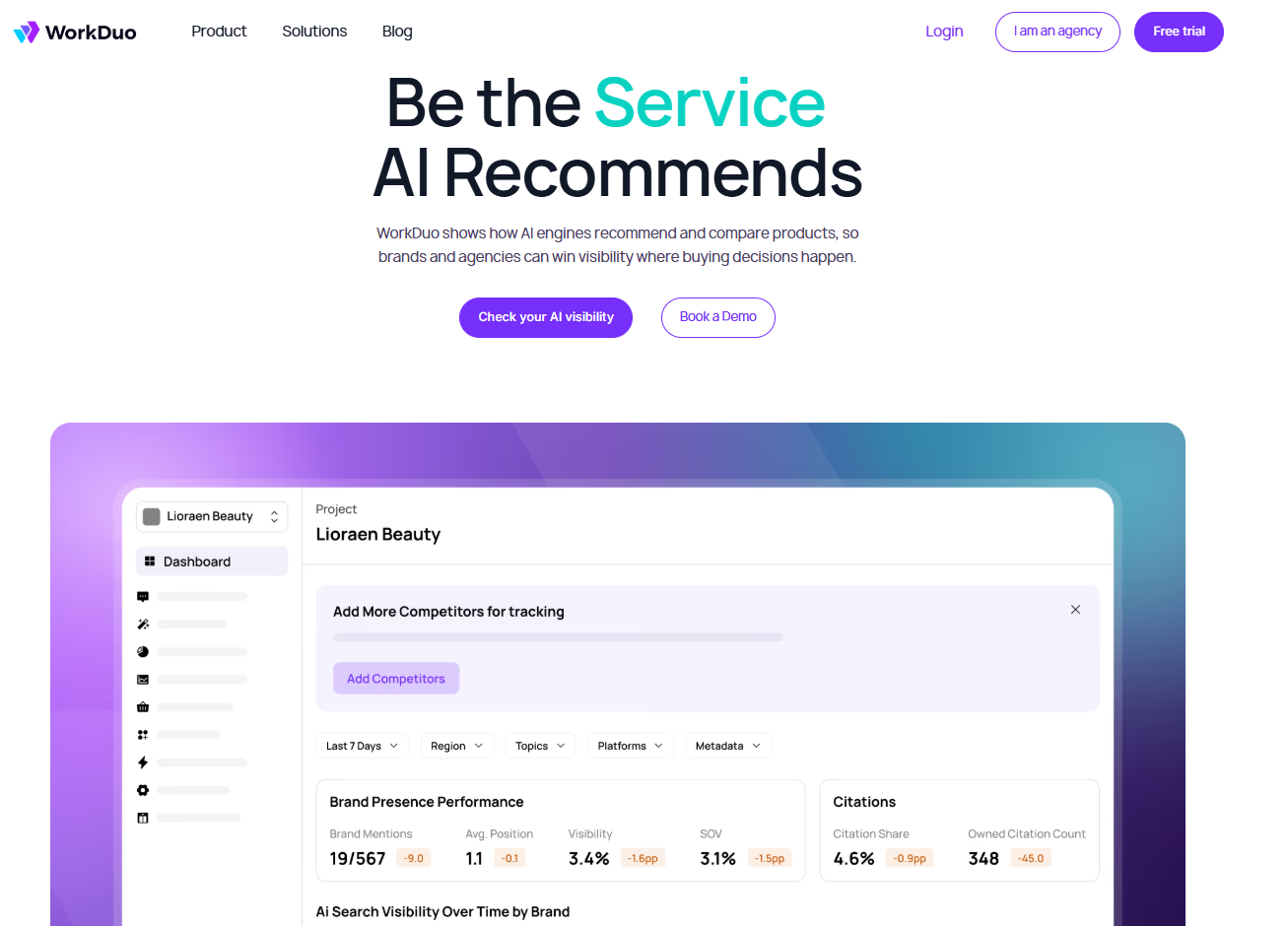
WorkDuo is an AI search visibility and sentiment‑analysis platform designed for marketing teams and agencies. It tracks brand mentions across ChatGPT, Perplexity, Google AI Overviews, Gemini, Copilot and other LLMs, providing real‑time browser‑based monitoring, sentiment analysis and competitor benchmarking.
Why WorkDuo Stands Out as an Alternative
1. Real‑Time Accuracy vs API‑Only Monitoring
WorkDuo’s browser‑based tracking replicates actual user interactions, capturing the same answers that customers see across ChatGPT, Perplexity, Gemini, Copilot and Google AI Overviews. Otterly relies on static prompts and API polling, while AthenaHQ uses credit‑based API calls. Real‑time tracking yields more reliable visibility and sentiment data.
2. Unlimited Seats With Low Barrier to Entry
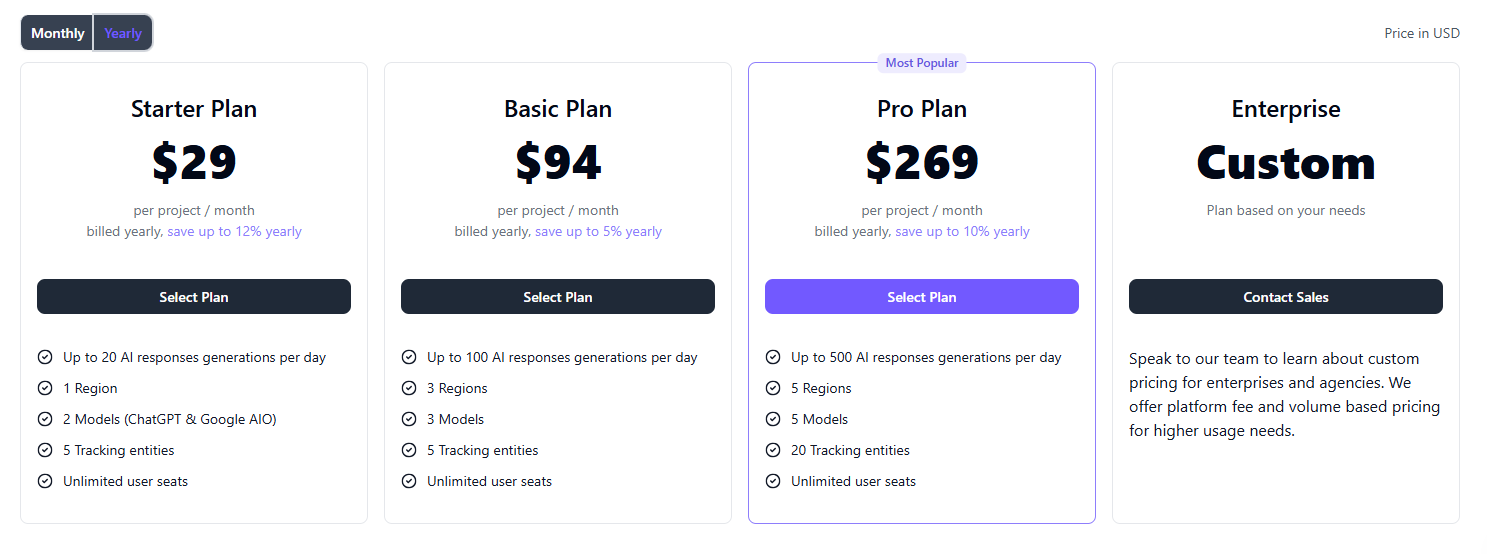
WorkDuo charges per project, not per user. Even the Pro plan ($299 per project/month) allows unlimited users, making it ideal for agencies and lean teams.
AthenaHQ’s self‑serve plan is more than twice the price ($295/month), and Otterly’s Standard plan ($189/month) limits you to 100 prompts. WorkDuo offers generous daily limits and multi‑model coverage without prompt caps.
3. Deeper Narrative and Sentiment Insights
WorkDuo not only tracks whether you are mentioned but also analyzes the tone and narrative of AI responses, identifying strengths, weaknesses and misconceptions.
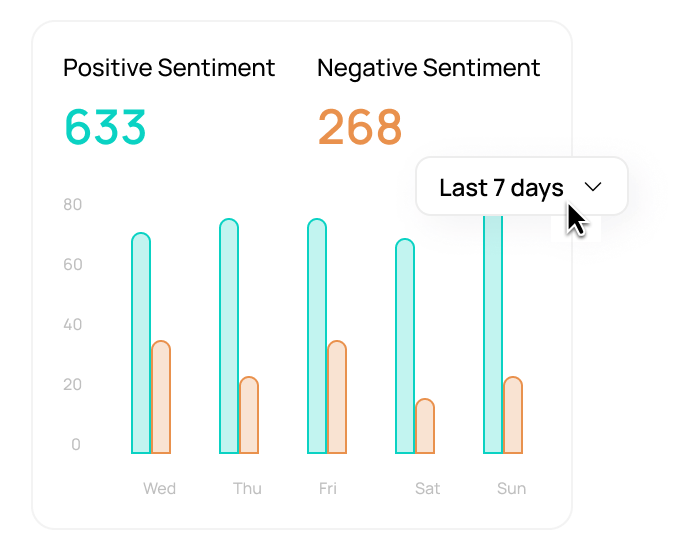
It also shows which sources fuel AI answers, enabling targeted content and PR campaigns. Otterly provides link‑citation analysis but not narrative sentiment; AthenaHQ includes sentiment monitoring but ties some advanced analytics to higher credit usage
4. Flexible APIs & White‑Labelling
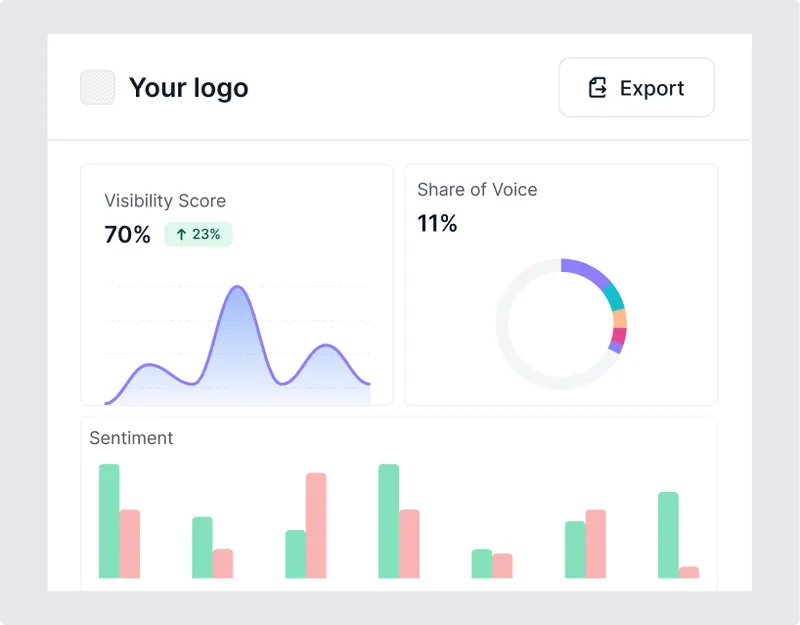
WorkDuo exposes its data through APIs and Looker Studio connectors, allowing agencies to build custom dashboards and integrate AI visibility metrics into existing reporting workflows. Reports can be white‑labelled with agency branding, something not offered by Otterly. AthenaHQ provides API access only on enterprise plan.
5. Competitive Benchmarking & Pitch Support
WorkDuo’s competitor benchmarking features empower agencies to compare share of voice, AI position ranks and narrative differences in pitch decks.
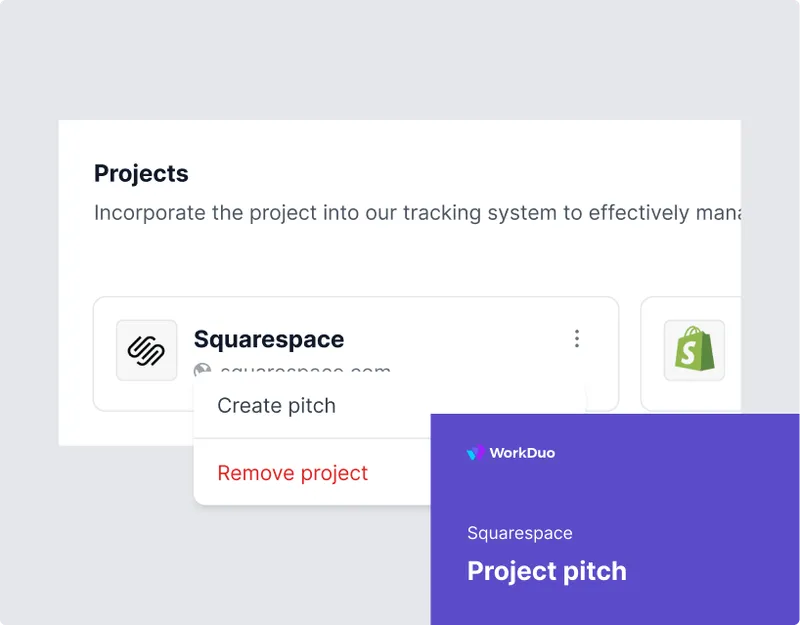
This helps agencies win clients by demonstrating AI visibility gaps. AthenaHQ also offers competitor monitoring but at a higher price, while Otterly’s competitive analysis is limited to prompt‑level comparisons.
6. Cost‑Effective Scalability
For businesses tracking multiple brands or clients, WorkDuo’s project‑based pricing with unlimited seats scales better than the prompt‑based or credit‑based models.
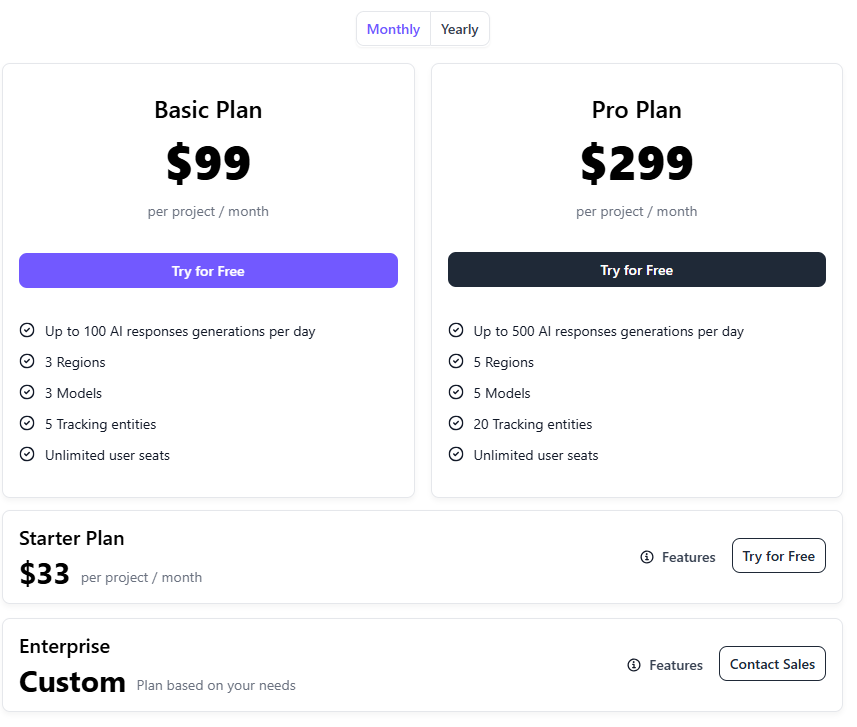
Independent reviewers note that it offers 9/10 value for serious AEO work and that real‑use pricing around $149 per month makes it accessible to lean teams.
AthenaHQ’s $295 self‑serve plan may deter budget‑conscious teams, and Otterly’s add‑on costs mount quickly as you expand prompt coverage.
Price
Since cost matters, let’s break down both tools and see which one gives you better overall value.
AthenaHQ Pricing
AthenaHQ offers two plans. Here’s a closer look at what comes with each one.
Otterly AI Pricing
Otterly AI uses the same three pricing plans for both brands and agencies. Here’s what each one includes.
Verdict
Otterly AI gives better entry-level value because its plans start much lower and still include broad tracking, unlimited team members, and generous reporting features, which makes it easier for smaller teams to get started.
AthenaHQ looks stronger for teams that need deeper GEO analysis, more advanced optimization workflows, and enterprise-grade support, so it may offer better value only if you will actually use those higher-end capabilities.
Feature Comparison
A side-by-side look at the core features can make it easier to see how the two tools differ and where each one stands out.
AthenaHQ
Monitoring
AthenaHQ’s Monitoring module turns generative‑search into a measurable traffic source. It tracks when ChatGPT, Perplexity, Gemini and other AI agents crawl your site, shows where visitors come from and even highlights the pages AI cites.
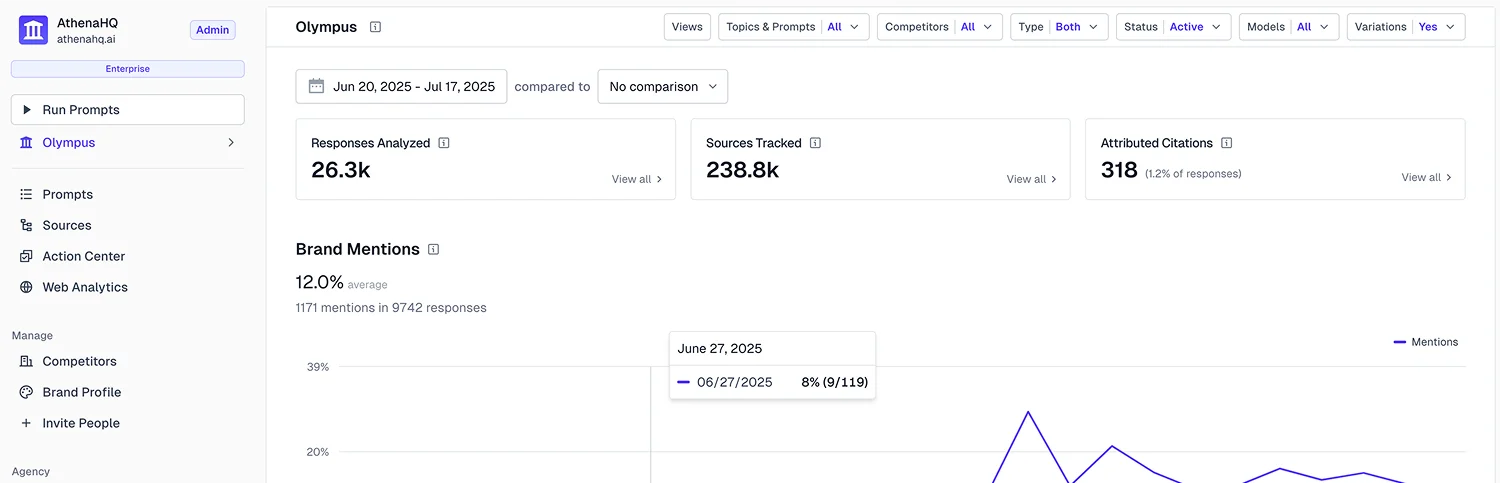
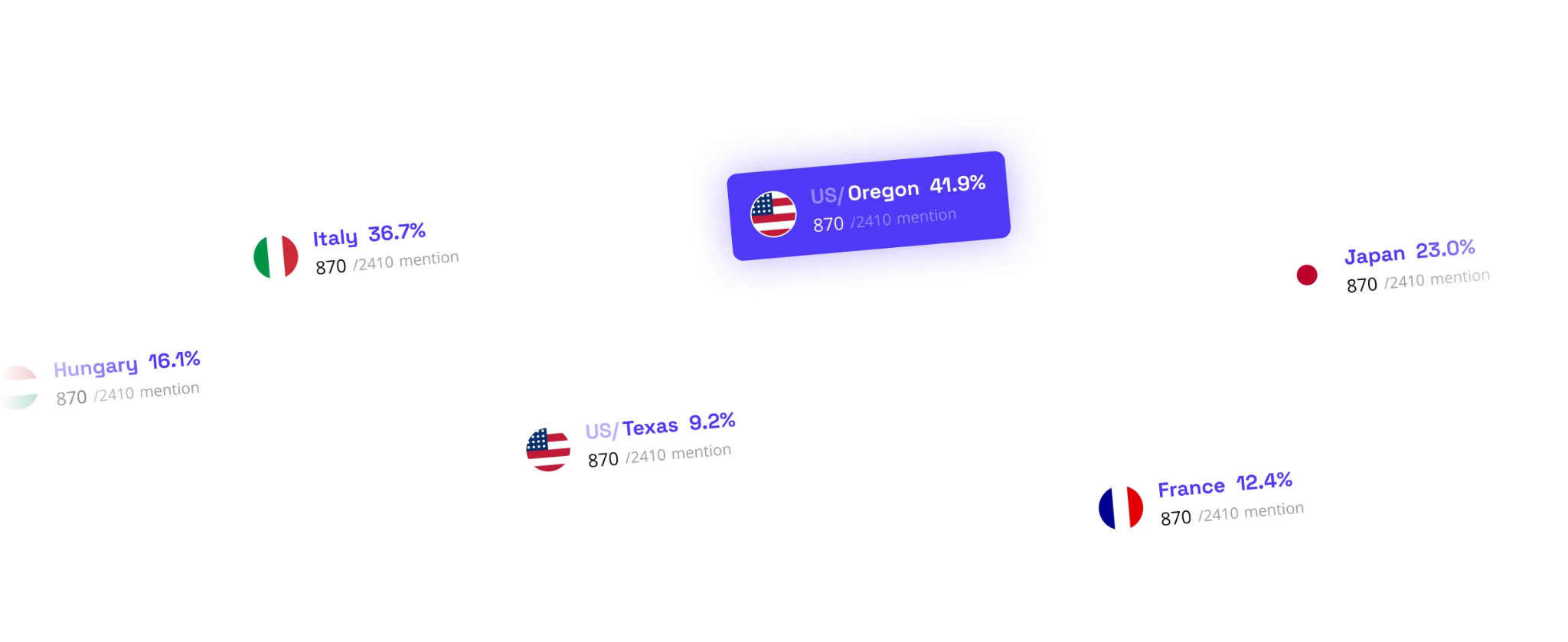
A live, shareable dashboard displays geographic data, sentiment and competitor mentions so teams can see their share of voice and act on gaps.
Prompt Volume Analysis
For enterprise users, the Prompt Volume feature estimates how many prompts relevant to your brand exist and how often people ask them. AthenaHQ uses a proprietary machine‑learning model to forecast query volume, spot trending topics and highlight regional patterns.
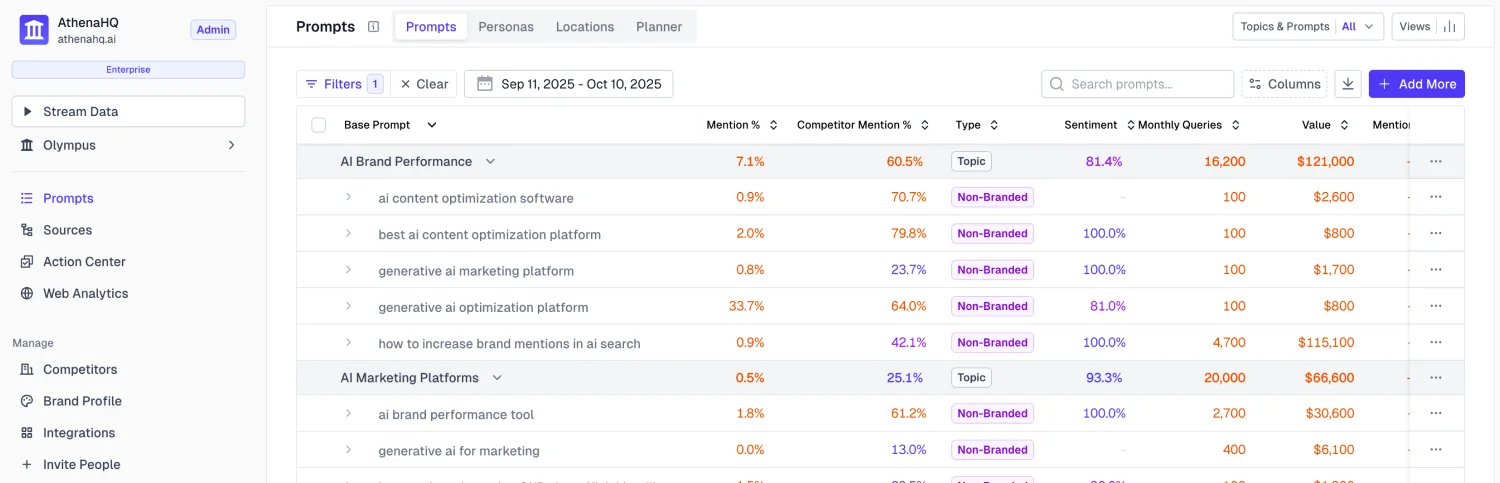
Marketers can stay ahead of emerging questions and allocate resources where demand is growing.
Action Center & Content Recommendations
The platform’s Action Center converts monitoring insights into tasks. It identifies AI knowledge gaps and recommends how to improve visibility for high‑value prompts.
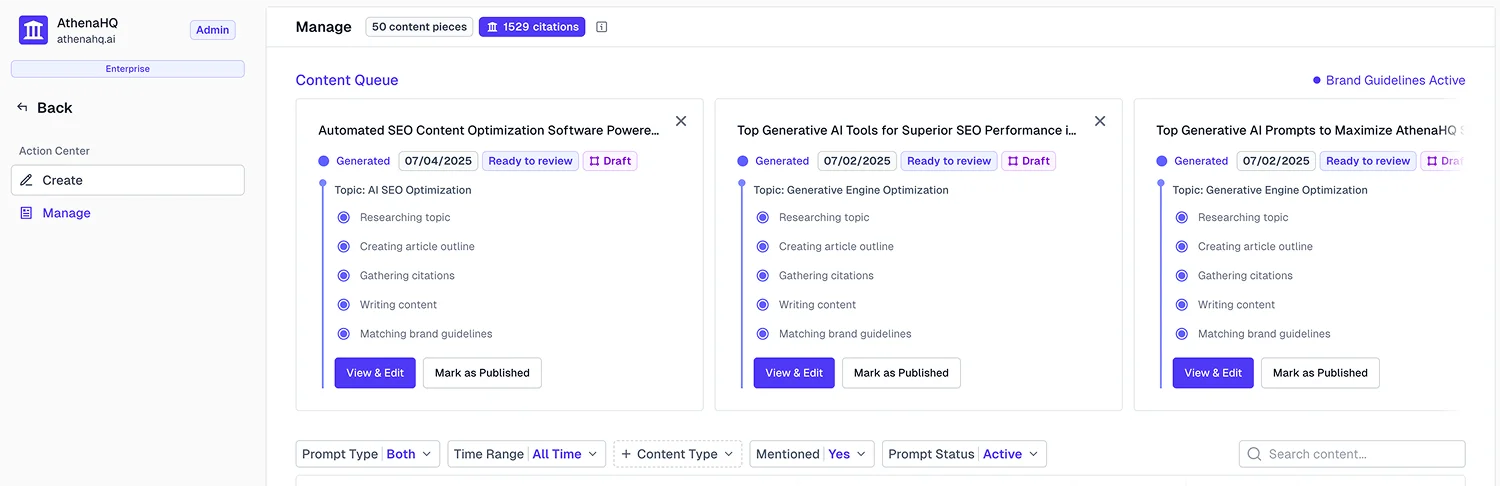
Teams can generate or refresh content in their brand voice directly from the dashboard, creating AI‑optimized copy at scale and prioritizing actions based on potential impact.
E‑Commerce Integration
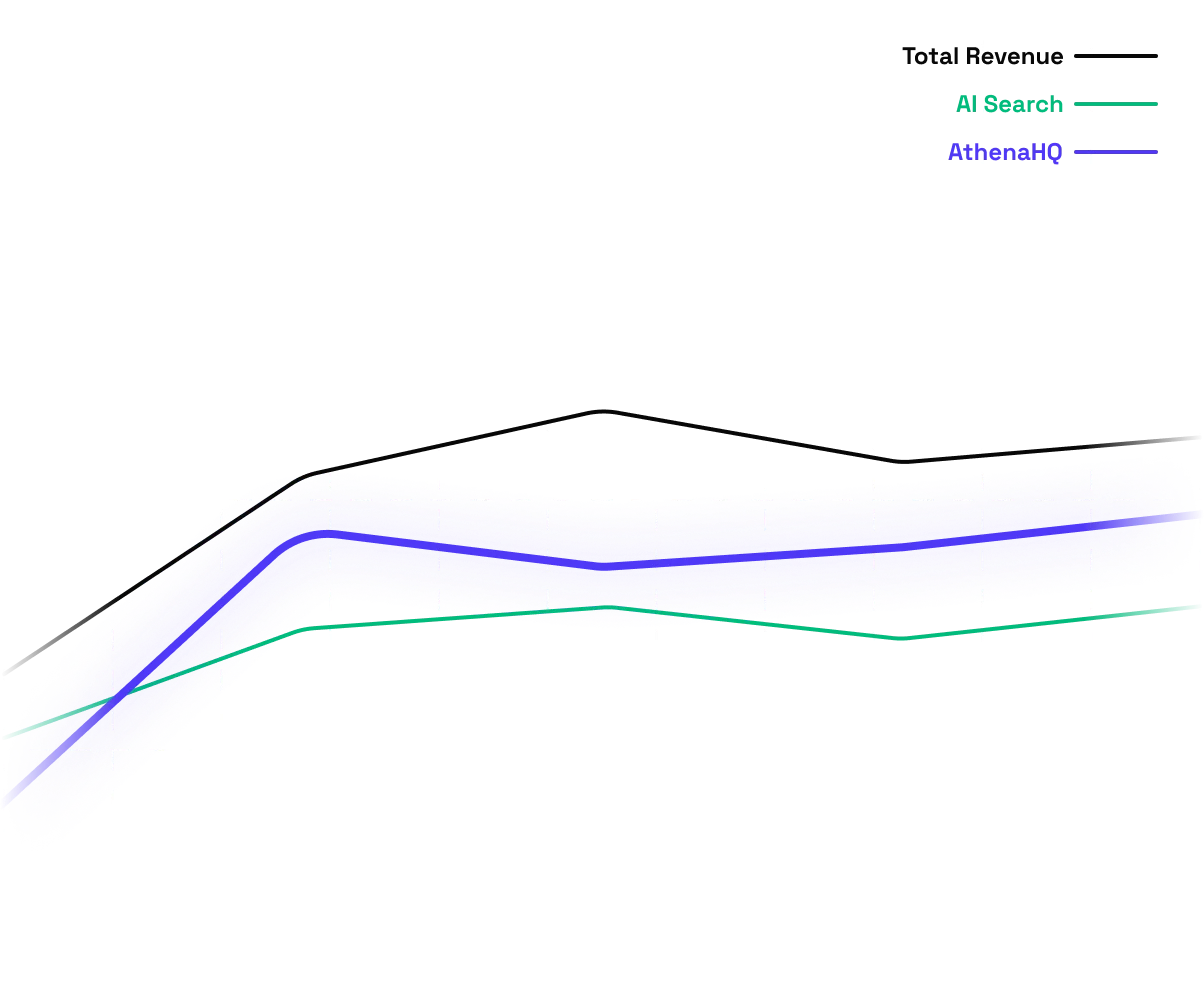
AthenaHQ’s Shopify integration helps e‑commerce brands tie AI visibility to revenue. The tool publishes geo‑optimized blog posts directly to Shopify and measures how AI‑driven traffic translates into sales.
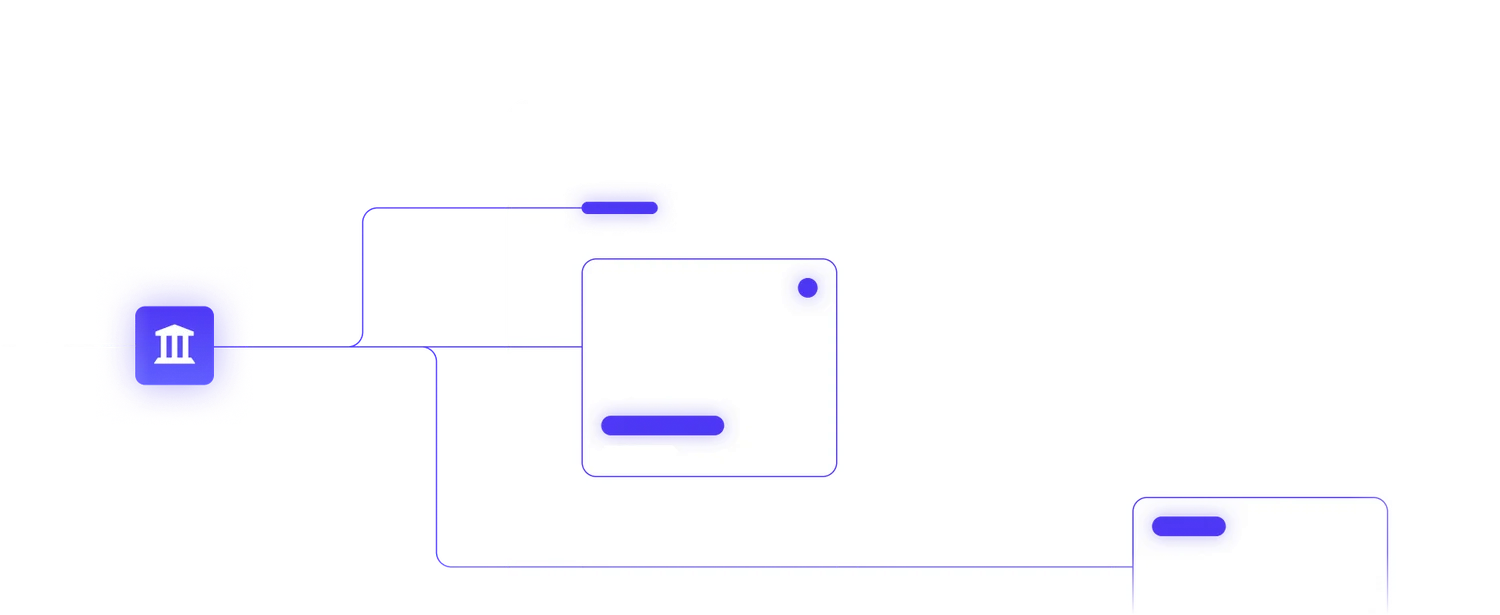
It also tracks product mentions, reviews and sentiment across AI engines so marketers can optimize listings and attribute performance to specific prompts.
Pitch Workspace for Agencies
Agencies can use the Pitch Workspace to generate client‑ready reports in minutes. The workspace lets consultants showcase a prospective client’s AI search performance, vulnerabilities and opportunities across multiple AI engines.
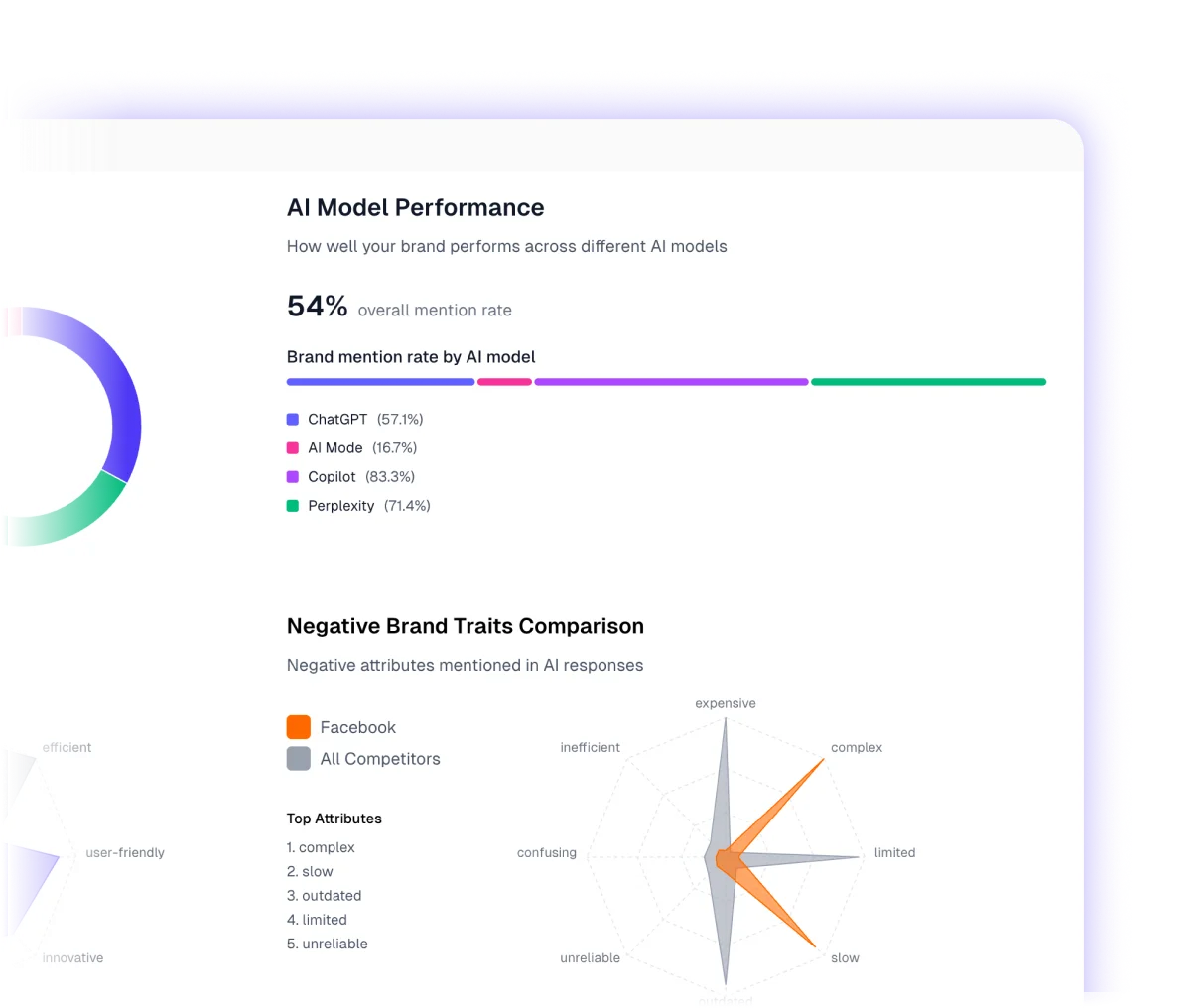
This quick‑turn reporting differentiates agencies and provides an easy entry point for ongoing engagements.
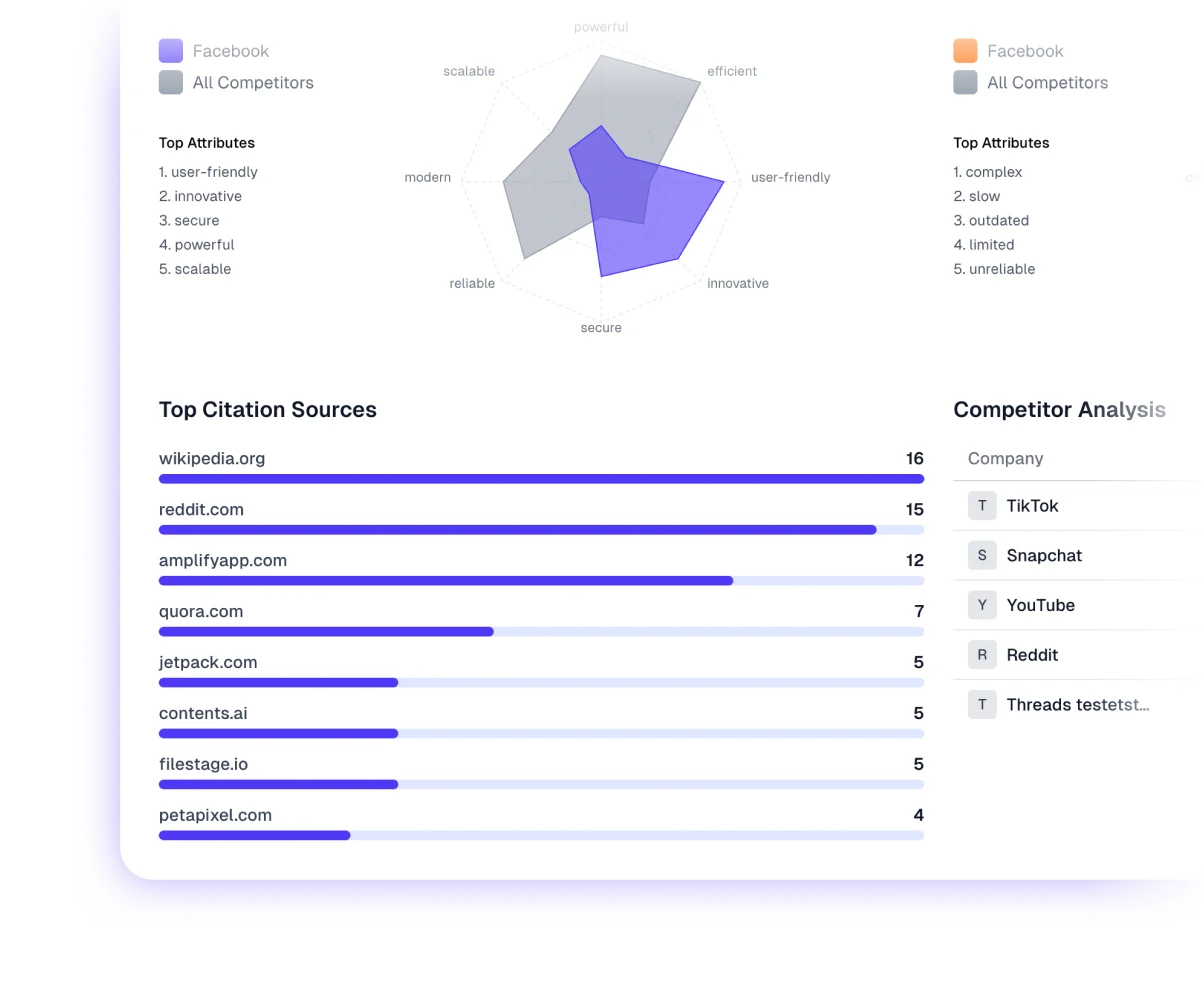
Advanced Content & Citation Optimization
Beyond basic monitoring, AthenaHQ offers advanced optimization tools. The platform runs on‑ and off‑page geo‑analysis, performs dynamic AI crawling to uncover hidden site sections and flags blind spots where AI engines cannot access your content.
An advanced content‑optimization agent and the Athena Citation Engine (ACE) help produce authoritative copy, detect impersonation and refine citations.
Otterly AI
AI Prompt Research & Discovery
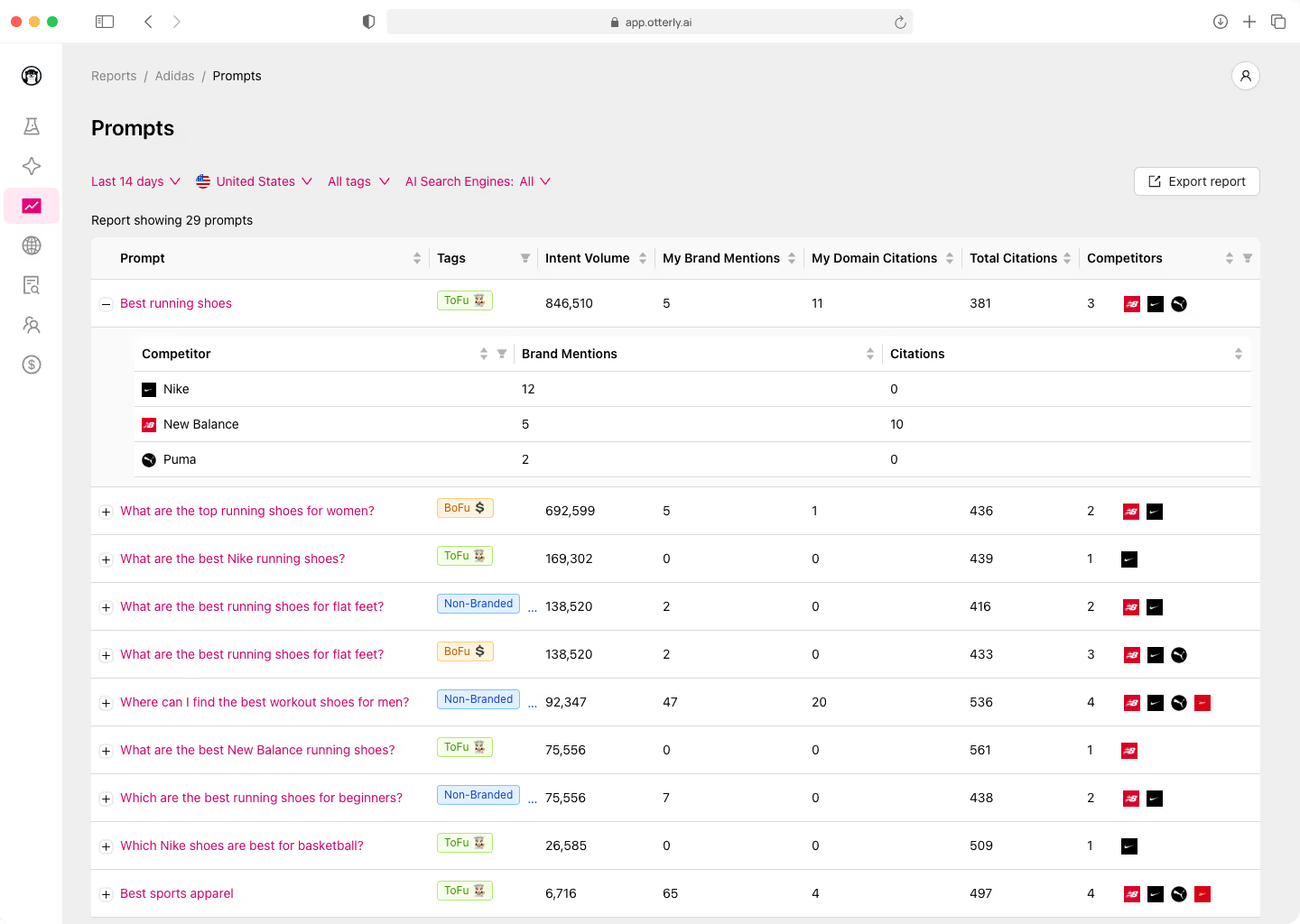
Otterly’s AI Prompt Research tool turns keywords, brand names or URLs into prompts that real users enter into ChatGPT or other AI search engines.
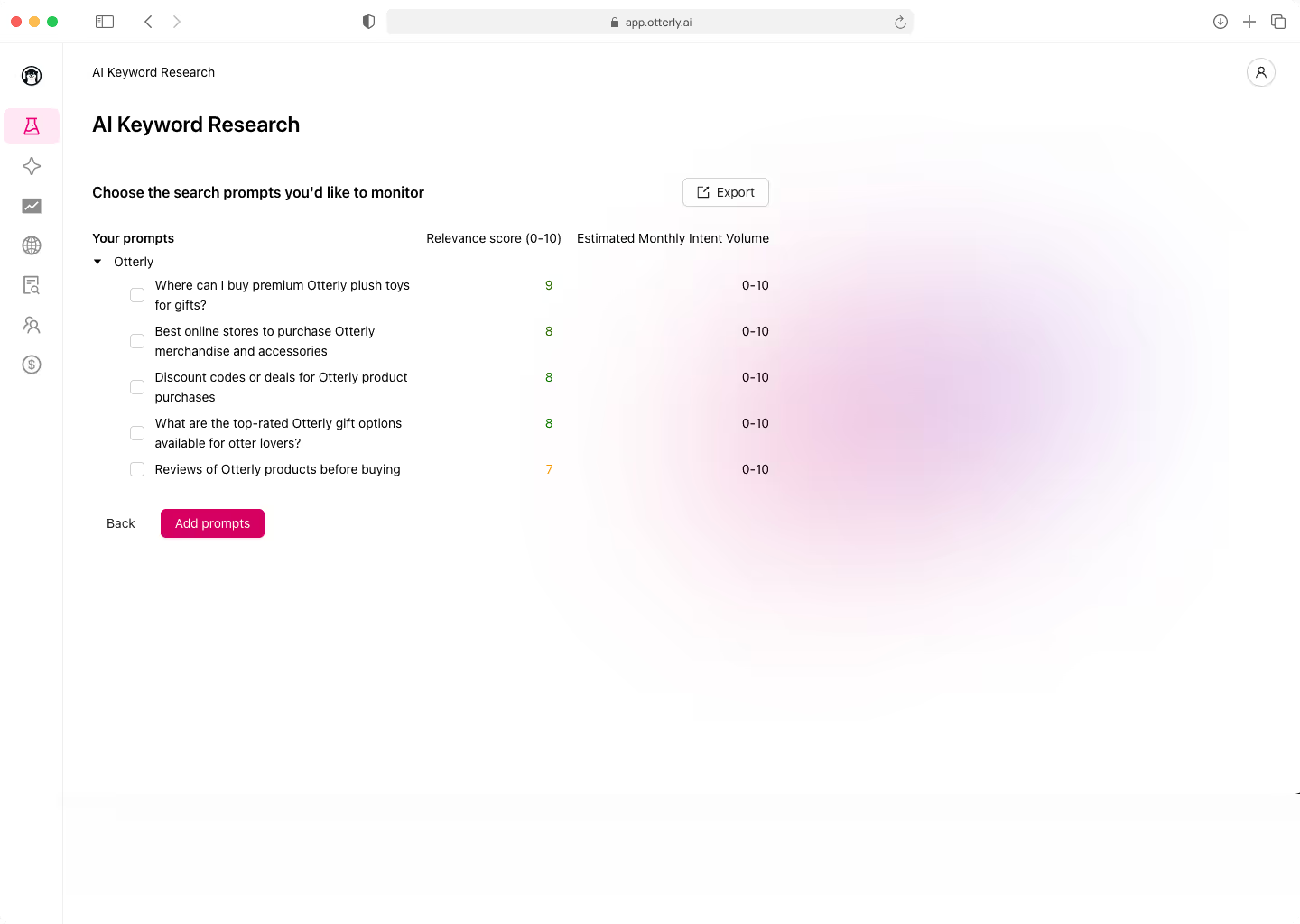
By analysing topical associations and query fan‑out patterns, the tool uncovers the questions your audience actually asks, allowing you to tailor content for maximum citation probability.
Search Prompt Monitoring
Once you know the right prompts, Otterly automatically monitors them daily across ChatGPT, Google AI Overviews, AI Mode and Perplexity.
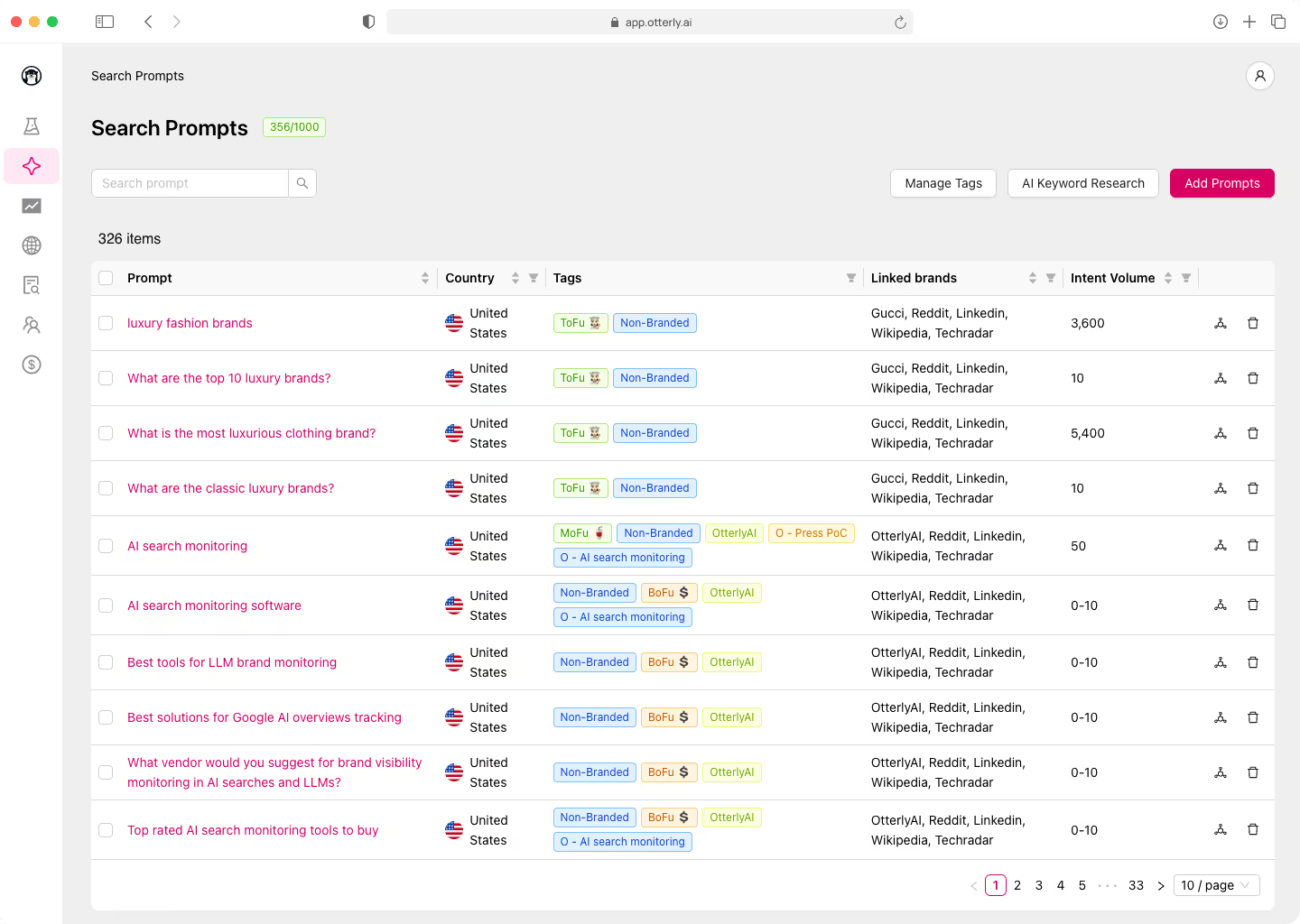
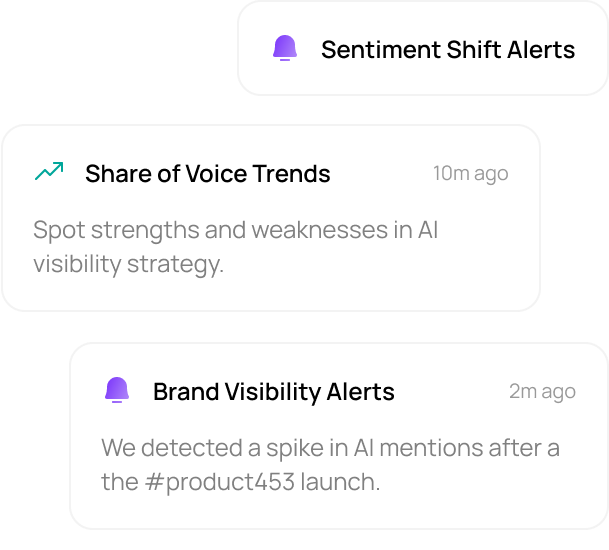
The platform stores the full AI responses, tracks which domains are cited and alerts you when your brand drops from an answer. Continuous monitoring helps teams stay aware of shifting AI rankings and competitor movements.
Brand & Domain Reporting
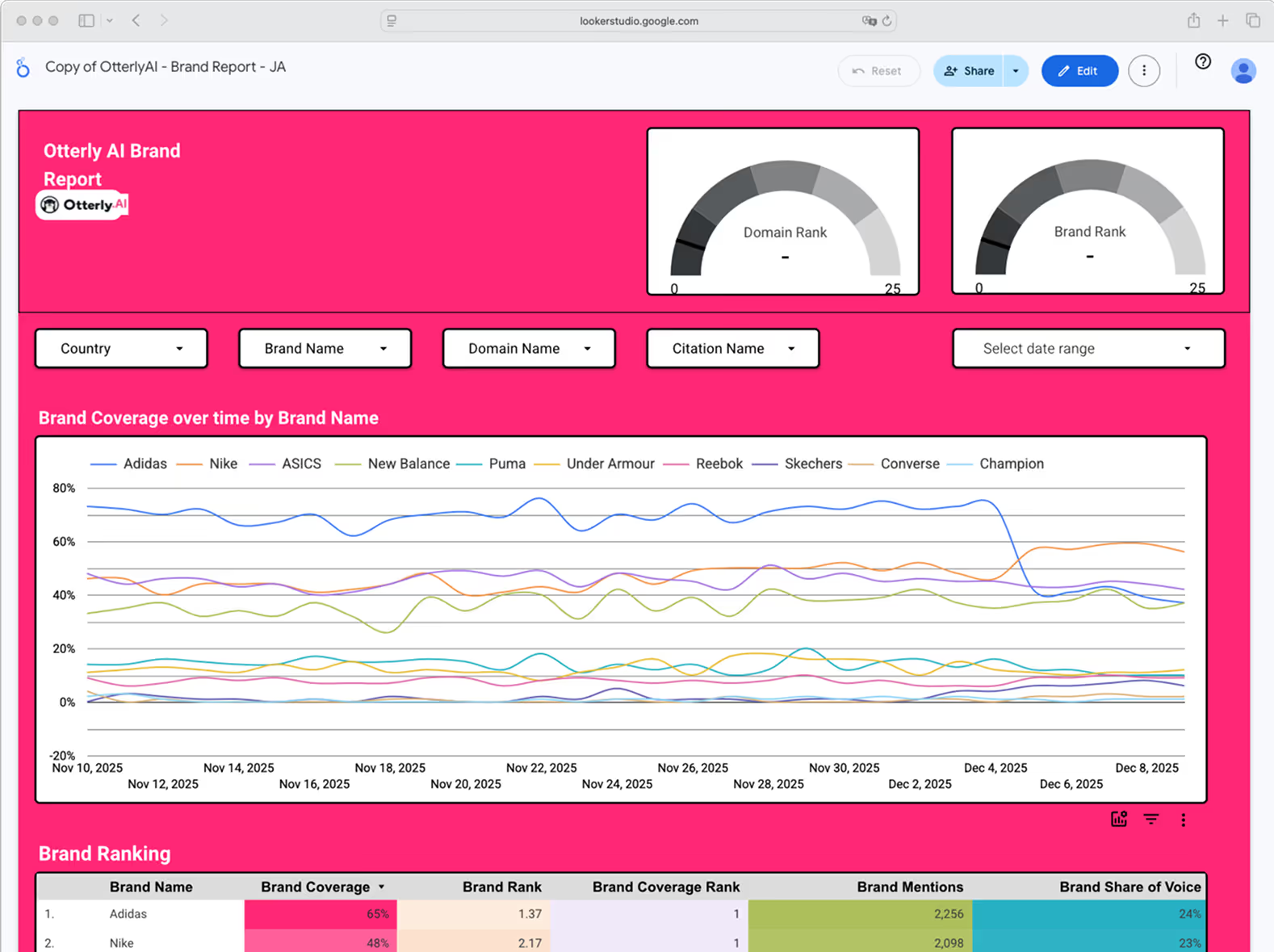
Otterly offers unlimited Brand Reports that show key performance indicators such as brand mentions, coverage and domain citations for your company or competitors.
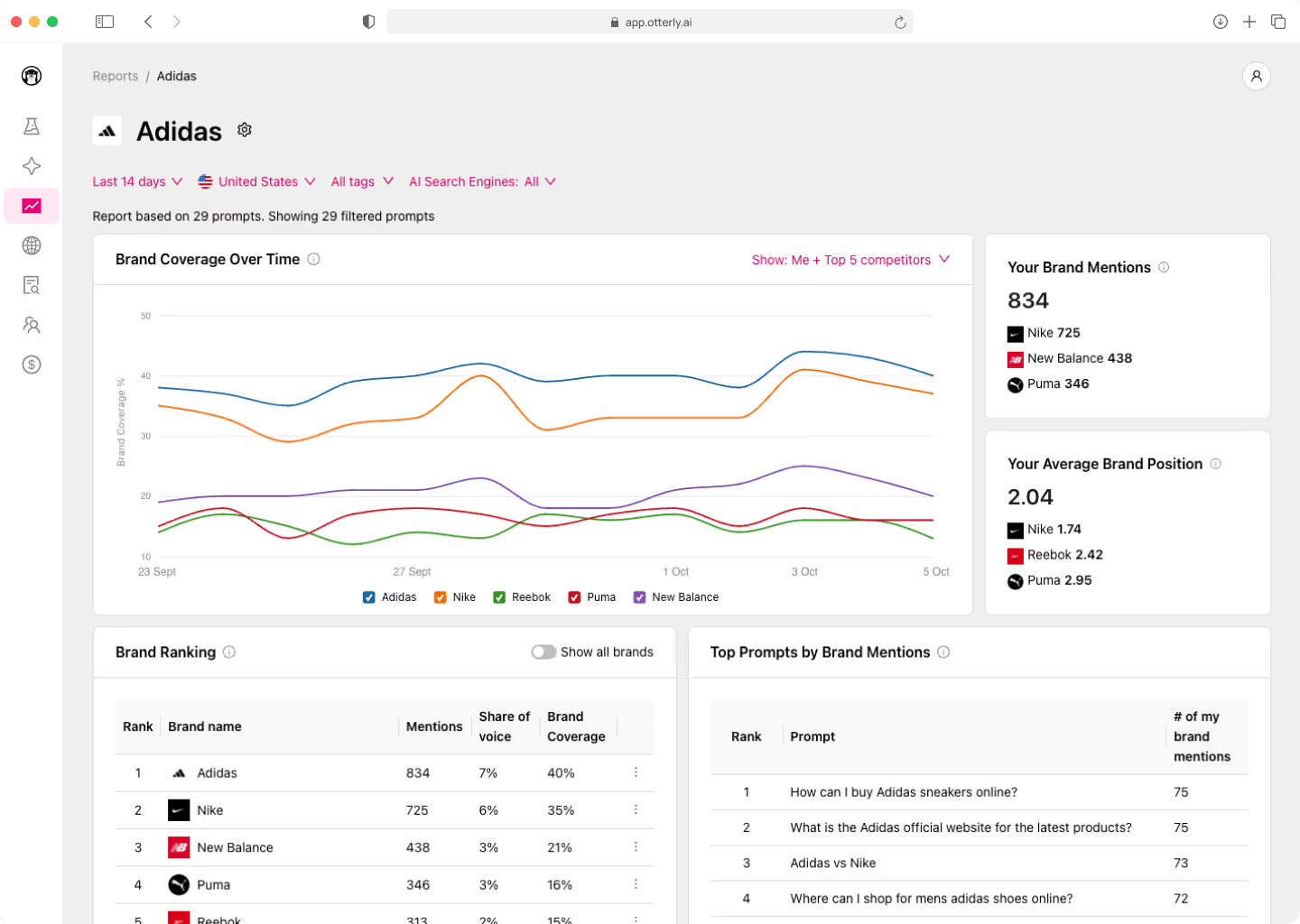
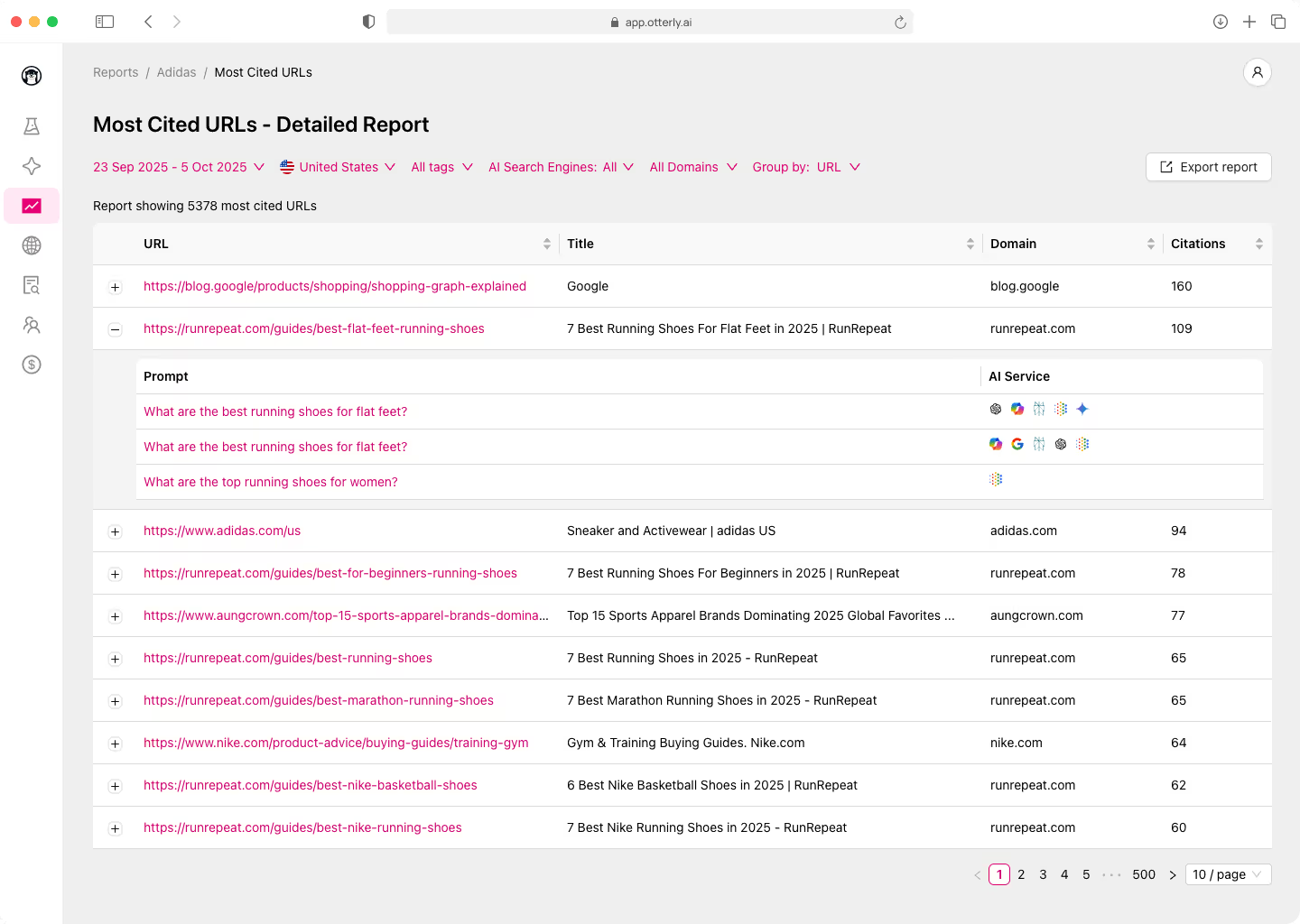
Domain Ranking & Analytics tracks every cited domain and URL across AI search experiences, updating link positions weekly to reveal changes in authority.
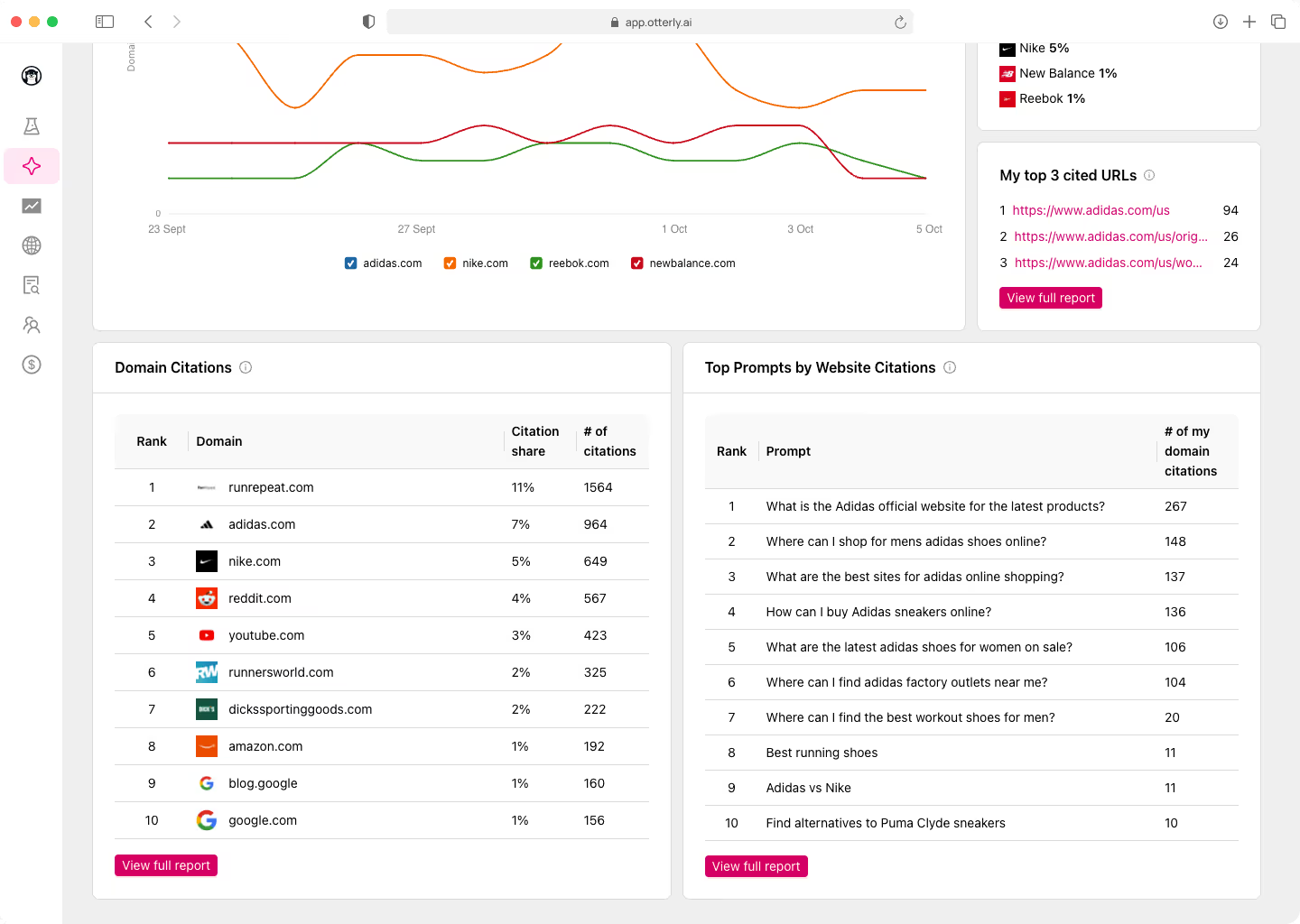
This dual reporting makes it easy to benchmark visibility at both the brand and page level.
Brand Visibility Index & Sentiment Analysis
The proprietary Brand Visibility Index (BVI) combines brand coverage (how often you appear) with the average ranking position to score your visibility across AI platforms.
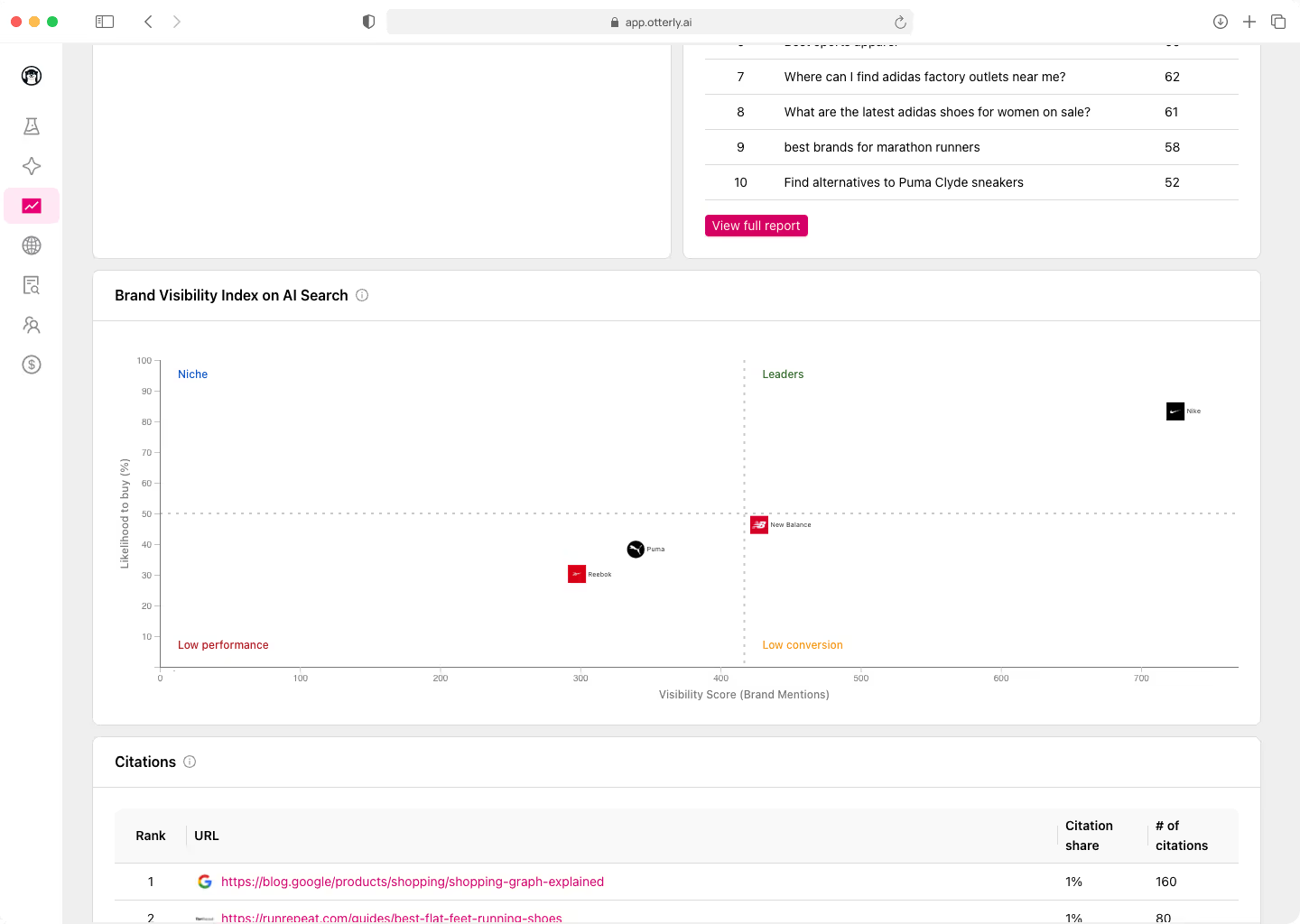
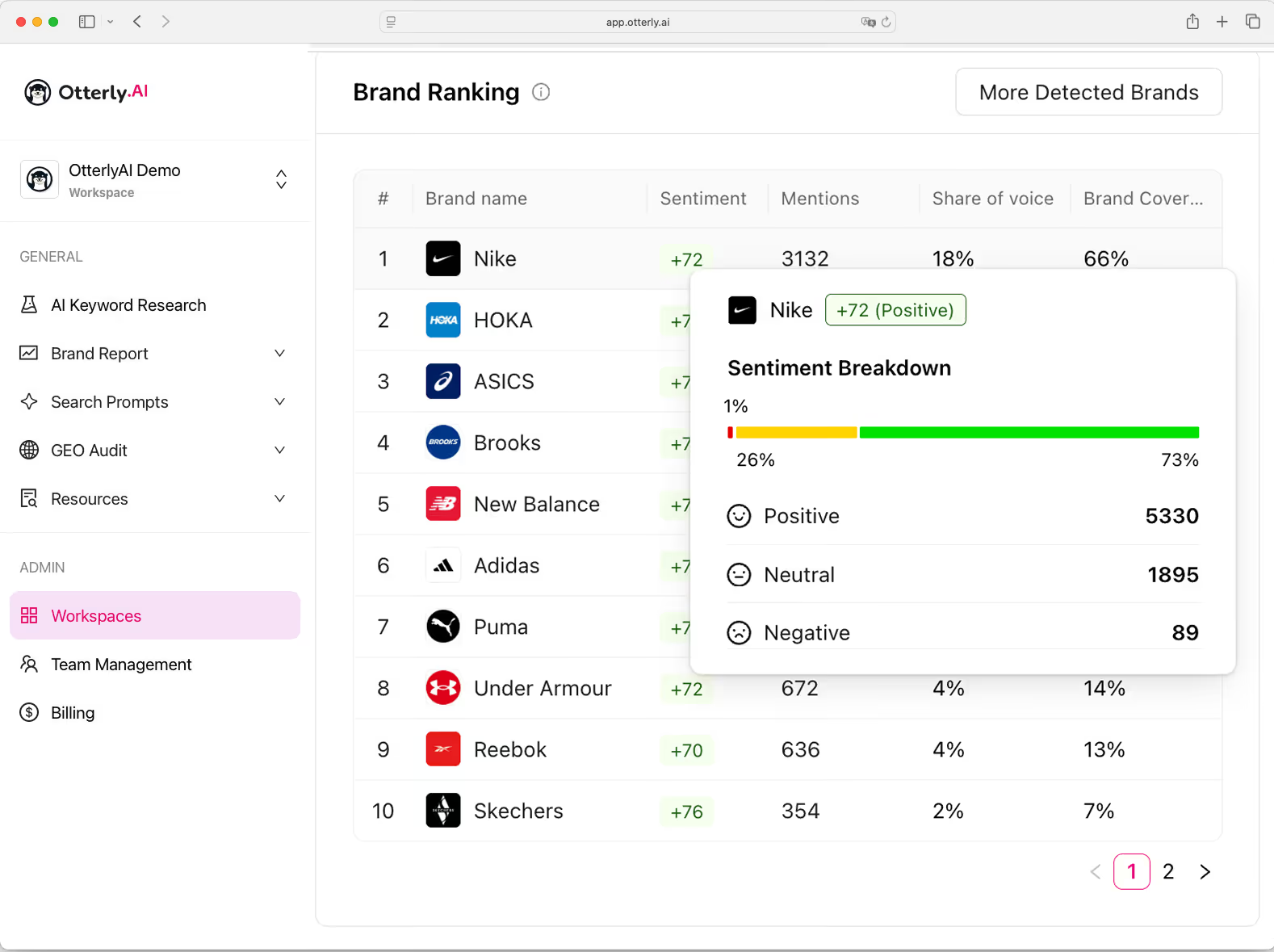
The index plots brands into quadrants such as “Leaders” or “Niche” and includes a time‑lapse slider to see changes over time. Otterly also performs sentiment analysis on AI answers, categorizing mentions as positive, neutral or negative to reveal how AI agents portray your brand.
GEO Audit & Website Citation Analysis
Otterly’s GEO Audit evaluates your site’s readiness for generative search. It conducts a brand SWOT analysis, compares your visibility to competitors and assesses factors like digital PR, on‑page content and user‑generated content.
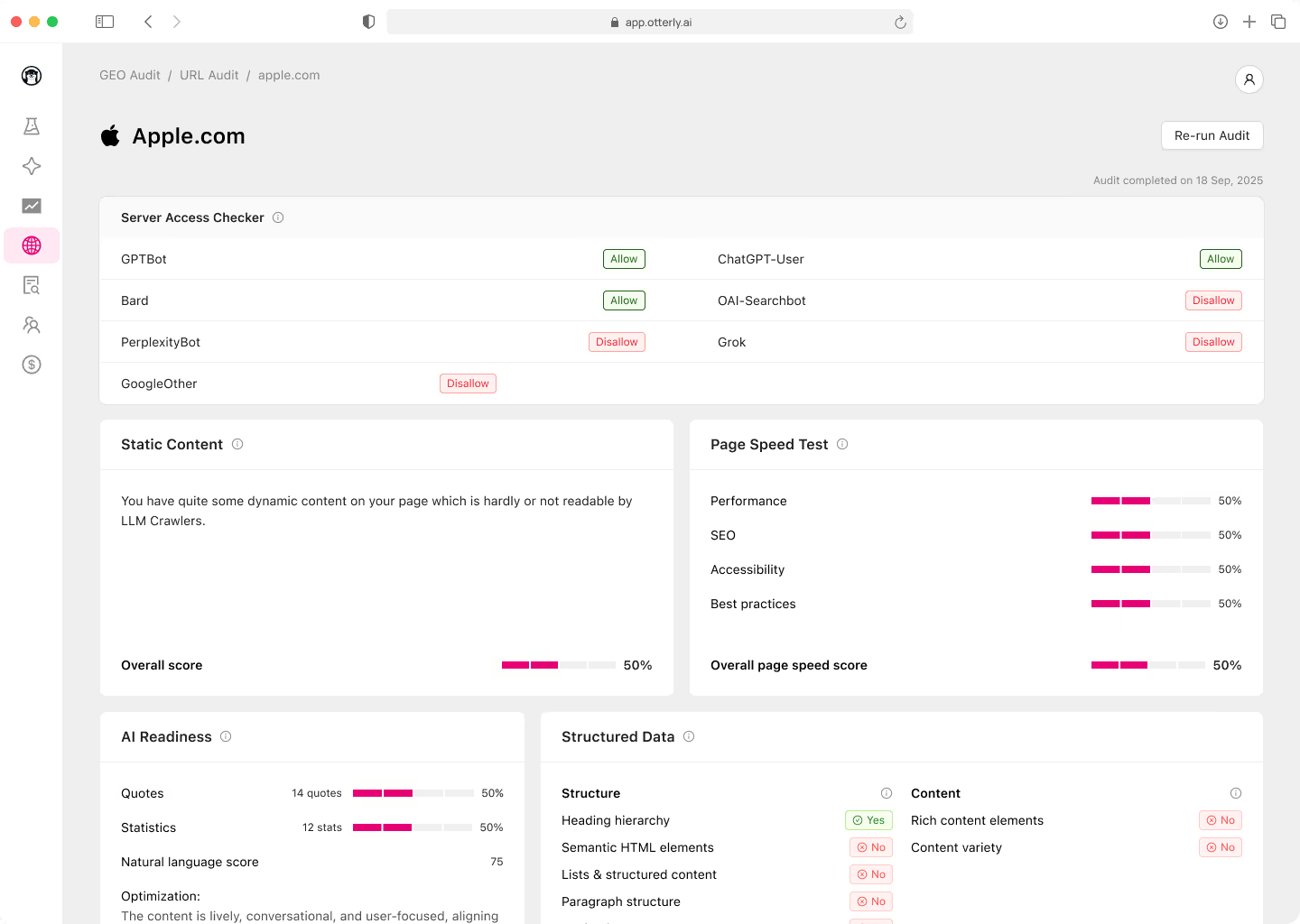
The Website Citations Gap Analysis drills into individual URLs to discover which pages AI search engines cite most often and identifies underperforming pages that need optimization.
Multi‑Platform AI Visibility & Workspaces
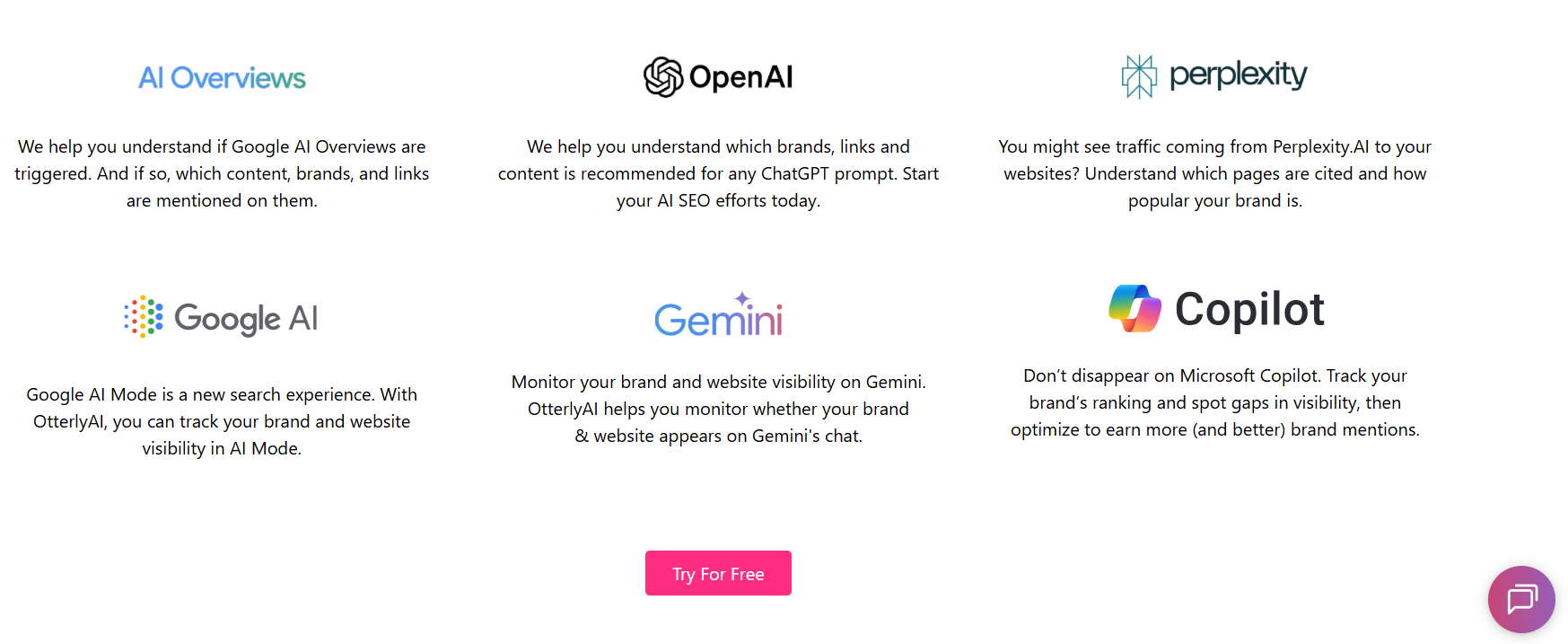
Otterly monitors AI search results from a broad set of engines, including ChatGPT, Perplexity, Google AI Overviews, AI Mode, Gemini and Microsoft Copilot showing which platforms recommend your brand.
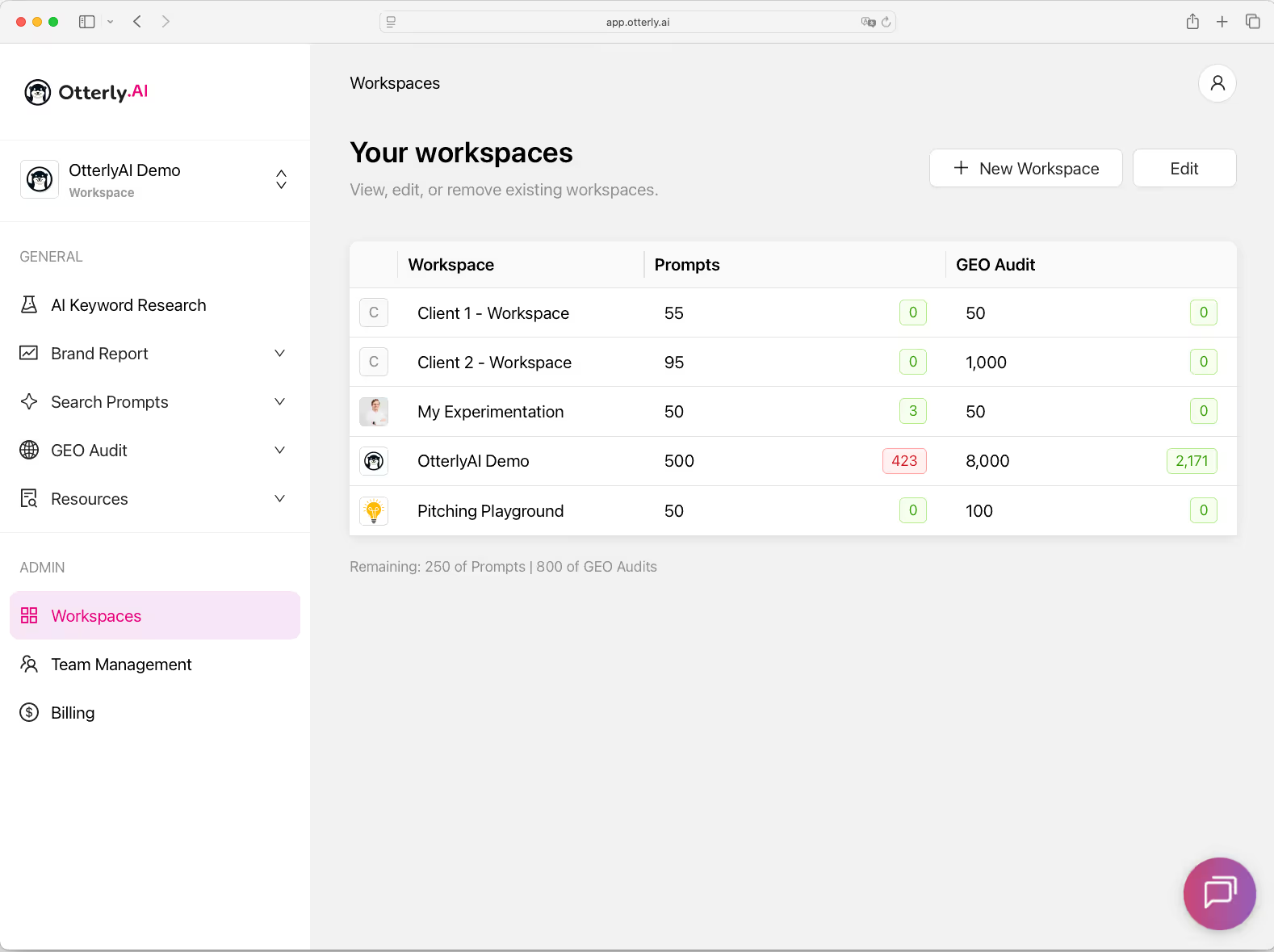
For agencies or multi‑brand teams, Workspaces provide separate environments with their own prompts, reports and audits, ensuring clients only see their data.
Reporting & Integrations
The platform’s Detailed Reports & Exports allow you to export prompts, mentions and citations as CSV files for further analysis.
A Google Looker Studio connector lets you pull AI visibility data into custom dashboards and automated reports.
Otterly also offers weekly email digests summarizing visibility changes and provides simple dashboards that require minimal training.
Verdict
AthenaHQ stands out if you want a more full-service platform that combines AI monitoring, content optimization, citation analysis and e-commerce support in one place. Otterly AI feels more focused and practical for teams that mainly want prompt tracking, brand visibility reporting and easy-to-use monitoring across multiple AI platforms
Ease of Use
Let’s break down both tools and see which one feels more practical to implement in day-to-day workflows.
AthenaHQ
AthenaHQ looks fairly easy to use for teams that want AI visibility, reporting, and optimization brought into one place, and its site emphasizes unified dashboards plus report generation in less than five minutes for certain workflows.
Users also tend to praise its ease of use and actionable insights, which suggests the platform makes complex AI-search data reasonably manageable in day-to-day work.
At the same time, it still seems to come with a bit more learning curve than a lighter tracker because it is built to do more than just monitoring.
Otterly AI
Otterly AI comes across as the simpler tool to get started with, since its workflow is built around adding prompts first, generating reports in about five minutes, and then monitoring changes automatically over time.
Users consistently describe it as intuitive and easy to use, especially for quickly setting up tracking and getting actionable visibility insights.
There can still be a small setup learning curve, but overall it appears more straightforward for teams that mainly want focused monitoring without much complexity.
Verdict
If ease of use is the main deciding factor, Otterly AI has the edge because it appears quicker to set up and easier to grasp right away.
AthenaHQ still looks user-friendly, but it seems better suited to teams that are comfortable trading a bit of simplicity for a broader platform that ties monitoring more closely to reporting and optimization.
Customer Support
These support differences can help you understand which platform is more likely to offer strong support after sign-up.
AthenaHQ
AthenaHQ’s support setup looks more high-touch, especially for agencies and larger customers that want more than basic troubleshooting.
They mention certification and onboarding, Slack support, on-demand support, office hours, dedicated growth support, and even white-glove partnership support at higher tiers, which makes it feel more strategic and hands-on.
The main limitation is that AthenaHQ’s public site gives much clearer support details for agency partners than for everyday self-serve users, so its strongest visible support story is on the partner and enterprise side.
Otterly AI
Otterly AI’s support looks strong, but it is structured in a more self-serve and product-led way. Publicly, it offers a help center, in-app chat with bot and human help, email support with a stated business-day response target, personalized demos, onboarding sessions for higher plans, and onboarding guides and videos that users can revisit anytime.
That makes Otterly AI feel very practical and accessible for teams that want responsive help without needing a heavy managed-support model.
Verdict
If customer support is the deciding factor, AthenaHQ looks stronger for teams that want a more guided, partner-style experience with ongoing strategic help.
Otterly AI still looks very solid, but it seems better suited to teams that prefer responsive support inside a lighter, more self-serve setup.
Integrations
If you want to reduce manual work, integrations play a key role in how easily a tool fits into your workflow. These differences can help show which platform may fit more smoothly into your current stack.
AthenaHQ
AthenaHQ shows a broader integration setup across CMS, analytics, BI, and enterprise data connections, so it fits better into teams that want AI search data tied more closely to traffic, conversions, and publishing workflows.
- CMS and publishing: Shopify, Webflow, WordPress, and Framer.
- Analytics: Google Analytics 4 and Google Search Console.
- BI and dashboards: Tableau, Power BI, and Looker on enterprise plans.
- API and enterprise data: API access is listed for enterprise customers.
- Workflow and collaboration: AthenaHQ publicly emphasizes workflow management and enterprise collaboration features, though its public docs highlight analytics and CMS connections more clearly than app-style workflow integrations.
Otterly AI
Otterly AI shows a narrower integration setup that is more focused on reporting, exports, and distribution into other reporting environments than on deeper CMS, analytics, or infrastructure integrations.
- Reporting and BI: Google Looker Studio.
- SEO ecosystem: Semrush App Center.
- Data export: Search prompt exports and citation exports, with full or summary citation report options.
- API: No public API is currently offered.
- CMS, analytics, and workflow tools: No widely listed native CMS, analytics, or workflow integrations appear in Otterly AI’s current public integration documentation.
Verdict
AthenaHQ is stronger on integrations because it connects more directly with CMS platforms, analytics tools, BI tools, and enterprise data workflows. Otterly AI covers reporting and export needs well, but its public integration footprint looks much lighter.
How to Choose the Best Generative Engine Optimization Tool
These are some of the key things to assess when choosing GEO software.
1. Focus on Tools That Show Real AI Search Results
Not every GEO platform collects data in the same way. Some depend on LLM APIs, while others track results from live browser environments. That difference matters because API responses do not always match what users actually see in AI-driven search.
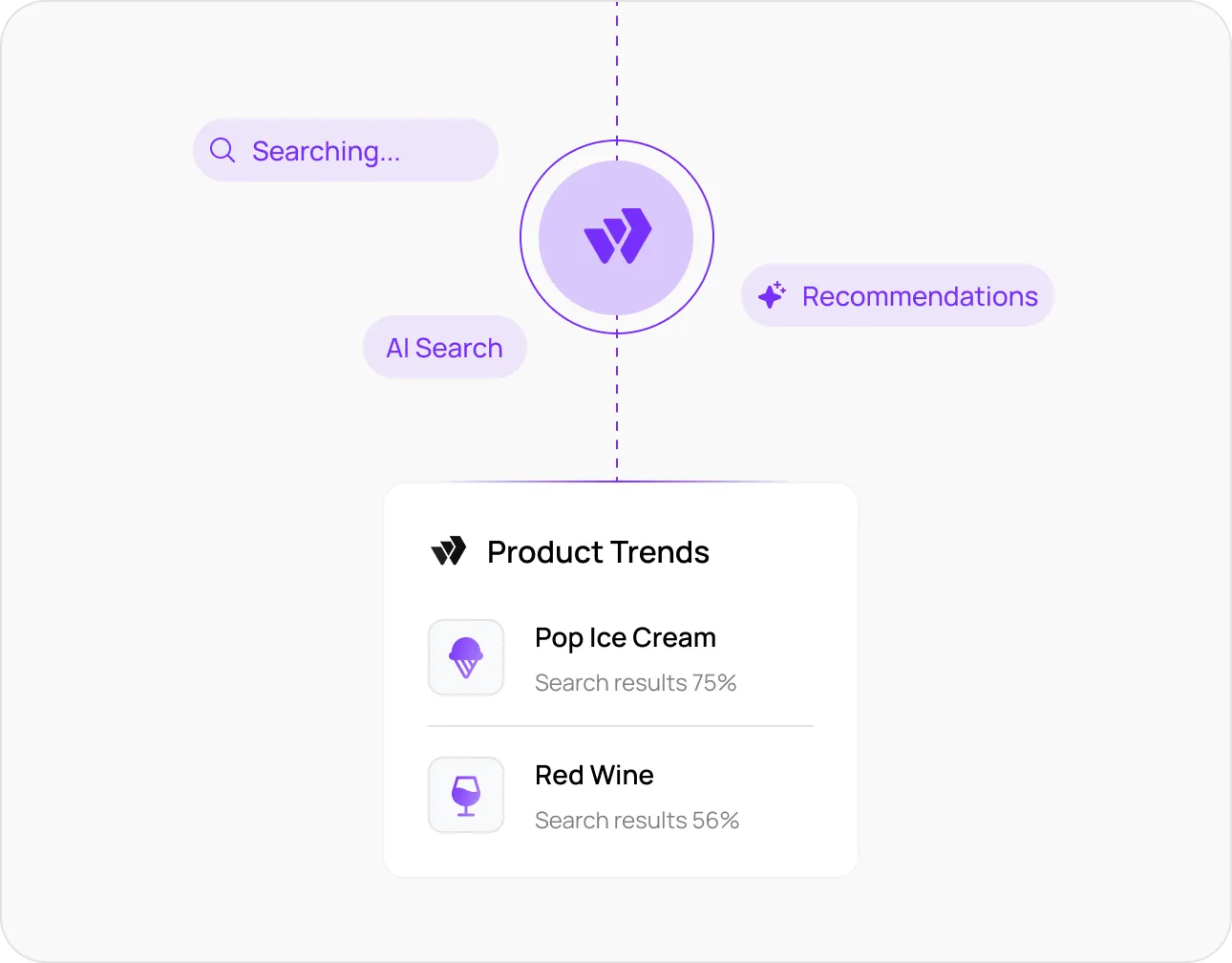
If you want more reliable visibility data, it makes sense to look for software that captures live results. This is one reason WorkDuo stands out, as its real-time tracking approach gives teams a more accurate picture of how they appear across AI search experiences.
2. Choose a Platform That Gives Clear Next Steps
Good GEO software should do more than show brand mentions, rankings, or citations. It should also help you understand what those signals mean and guide you on what to do next, whether that means improving pages, expanding prompt coverage, or fixing weak visibility areas.
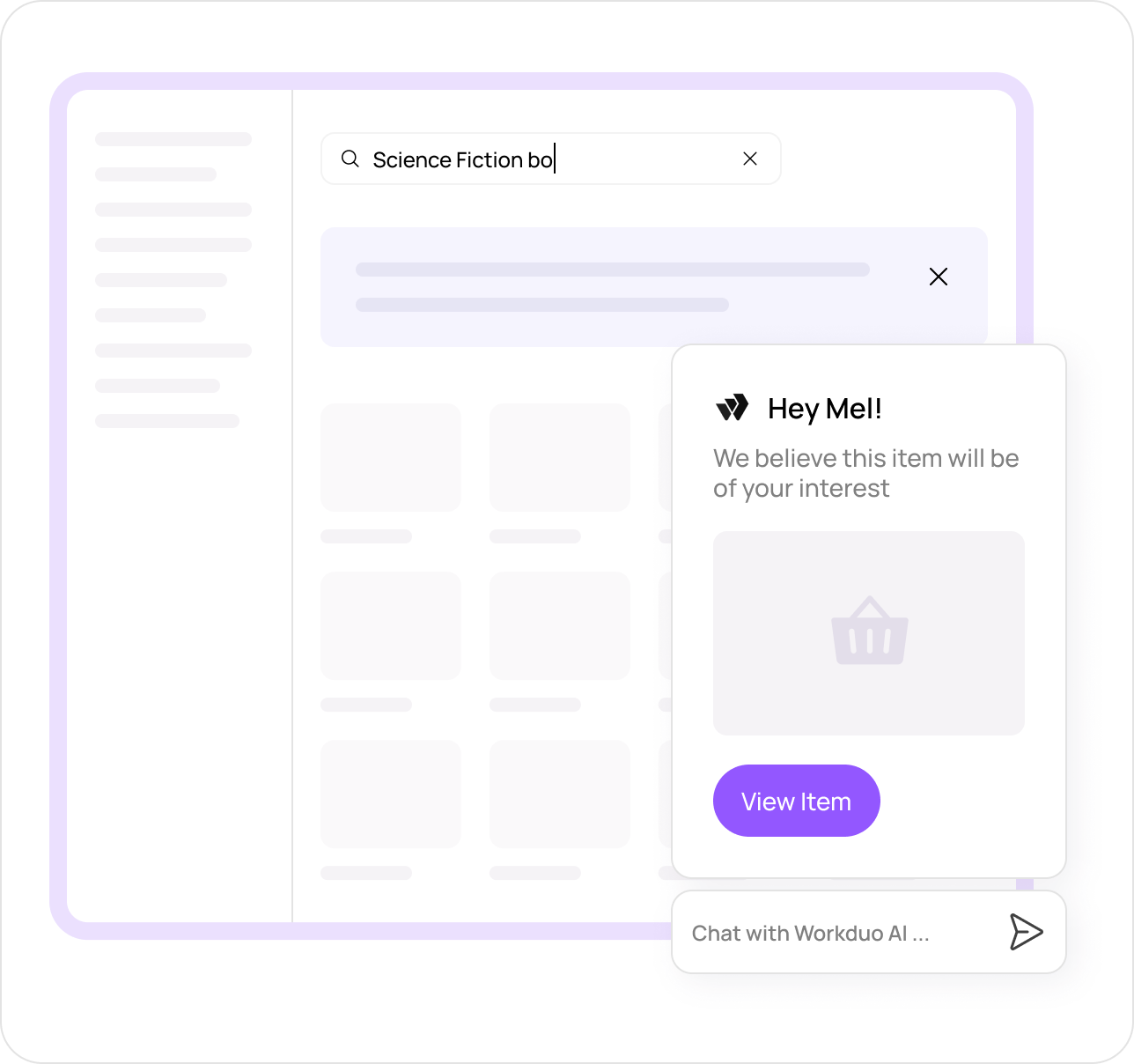
Platforms that support action, not just monitoring, tend to be more useful in daily workflows. WorkDuo is strong in this area because it is built to turn tracking insights into practical recommendations.
3. Judge Value Based on Practical Coverage
Price on its own does not tell you much about overall value. A better way to compare GEO software is to look at how much tracking, model coverage, and usable monitoring depth you actually get for the cost.
A lower-priced plan may still feel restrictive if it cannot support consistent day-to-day work. That is why it helps to compare pricing against actual usage needs, and WorkDuo can be appealing here because its value is closely tied to practical ongoing coverage.
4. Look for Features That Work for Both Brands and Agencies
If you manage several brands, internal teams, or client accounts, flexibility becomes much more important. Capabilities such as project-based workspaces, API access, white-label reporting, and custom tracking controls can make scaling and reporting much easier.
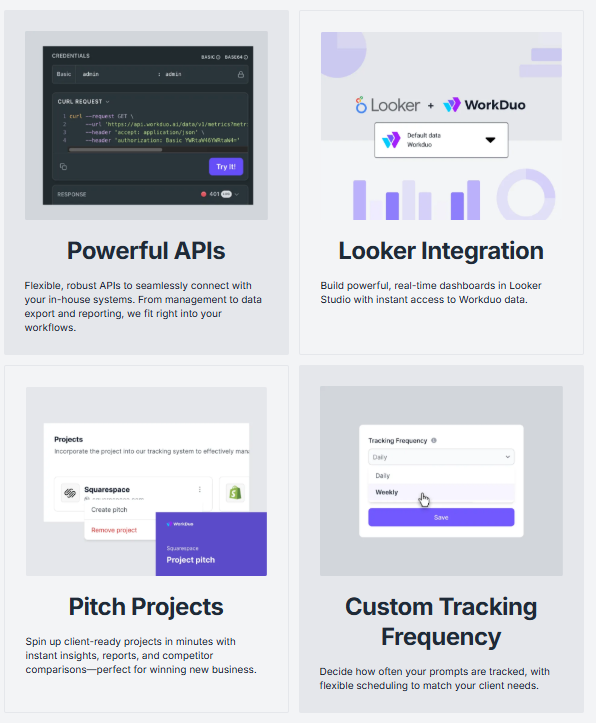
The best GEO platforms should support both in-house and agency workflows without creating extra complexity. WorkDuo performs well here because it is designed to fit both use cases smoothly.
5. Review Regional and Market Coverage Carefully
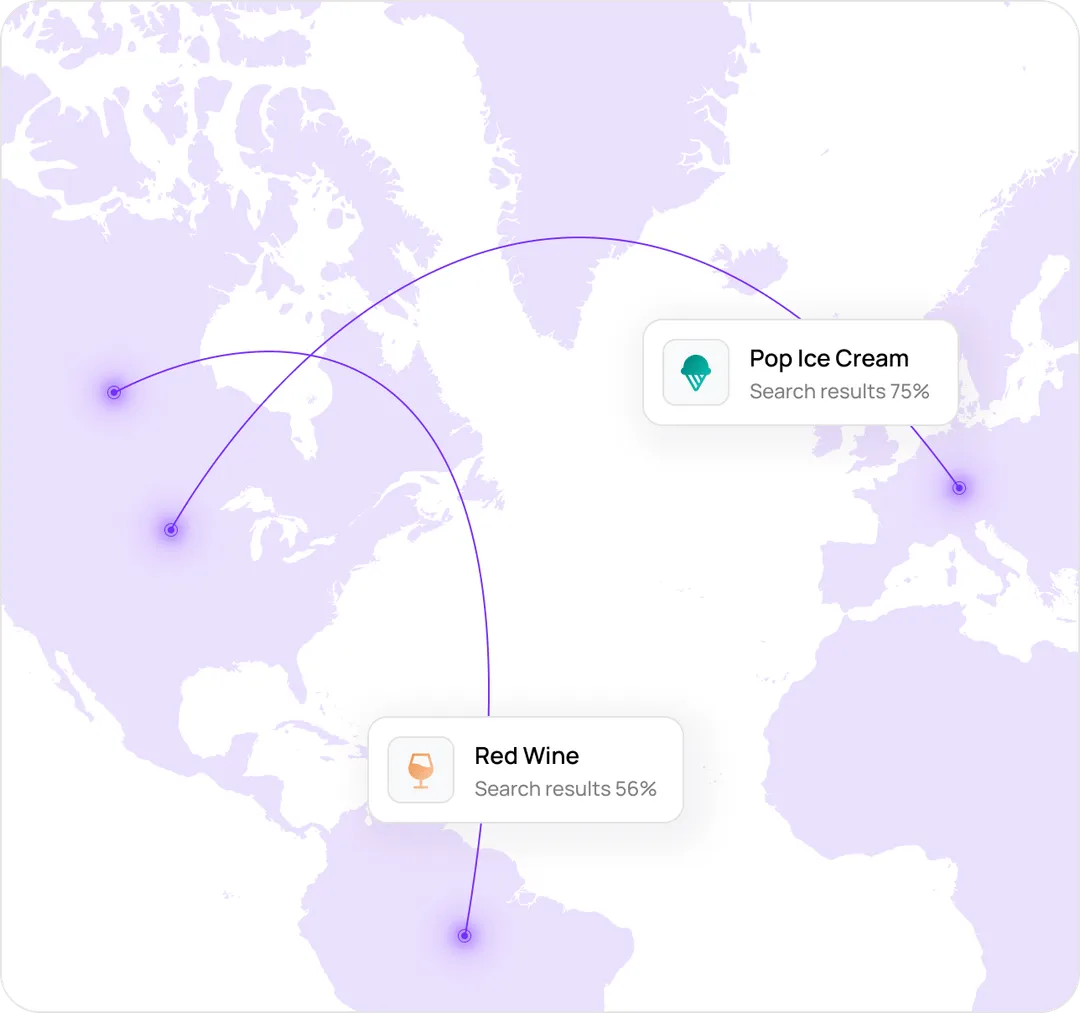
AI search results can differ a lot depending on region, market, and language, so coverage should be part of your evaluation. It is worth checking what each plan includes and whether adding more regions becomes expensive over time.
For companies operating in multiple markets, this can have a big impact on long-term value. WorkDuo is a strong choice here too, especially for teams that want wider visibility without immediately moving to a top-tier plan.
Alternative to AthenaHQ and Otterly AI: WorkDuo
WorkDuo is a strong alternative for teams that care more about cost, accurate AI visibility data, and flexible scaling than bundled enterprise-style pricing.
Key Features
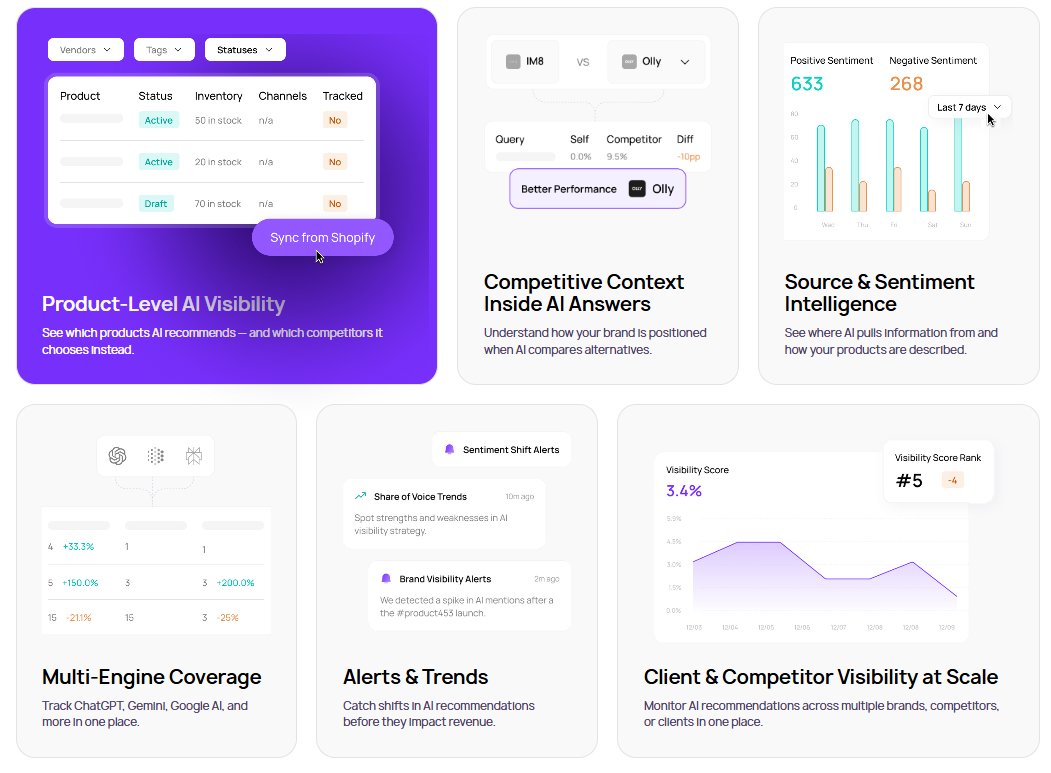
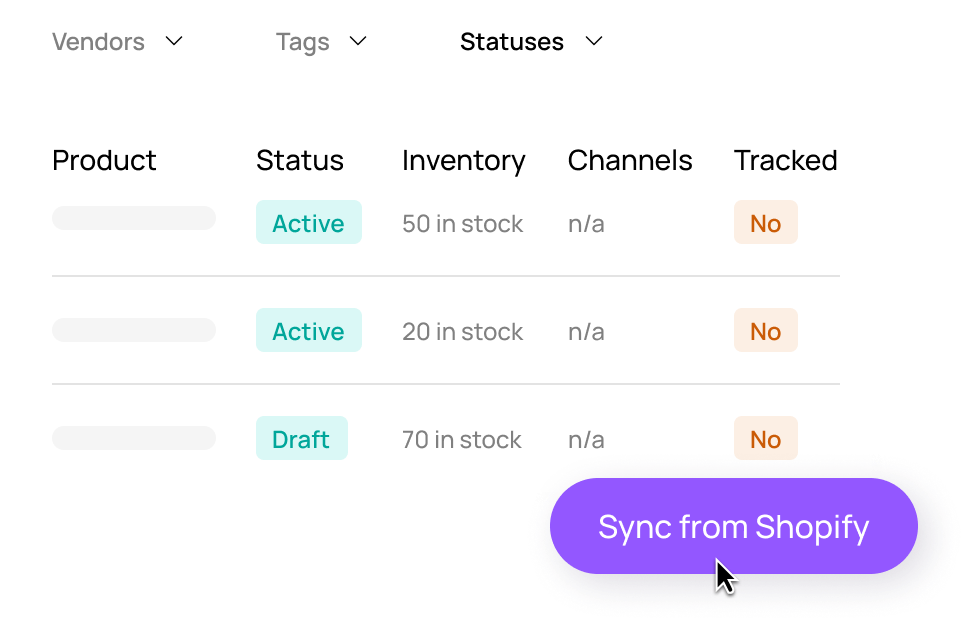
Product-Level AI Visibility
WorkDuo helps teams see not just whether a brand appears, but which specific products get recommended and which competing options show up instead. That makes it more useful for commerce teams that need visibility below the brand level.
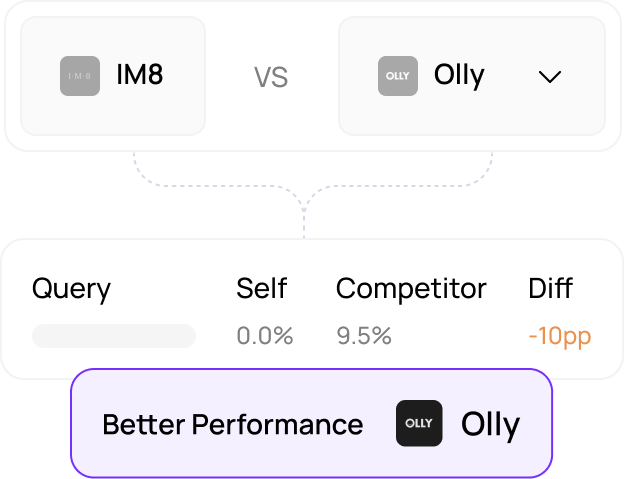
Competitive Context Inside AI Answers
The platform shows how your brand is positioned when AI tools compare alternatives, which helps you understand whether you are winning recommendation moments or being presented as a secondary option.
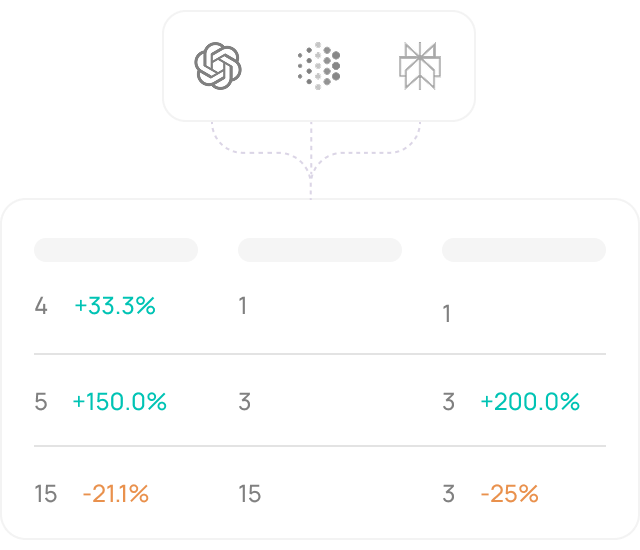
Multi-Engine Coverage
You can monitor visibility across major AI search environments from one place, including platforms such as ChatGPT, Gemini, and Google AI experiences. That matters because buyers do not stick to one assistant anymore.
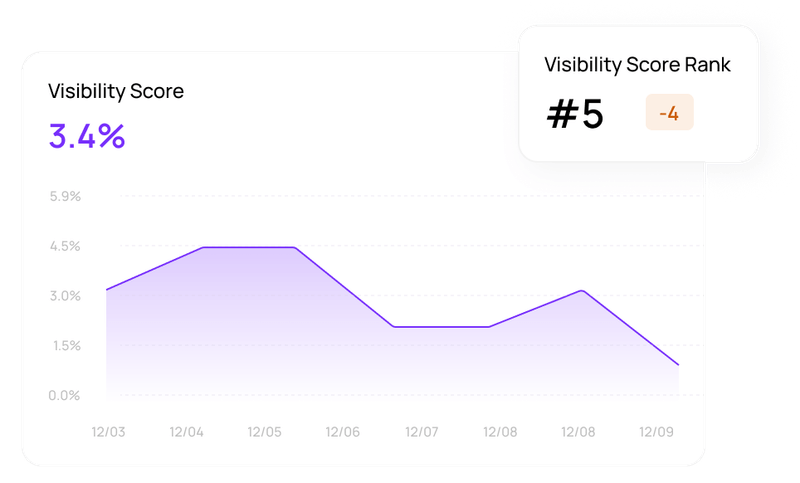
Client and Competitor Visibility Across Multiple Accounts
WorkDuo helps teams monitor AI recommendations for multiple brands, competitors, and client accounts in one place. This makes it a strong fit for agencies, multi-brand companies, and teams that need to compare visibility across a broader set of products and market players without switching between separate dashboards.
Where WorkDuo Shines
- Project-Based Pricing Flexibility: The pricing model is cheaper and is easier to scale gradually because teams can start with a smaller setup and expand by project as their monitoring needs grow.
- Affordable Entry and Unlimited Seats: The project-based pricing model with unlimited users reduces the barrier to entry for small teams and agencies. Even higher-tier plans are more accessible than AthenaHQ’s $295/month starting plan.
- Agency-grade integrations: With APIs and white-label options, agencies can build custom workflows and maintain branded experiences.
Where WorkDuo Falls Short
- Not Built for AI Content Generation: WorkDuo is focused on monitoring, benchmarking, and visibility analysis rather than writing large volumes of AI-generated content for you.
- No Direct Publishing Workflow: It is not positioned as a publishing tool for automatically pushing content live across websites, landing pages, or product pages.
Who WorkDuo Is Best For
- SMBs That Want Practical Visibility Tracking: A good fit for teams that want clarity on AI presence without committing to a heavy enterprise setup.
- Product and E-Commerce Teams: Especially useful when visibility needs to be tracked at the product, category, or offer level rather than only at the brand level.
- SEO and Content Agencies: Strong option for agencies that need multi-client visibility management across different brands and competitors.
- Global Brands: Helpful for teams that need to understand how AI search behaves across markets, regions, and languages from one platform.
Track How AI Search Mentions Your Brand With WorkDuo
WorkDuo gives you a practical way to monitor how AI search engines mention your brand, compare your visibility against competitors, and spot where you need to improve.
Its approach is useful for teams that want accurate tracking and room to scale without getting locked into a heavy setup. If your goal is to understand how AI search shapes brand discovery, it offers a strong place to start.
Get started with a free trial and see your AI search visibility more clearly.
Fiona is the Co‑Founder of WorkDuo AI, where she helps brands optimize their AI search visibility. Previously, she co‑founded SHOPLINE, a smart commerce platform in Asia, and led its successful exit to a NASDAQ‑listed company in 2022. With deep expertise in scaling tech businesses and working with global investors, Fiona now advises startups on growth and data-driven decision-making, while leading WorkDuo’s mission to improve how brands are represented in AI-driven search.

Ready to try our product?
Sign up for a free consultation with our experts.


Follow Us on Social Media
Follow our profiles for daily updates, behind-the-scenes content, and more.




More articles