7 Best GEO Tools & Software for Ecommerce Brands in 2026
.png)
- WorkDuo: Best for ecommerce brands and agencies that need product-level visibility and competitor hero product benchmarking across AI shopping answers.
- Zoovu: Best for catalog-heavy retailers that want guided selling to match shoppers' needs to the right product and lift conversion.
- Azoma: Best for ecommerce marketing teams that need to scale AI-ready product content across large catalogs.
- Profound: Best for enterprise teams needing deeper analytics, governance guardrails, and visibility-to-impact reporting.
- Scrunch: Best for teams that want citation auditing plus LLM-ready pages through an agent-facing experience layer that makes content easier for AI assistants to read and cite.
Most GEO tools stop at the domain level. They tell you whether your site is cited in AI answers, but not whether your hero products actually make it into AI shopping shortlists.
Ecommerce GEO tools go deeper, tracking which products or categories appear in AI-generated shopping answers, which brands and products get recommended, and how high they sit compared to competing products for the same prompts.
If you sell online, that level of visibility matters more than ever. Adobe found that AI-driven traffic to U.S. retail sites rose 693.4% year over year during the 2025 holiday season, showing how quickly AI is becoming part of the shopping journey.
It is not just about whether your brand gets mentioned. It is about whether your products show up when AI tools narrow the market down for shoppers
Best GEO Tools For Ecommerce At a Glance
Benchmark brand and product visibility against competitor hero products with WorkDuo, a data intelligence and analytics platform for AI visibility. Spot why competitors are recommended over you, then prioritize the fixes that move the needle. Sign up today.

1. WorkDuo: Tracking Brand and Product Visibility With Real-Time Competitor Benchmarking Across Major AI Surfaces

WorkDuo is an AI search visibility platform built for ecommerce brands and the agencies that support them. It measures brand, category, and product-level visibility across major AI surfaces such as Perplexity, Gemini, Google AI Overviews, Google AI Mode, DeepSeek, Claude, and Copilot, so you can see more than just whether your domain is cited.
WorkDuo shows which brands and specific products get recommended, how high they appear in AI shortlists, and how they compare to competitor products for the same prompts.
It also helps you understand how AI systems interpret your brand and product data, where you appear or fail to appear in AI-generated answers, and what to improve to grow your share of voice.
Key features
Here are the key WorkDuo GEO features for tracking ecommerce visibility across AI answers.
Competitor Benchmarking for Categories and Products
Compare your brand and key products against competitor brands and their products for the same shopping prompts.

Spot where competitors get recommended over you, and where you are winning at both brand and product level.
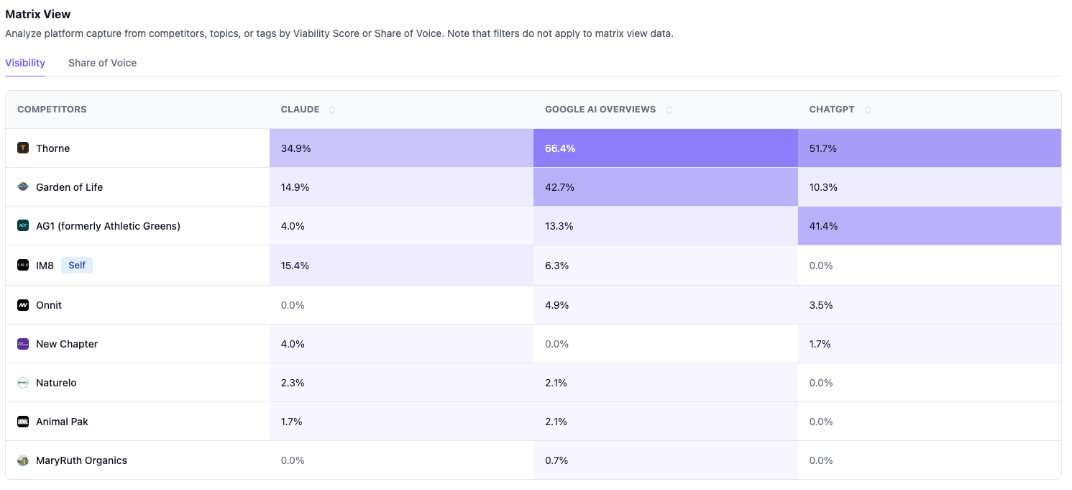
Visibility and Position Tracking
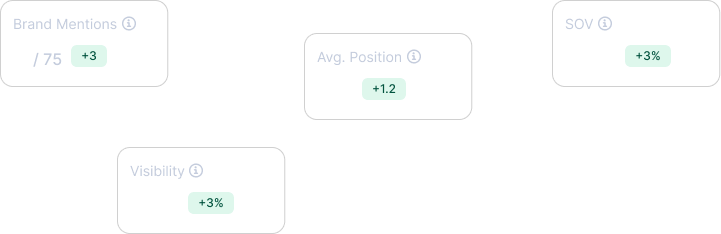
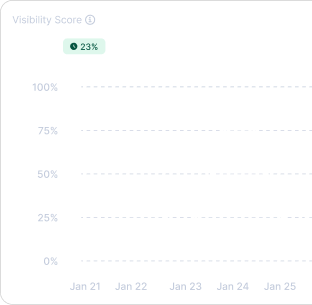
See how often your brand or products show up in AI-generated shopping answers for a query, then track where you land in the shortlist.

It then tracks position (e.g., #1 vs #3), so you measure prominence, not just presence.
.png)
Share of Voice at Brand and Product Level
Track how much of the overall conversation you own across prompts, with rankings and platforms.
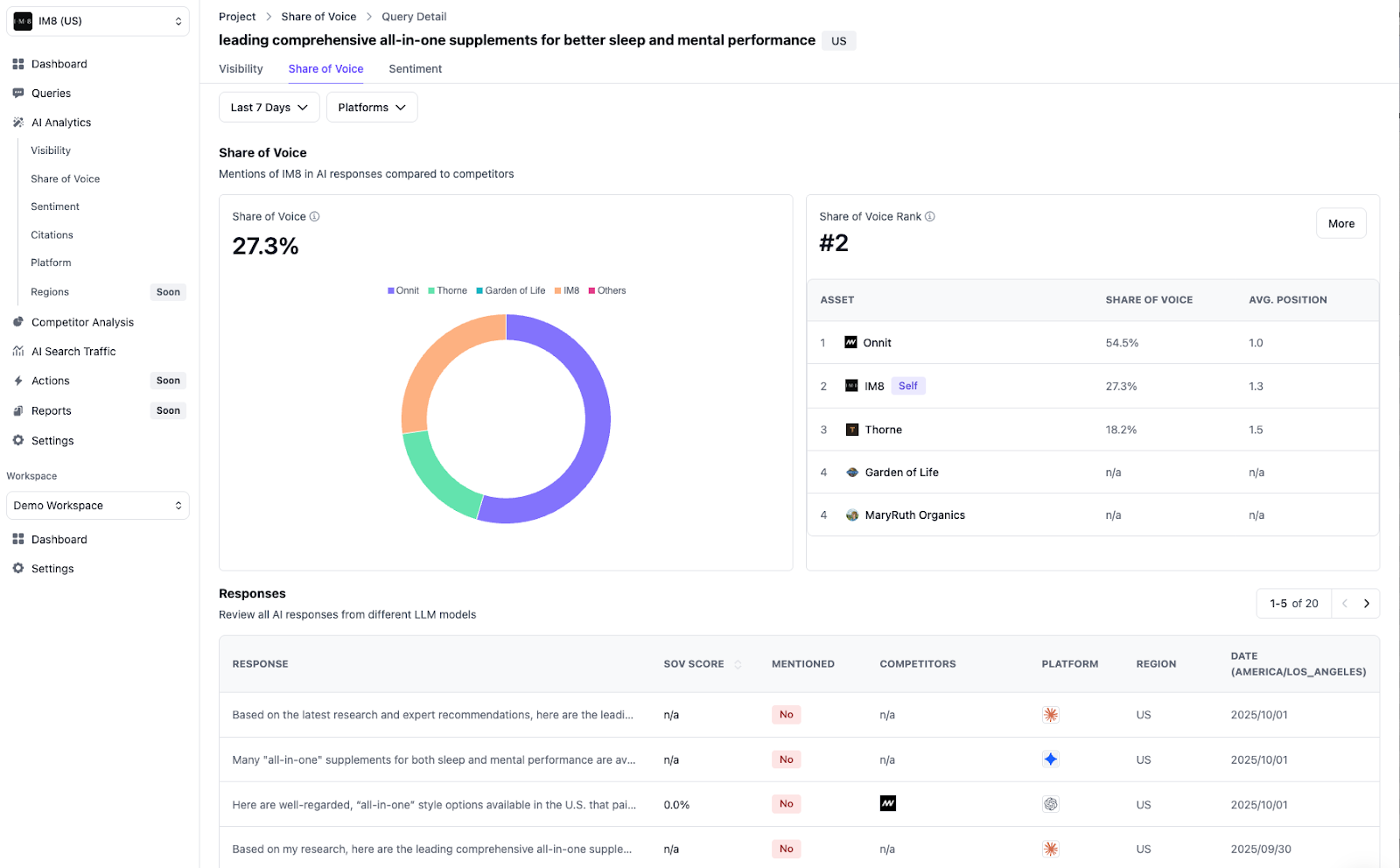
Use it as a baseline measure of who is discussed more and who is selected more.
Sentiment and Messaging Themes
WorkDuo groups brand and product mentions by sentiment themes, so you can quickly see whether AI frames you positively, neutrally, or negatively for each shopping prompt.
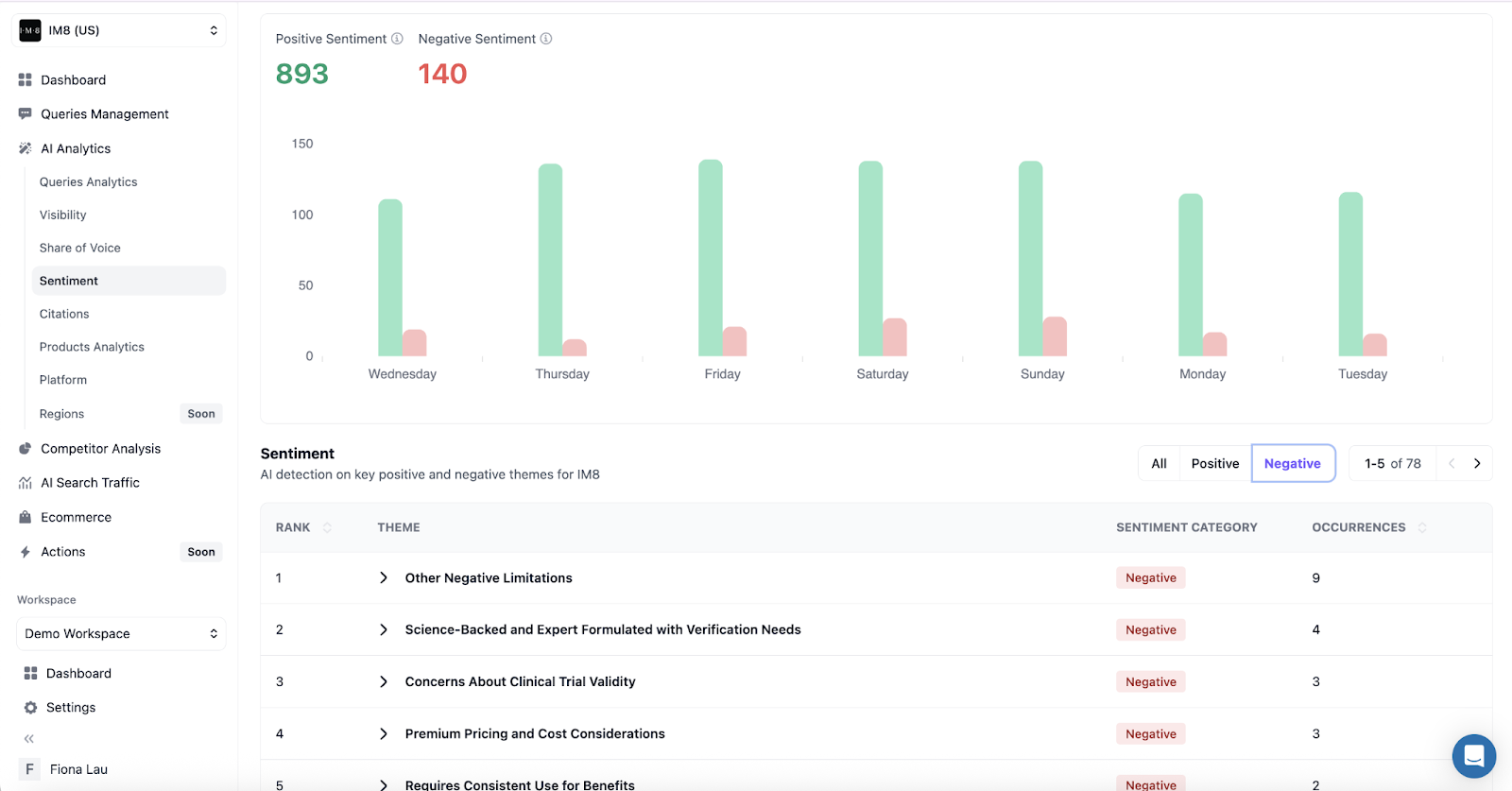
It also shows how often those themes appear and the exact messaging AI associates with your brand and products.

Use this insight to update PDP copy, FAQs, and positioning in a calm, targeted way.
Citation and Source Intelligence
See which sources AI pulls from when it describes or recommends you, down to the URL or domain level.
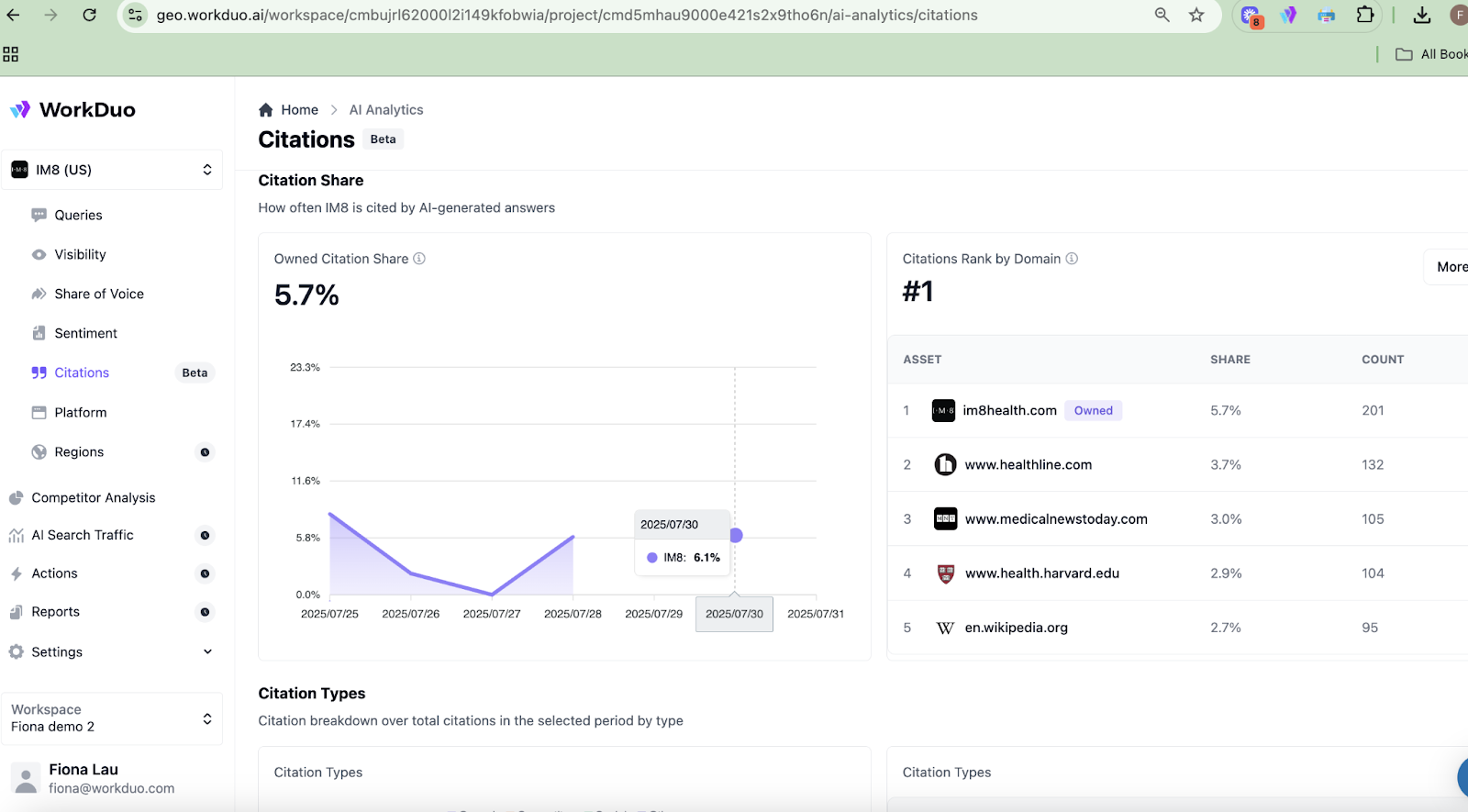
Use this to prioritize where to improve listings, PR, reviews, and third-party content that influences recommendations.
Multi-Platform AI Surface Monitoring
Monitor visibility across the major AI surfaces in one place, including Google AI Overviews, Perplexity, Gemini, DeepSeek, Claude, and Copilot. This helps you catch platform differences, not just overall performance.
Reporting API for Ecommerce Dashboards
Pull queries, answers, citations, and core metrics into your own BI tools so you can connect AI visibility with ecommerce KPIs like category performance, product launches, and campaign timing.
Pricing
Where WorkDuo shines
- Real-time result tracking as a USP: WorkDuo pulls prompt results using real-time web browser runs, so you are measuring what shoppers actually see on the live AI surface, not a cleaner or different answer returned by an API.
- No-servicing architecture: WorkDuo delivers the data layer, insights, and automation, while your team or agency handles execution across content, listings, SEO, PR, and creative.
- Partner-first for agencies: Client-ready dashboards, benchmarking, and partner support designed for managing multiple ecommerce accounts.
- AI product feed readiness (coming soon): Prepares product data formats and schemas to better align with major AI ecosystems' expectations, making your catalog easier to interpret and recommend.
- More accessible than Profound or Peec AI for teams that want to grow into AI visibility tracking: WorkDuo gives brands an easier starting point without the heavier pricing often associated with tools like Profound and Peec AI, while still leaving room to expand tracking as the program matures
Where WorkDuo falls short
- Not an AI content generator: WorkDuo is not a tool for generating or mass-producing AI-written content, nor is it designed to auto-publish copy across your site or product pages.
Who WorkDuo is best for
- SMB and growing ecommerce brands: Lean teams that need a simple way to track brand, category, and product visibility in AI shopping answers.
- Global ecommerce retailers: Multi-market brands that want to benchmark visibility against competitors across regions and platforms.
- Ecommerce agencies: Teams managing multiple stores that need client-ready dashboards and repeatable reporting.
2. Zoovu: Best for AI-Guided Selling for Complex Product Catalogs
Zoovu helps shoppers choose the right product with guided selling experiences and AI-powered search. It is built for brands with large catalogs that need better discovery, cleaner product data, and higher conversion.
Key features
- Guided selling flows: Turns buyer needs into the right product recommendations.
- AI search and product discovery: Improves onsite findability beyond basic filters.
Pricing
- Contact their advisors for tailored pricing.
Where Zoovu shines
- Complex product selection: Helps customers compare and narrow choices faster.
Where Zoovu falls short
- Overkill for simple catalogs: Too heavy if you just need a basic quiz.
- Setup and data work: Needs strong attribute data to perform well.
- Adoption curve: Teams may need time to learn and maintain experiences.
Customer reviews
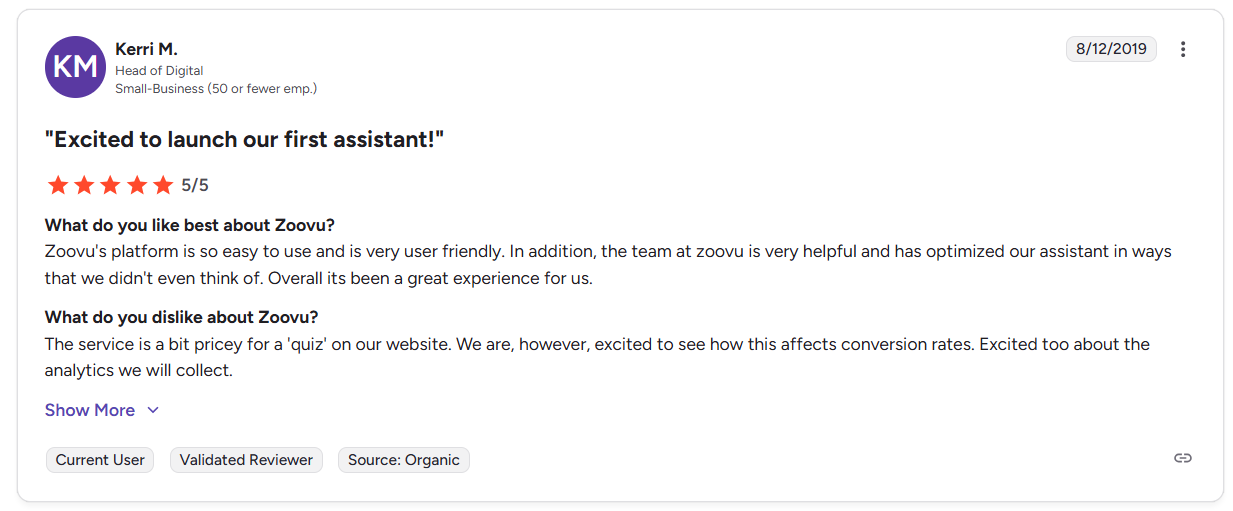
Kerri M., Head of Digital, wrote on G2 that Zoovu’s platform is easy to use and that the team was highly supportive, delivering optimizations she hadn’t expected.
A frustrated user on G2 said the team didn’t deliver the promised solution and renewed the contract without notice.
.png)
Who Zoovu is best for
- Ecommerce leaders: Improving conversion on large, complex catalogs.
- Product and marketing teams: Building finders that reduce drop off and lift AOV.
3. Azoma: Best for Scaling AI-Ready Product Content Across Large Catalogs

Azoma is an AI-powered, enterprise-grade software platform that tracks how your brand and products appear in AI search and shopping assistants, then helps you optimize for those results.
This tool is built for consumer brands and retailers that need competitive benchmarks and repeatable workflows across many products and markets.
Key features
- Multi-platform AI visibility tracking: Measures how AI engines mention and recommend your brand across key models
- Enterprise portfolio benchmarking: Supports multi-brand and multi-market reporting
Pricing
- Contact them for tailored pricing.
Where Azoma shines
- Competitive visibility insight: Helps teams spot where competitors outrank them in AI answers.
Where Azoma falls short
- Enterprise-oriented scope: Can be heavy if you only need lightweight prompt checks for a small catalog.
- Implementation dependency: Outcomes vary based on setup and operational follow-through.
- Pricing transparency: Typically quote-based, so it is harder to self-qualify quickly.
Customer reviews
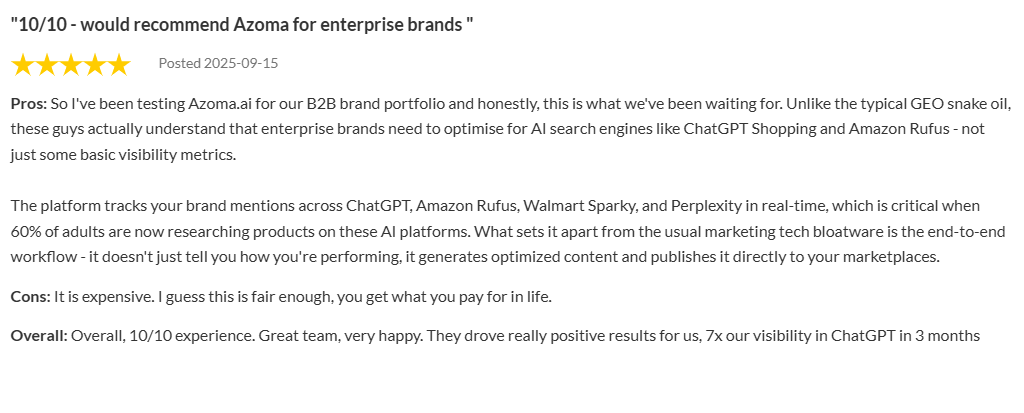
A founder wrote on SourceForge that Azoma.ai tracks real-time brand mentions across AI shopping platforms and supports an end-to-end workflow that creates and publishes optimized content, not just visibility metrics.
Ben K., Account Executive, mentioned in G2 that the tool is tailored for retail complexity and is less general than other tools, which he sees as a positive.

Who Azoma is best for
- Enterprise ecommerce teams: Improving visibility in AI shopping answers across large sets of products.
- Brand and category leaders: Tracking competitors and managing AI visibility across markets and product lines.
4. Profound: Best for Enterprise AI Search Visibility Intelligence
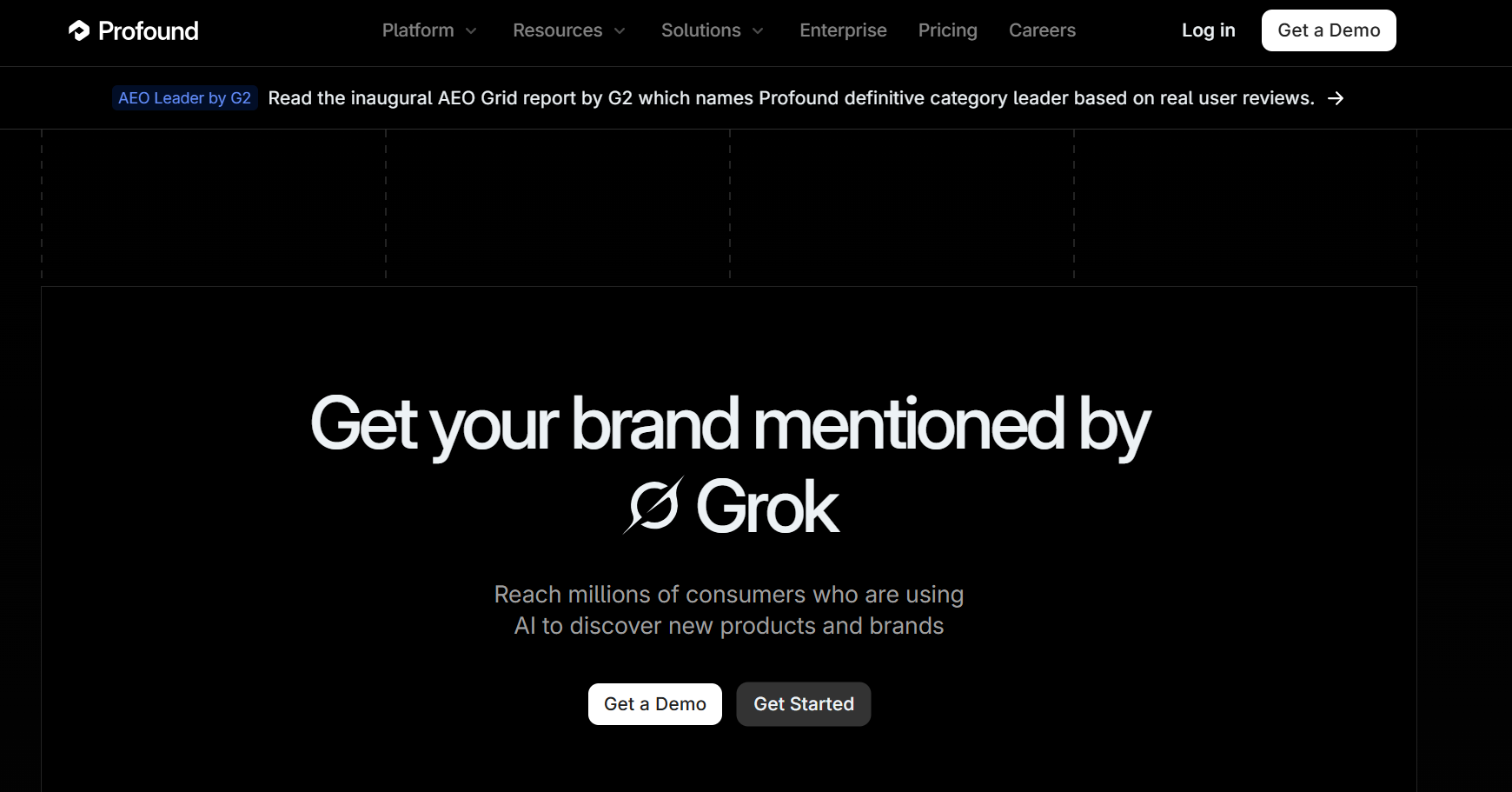
Profound tracks how AI engines mention your brand, cite sources, and drive visibility so you can improve performance in AI-generated answers.
Key features
- Answer engine insights: Tracks visibility, citations, and sentiment across AI answers in one dashboard.
- Workflow-driven optimization: Adds an automation layer to audit, analyze, and optimize content operations.
Pricing
Where Profound shines
- Enterprise-grade monitoring: Visibility, citations, sentiment, and competitor insights across platforms.
Where Profound falls short
- Pricing clarity: The pricing page does not clearly list plan details, which can slow self-qualification.
- Analytics complexity: Can feel heavy for teams that want only simple metrics and a lightweight UI.
- Not ideal for small sites: Most value shows up when you can track many prompts, categories, or brands at scale.
Customer reviews
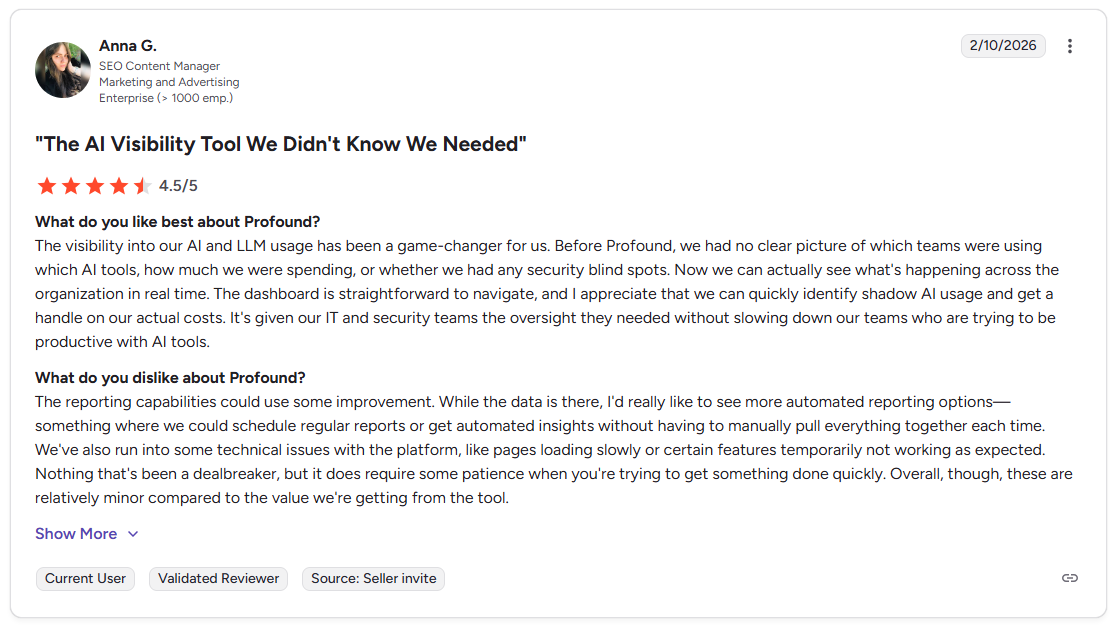
Anna G., SEO Content Manager, said Profound gave her team real-time visibility into AI and LLM usage, helping them spot shadow AI, understand costs, and improve security oversight with an easy-to-use dashboard.
Keri R. wrote on G2 that Profound’s prompt and assisted-writing features are useful for guiding AEO content strategy, but she finds the UX confusing.

Who Profound is best for
- Enterprise SEO and AEO teams in Ecommerce: Managing AI visibility across many topics, pages, and competitors.
5. Scrunch: Best for Serving LLM-Ready Pages

Scrunch helps you monitor how your brand shows up in AI search, then audit and optimize what AI systems cite about you.
Key features
- Monitoring and insights: Tracks brand mentions, citations, and trends across AI search experiences.
- Agent Experience Platform: Delivers AI-optimized content directly to AI agents visiting your site.
Pricing
Where Scrunch shines
- LLM-ready pages: Creates a clean, machine-readable version of your site (often as Markdown and JSON) so AI agents can access structured content even when your main pages rely on heavy JavaScript or dynamic layouts.
Where Scrunch falls short
- More difficult stakeholder sharing: Some feedback indicates insights are not always easy to share or operationalize.
- May be heavy for small teams: Most value comes from tracking lots of prompts and pages.
Customer reviews
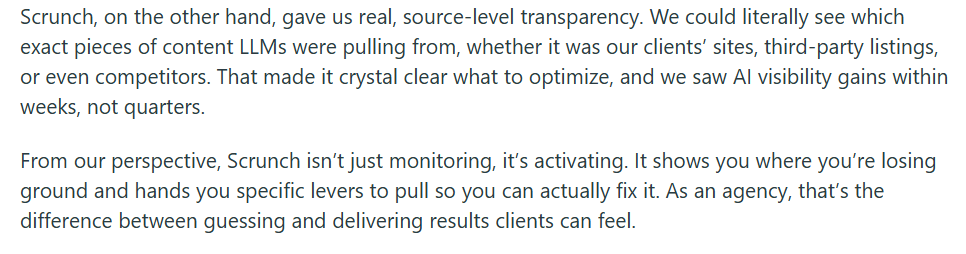
A Reddit user who tried both Scrunch and Profound said Scrunch goes beyond monitoring by showing where you’re losing ground and giving clear actions to fix it, which helps agencies deliver results.
Andres S., Digital Marketing Strategist, shared his thoughts on G2 that Scrunch has a clean dashboard, but the AI traffic section has tricky Google account permissions and limited drill-down options.

Who Scrunch is best for
- Enterprise SEO and AEO teams: Running AI visibility reporting and prioritization across large sites.
- Agencies: Managing multi-client AI visibility monitoring and reporting.
6. AthenaHQ

AthenaHQ is an AI search optimization platform that helps brands understand how they appear in generative AI engines such as ChatGPT, Perplexity, Claude, and Gemini.
This AI tracking software focuses on monitoring brand mentions and competitor visibility, identifying content gaps that AI cannot address, and supporting GEO workflows to help teams improve how often they are mentioned and cited in AI responses.
7. Semrush
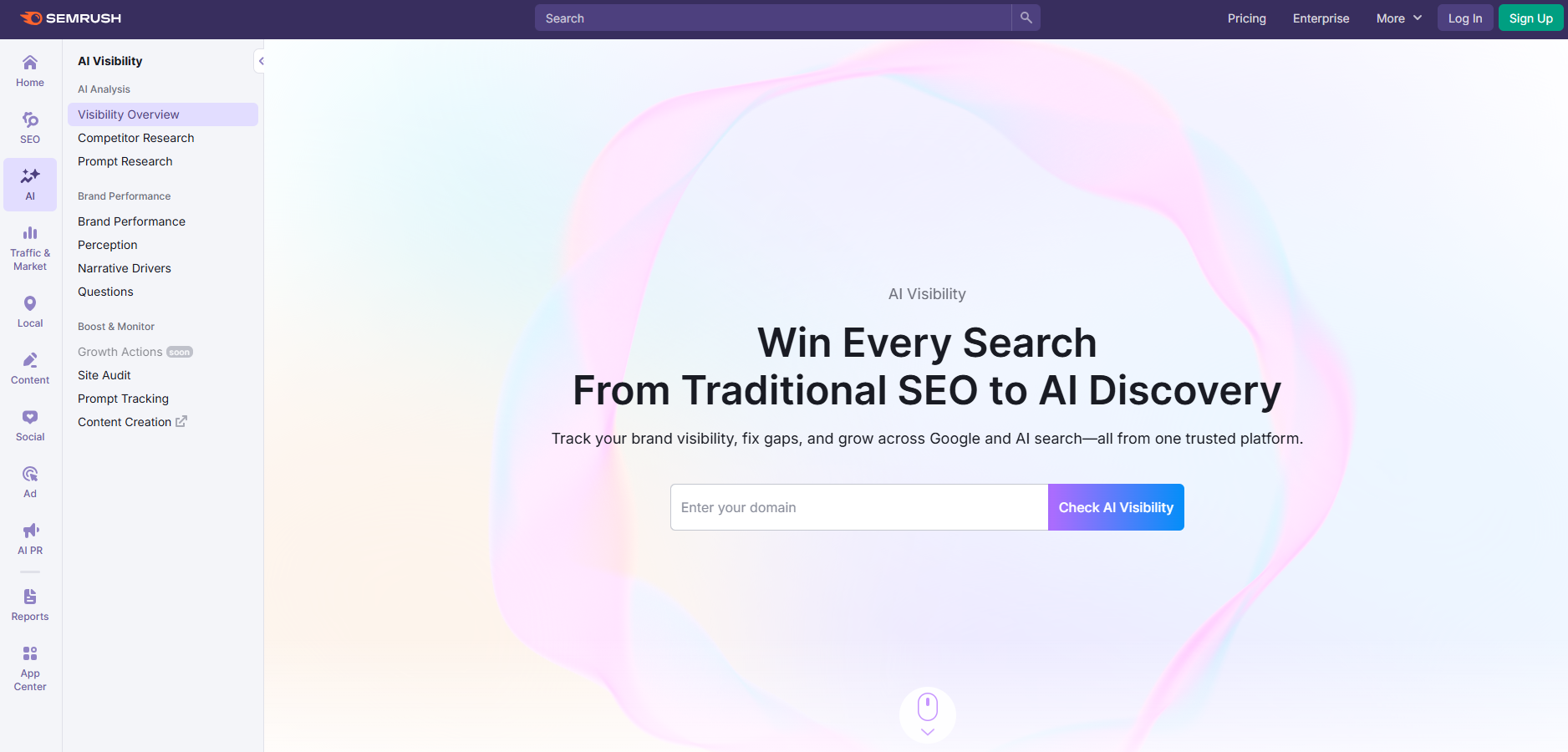
Semrush’s AI search features focus on measuring how your brand appears in AI-generated answers and where those answers cite content.
Their AI Visibility Toolkit tracks mentions, cited pages, and platform distribution across systems like ChatGPT and Google AI Overviews, and it benchmarks performance against competitors to highlight gaps to fix.
How to Choose the Best GEO Tools for Ecommerce
Here’s what should matter most when selecting a GEO tool for ecommerce.
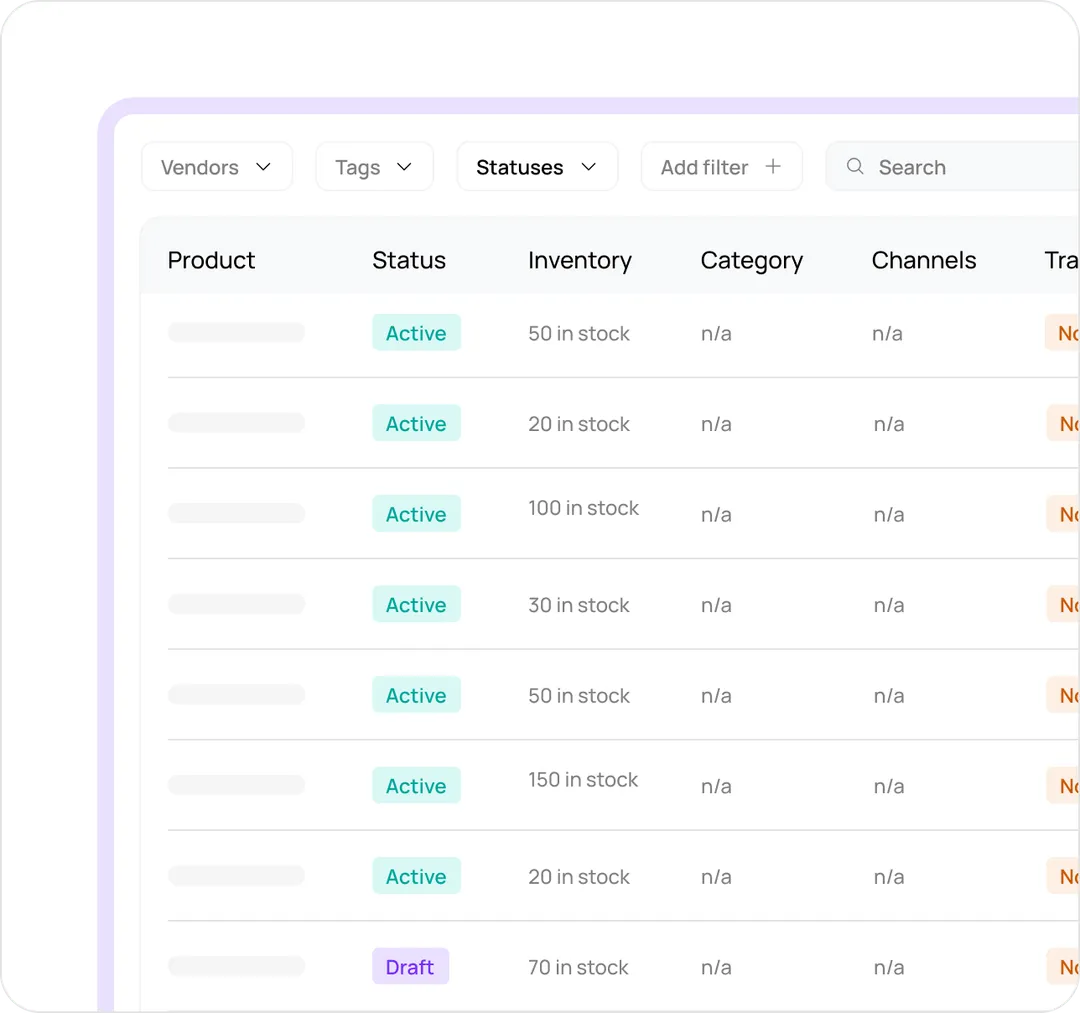
1. Confirm It Tracks Products, Not Just Domains
Look for product and category-level visibility. You want to know which products get recommended, not only whether your site is cited.
If you sell multiple products or service lines, WorkDuo lets you track visibility at the product, variant, category, or offering level so you can see what actually gets recommended.
2. Validate How Results Are Collected
Prefer real-time, browser-based tracking for prompt results when accuracy matters. API-only pulls can diverge from what shoppers actually see.
When accuracy matters, WorkDuo uses real-time, browser-based tracking to capture what shoppers actually see when prompted.
3. Look For Unlimited Or Flexible User Seats
Ecommerce visibility touches SEO, content, merchandising, and brand teams. Tools with unlimited users or affordable extra seats make it easier to collaborate without surprise costs.
WorkDuo includes unlimited user seats on every plan, so SEO, content, merch, and brand can collaborate without seat surprises.

4. Consider White Label Reporting If You Serve Clients
If you are an agency, look for white-label dashboards and exports so you can deliver AI visibility reporting under your brand without additional manual reporting.

For agencies, WorkDuo supports white-label dashboards and exports, enabling you to deliver client-ready reporting with your branding.
Take Control of How AI Platforms Talk About Your Brand With WorkDuo
Ecommerce is now an AI shelf. Your brand either earns space on it or gets skipped. WorkDuo helps you stay on top of the prompts that drive demand, spot gaps before they hurt revenue, and prioritize work that compounds over time. Turn AI discovery into a competitive advantage today. Get started.
Fiona is the Co‑Founder of WorkDuo AI, where she helps brands optimize their AI search visibility. Previously, she co‑founded SHOPLINE, a smart commerce platform in Asia, and led its successful exit to a NASDAQ‑listed company in 2022. With deep expertise in scaling tech businesses and working with global investors, Fiona now advises startups on growth and data-driven decision-making, while leading WorkDuo’s mission to improve how brands are represented in AI-driven search.

Ready to try our product?
Sign up for a free consultation with our experts.


Follow Us on Social Media
Follow our profiles for daily updates, behind-the-scenes content, and more.




More articles