Best Ways to Track Brand Mentions in AI Search (2026 Guide)
.png)
- AI brand mentions are when your brand, product, or site appears in AI answers, with or without a link, across tools like ChatGPT, Google AI Overviews, Perplexity, Claude, and Bing Copilot Search.
- The best ways to track them are manual checks, AI monitoring tools, or custom automation, depending on your scale, team, and reporting needs.
- Strong tracking looks at mentions, citations, sentiment, competitor presence, share of voice, and changes over time.
- To improve visibility, use a fixed prompt bank, monitor competitors, make content easy to extract, and track results consistently.
- WorkDuo helps teams track AI brand mentions at scale by combining visibility, competitor context, citation sources, sentiment signals, and multi-engine trends in one place, making it easier to see how your brand is actually presented across AI search.
AI brand mentions are harder to track than traditional web mentions because they appear inside generated answers, recommendations, and citations, not just in rankings, reviews, or social posts.
That makes them easy to miss with standard monitoring tools, even though they can influence who gets seen, trusted, and chosen before a user ever clicks through.
If you want to understand how your brand shows up in AI search, you need a way to monitor not just whether you are mentioned, but how AI platforms frame, compare, and recommend you.
What are AI Search Mentions?
AI search mentions are the times your brand, product, website, or content gets mentioned inside answers generated by AI search tools like ChatGPT, Google AI Overviews, Perplexity, Claude, or Copilot.
- Brand mention: Your company name appears in an AI answer.
- Product mention: A specific product, service, or feature is named.
Citation or source mention: The AI links to or cites your website as a source. - Unlinked mention: The AI talks about your brand without linking to you.
- Competitor comparison mention: Your brand appears alongside competing brands in recommendation-style answers.
Why Monitoring Your Brand in AI Search Isn’t Optional Anymore
Here’s why brand monitoring in AI search is no longer just a nice-to-have, but something teams need to do consistently.
The Best Ways to Track Your Brand Mentions in AI Search
There are three practical ways to track brand mentions in AI search: manual checks, AI search monitoring tools, and custom scraper or automation workflows.
1. Manual Checking
Manual checking is the best place to start because it shows you the real user experience.
Build Your Prompt Bank
Start by listing the prompts you want to test across AI search. Focus on the prompt types most likely to shape visibility across discovery, comparison, and evaluation.
Include prompts such as:
- Branded prompts: [brand name], misspellings, product names, feature names
- Category prompts: best [category], top [category] tools, leading [category] software
- Use case prompts: best tool for [use case], how to solve [problem]
- Comparison prompts: [brand] vs [competitor], best alternatives to [competitor]
- Audience or industry prompts: best [category] for SaaS, ecommerce, agencies, enterprise teams
What To Look For
Use the same checklist across every platform so your results are comparable.
Track whether:
- Your brand appears in the answer
- Your page or website is cited
- Competitors appear instead
- The answer changes after a follow-up
- Your brand is described accurately
- The same publishers or review sites appear repeatedly
Choose The Platforms
Search Engines: Google AI Overviews and Bing Copilot Search
Check your prompt bank in Google AI Overviews and Bing Copilot Search to see how your brand appears in AI-generated search summaries.
How to check:
- Run your prompts in a clean browser session
- Note whether an AI-generated answer appears
- Review the summary, citations, and competitor mentions
- Save screenshots with the query and date
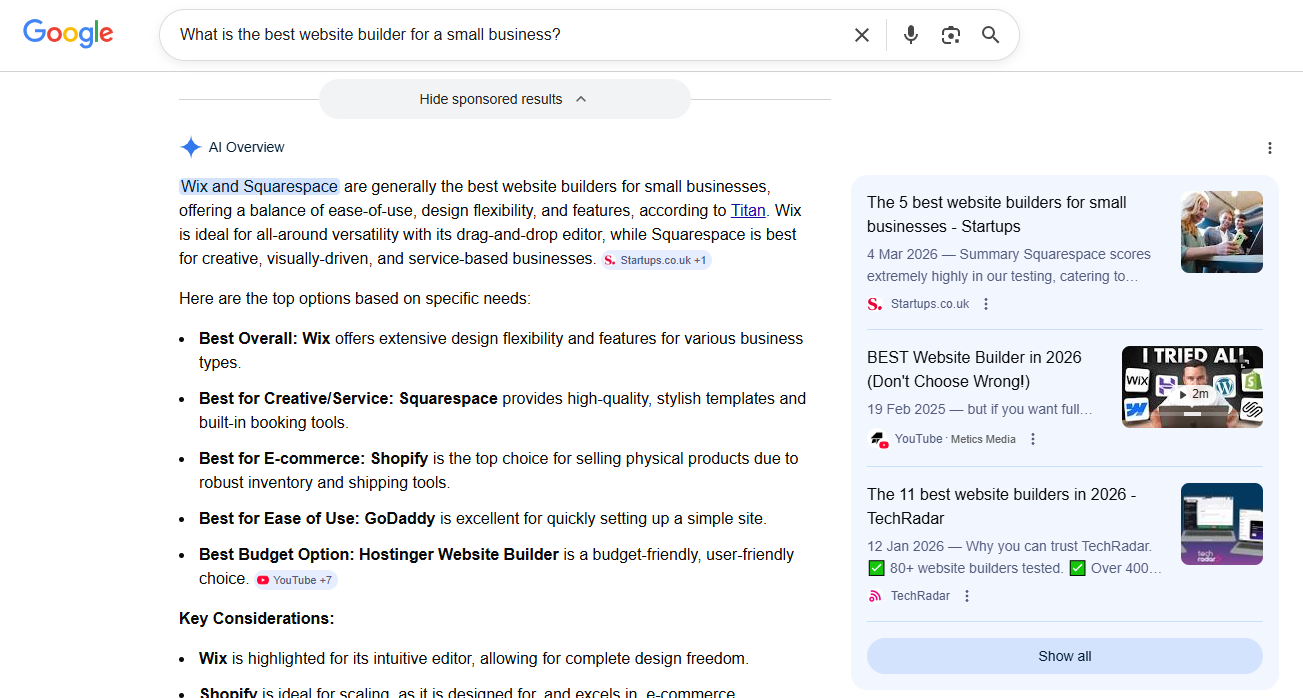
Examples of brands surfaced in Google AI Overview for a buyer-intent query about website builders.
AI Chat Engines: ChatGPT, Perplexity, And Claude
Next, run the same prompts in AI chat tools.
How to check:
- Start a fresh chat or thread for each prompt set
- Enable web search when available or needed
- Run the exact same prompts across tools
- Review mentions, citations, brand framing, and follow-up AI responses
- Log whether your visibility improves, drops, or disappears deeper in the conversation
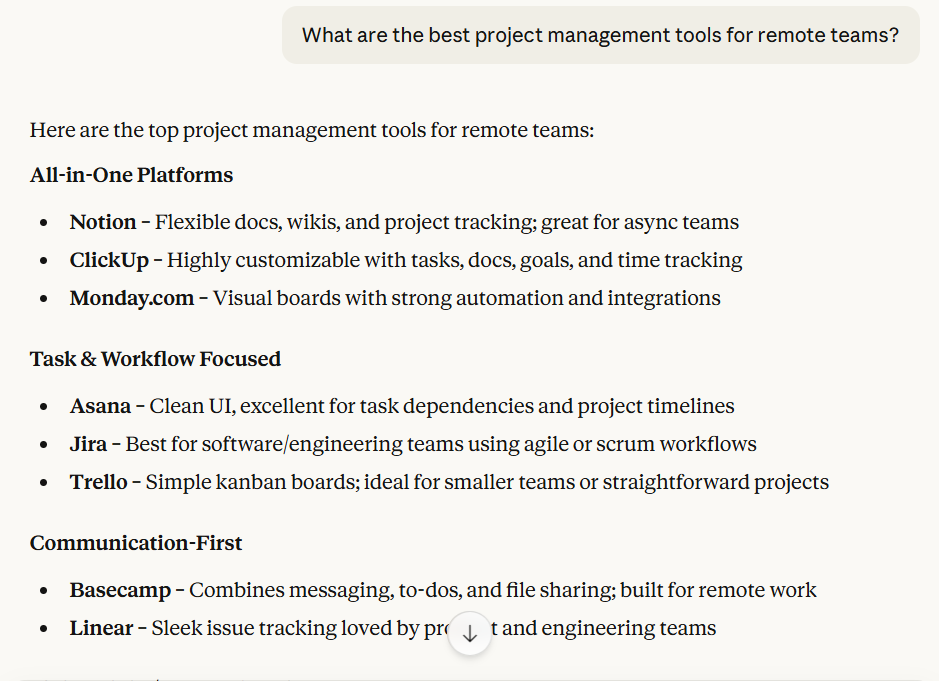
Example of brand mentions in Claude for the prompt, “What are the best project management tools for remote teams?”
2. Use AI Search Monitoring Tools
Here are some of the key AI search monitoring tools that can help you track all of this at scale.
1. WorkDuo
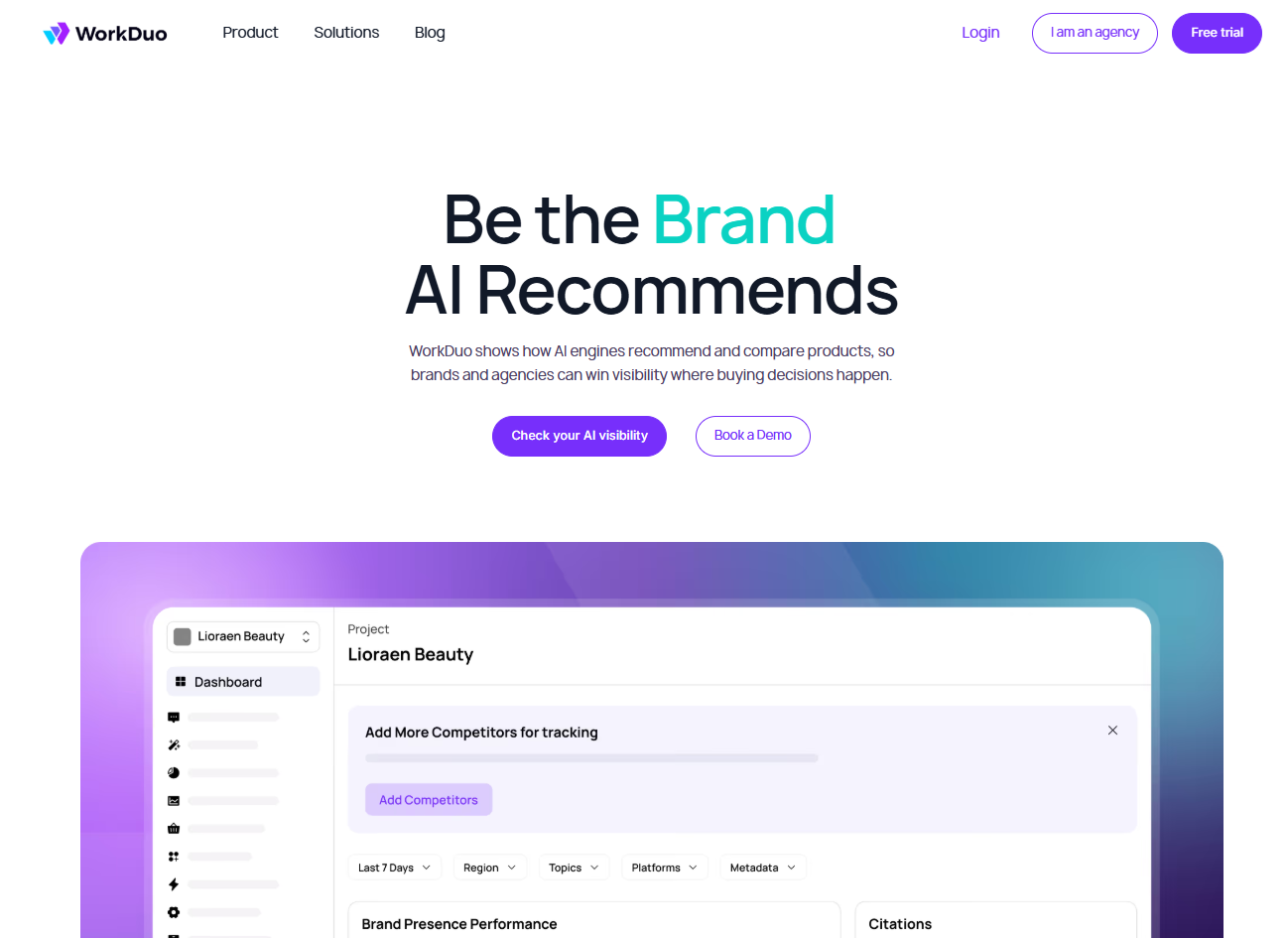
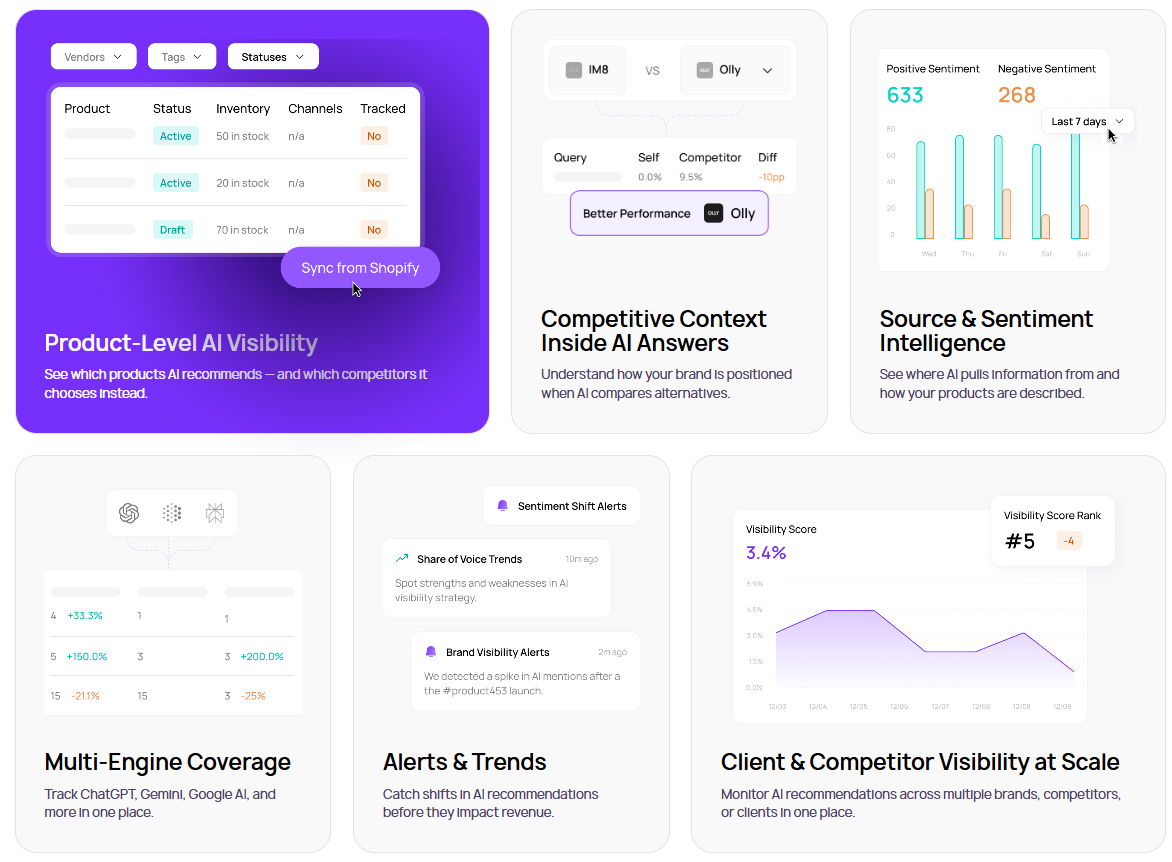
WorkDuo tracks how brands, products, and services appear across major AI engines in one place.
It combines visibility, competitor context, citation sources, sentiment signals, and market-level monitoring so brands and agencies can see what users actually get in AI answers.
WorkDuo tracks:
- Product-level AI visibility
- Visibility scores and positions
- Share of voice vs competitors
- Citation and source intelligence
- Sentiment and repeated themes
- Multi-engine performance trends
Pros
- Global coverage: Tracks AI visibility across regions and languages, which matters because AI answers vary by market.
- Built for brands and agencies: Works for in-house monitoring and multi-client reporting.
- Strong competitive context: Shows share of voice, benchmark data, and visibility gaps.
- Useful alerts: Helps teams catch sentiment shifts and visibility changes early.
- Live browser tracking: Reflects real user-facing results, not just API pulls.
Cons
- Not a content generator: Focused on monitoring, not creating or publishing content.
Pricing
Who WorkDuo is Best For
- Global brands: Useful for tracking AI visibility across regions and languages.
- Agencies: Strong for multi-client reporting, benchmarking, and white-label delivery.
- Ecommerce and product teams: Helpful for monitoring product, category, and offer-level visibility.
- Multi-platform teams: Good for brands that want one view across several AI search engines.
2. Profound
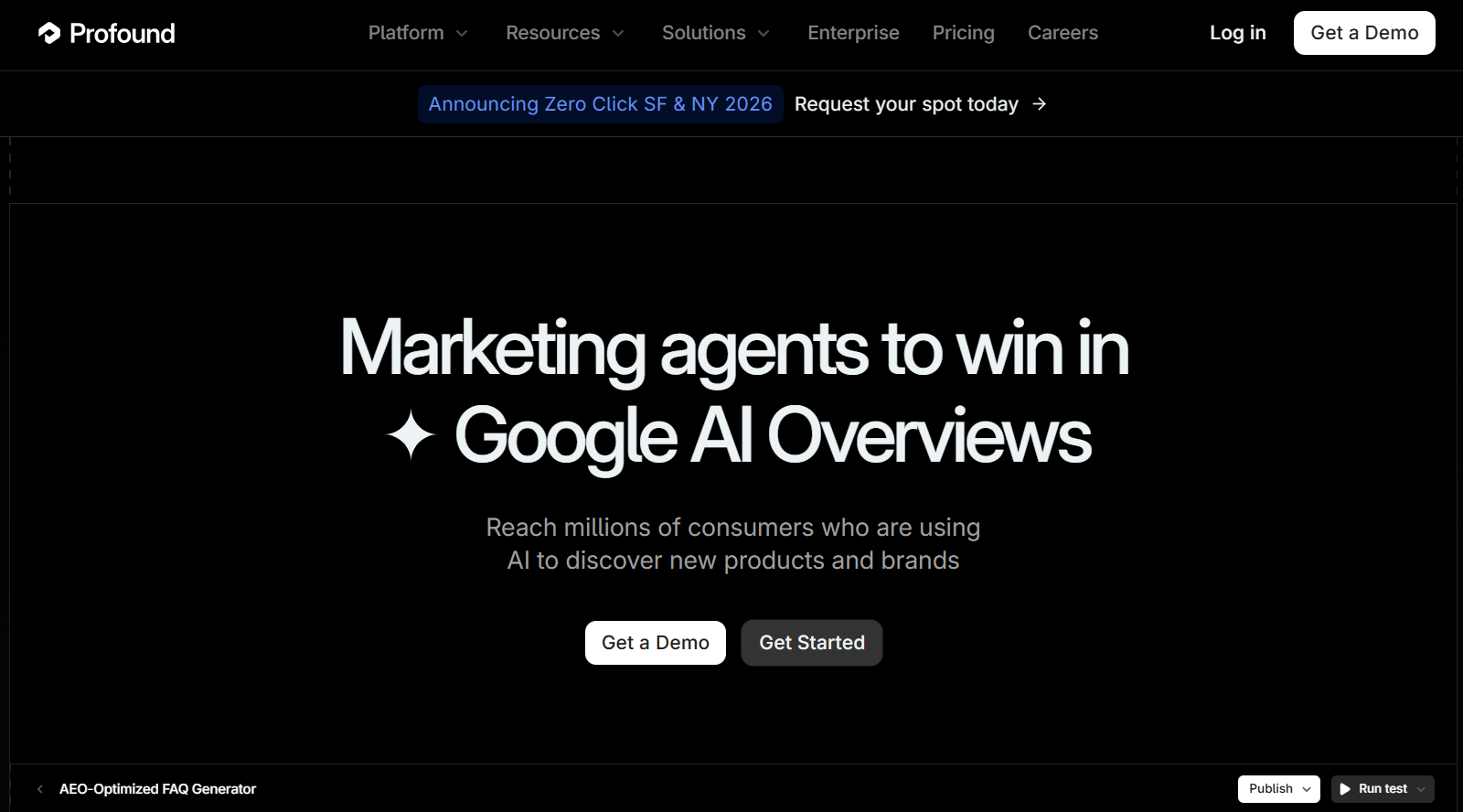
Profound helps enterprises track how their brand appears in AI answers, what AI says, and which sources shape those responses.
What it Tracks
- Brand mentions in AI answers
- Visibility trends over time
- Citation sources and cited pages
- Narrative and source influence
Pros
- Enterprise reporting: Turns AI visibility into dashboards stakeholders can use quickly.
Cons
- Quote-based pricing: Harder to evaluate without speaking to sales.
- Heavier setup: Needs clear prompts, topics, and governance.
Pricing
Who Profound is Best For
- Enterprise SEO teams: Monitoring AI answers and citations at scale.
- Brand and comms teams: Tracking brand narratives and source influence across AI.
3. Peec AI
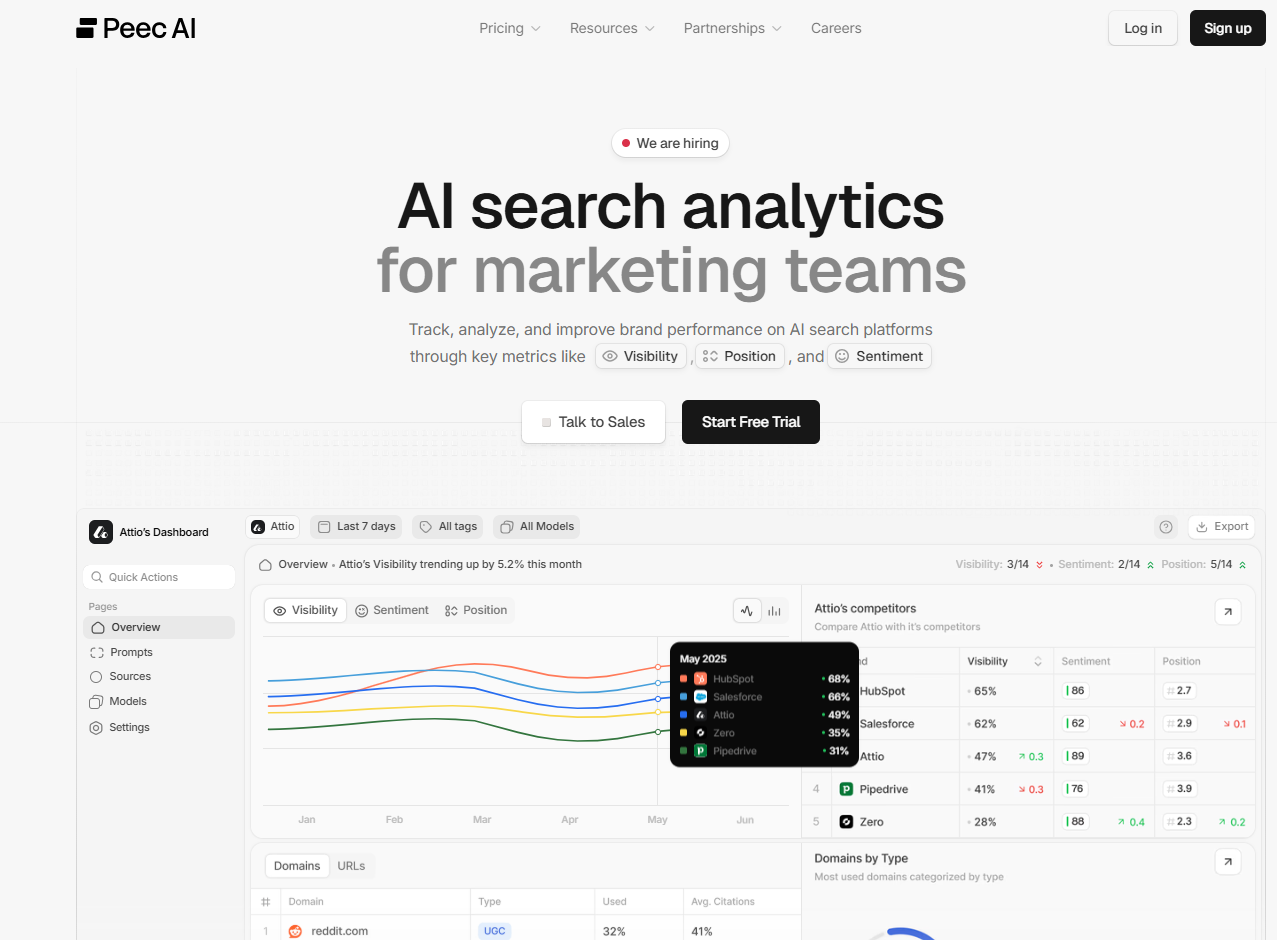
Peec AI helps teams track how their brand appears in AI answers and which sources influence those results.
What it Tracks
- Prompt-level AI visibility
- Brand mentions across engines
- Citation sources and URLs
- Share of voice by topic
- Competitor comparisons
Pros
- Fast setup: Delivers visibility and citation insight quickly.
Cons
- Costs can rise fast: Pricing scales as you add prompts and engines.
- Lighter enterprise depth: Less suited for teams needing advanced integrations or automation.
Pricing
Who Peec AI is Best For
- SEO and content teams: Using prompt and citation data to guide updates.
- Marketing leads: Tracking AI share of voice across priority topics.
4. Scrunch
Scrunch tracks how your brand appears in AI answers and helps make your site easier for AI agents to read and cite through its AXP layer.
What it Tracks
- Brand mentions in AI answers
- Citations and source links
- Prompt-level visibility trends
- Competitor share of voice
Pros
- AXP layer: Serves an AI-friendly version of your site for better AI parsing and citation.
Cons
- Heavier setup: AXP needs implementation and ongoing ownership.
- Plan limits: Prompt and audit caps may push teams to higher tiers.
Pricing
Who Scrunch is Best For
- Enterprise SEO teams: Tracking AI mentions and citations across many topics.
5. Ahrefs
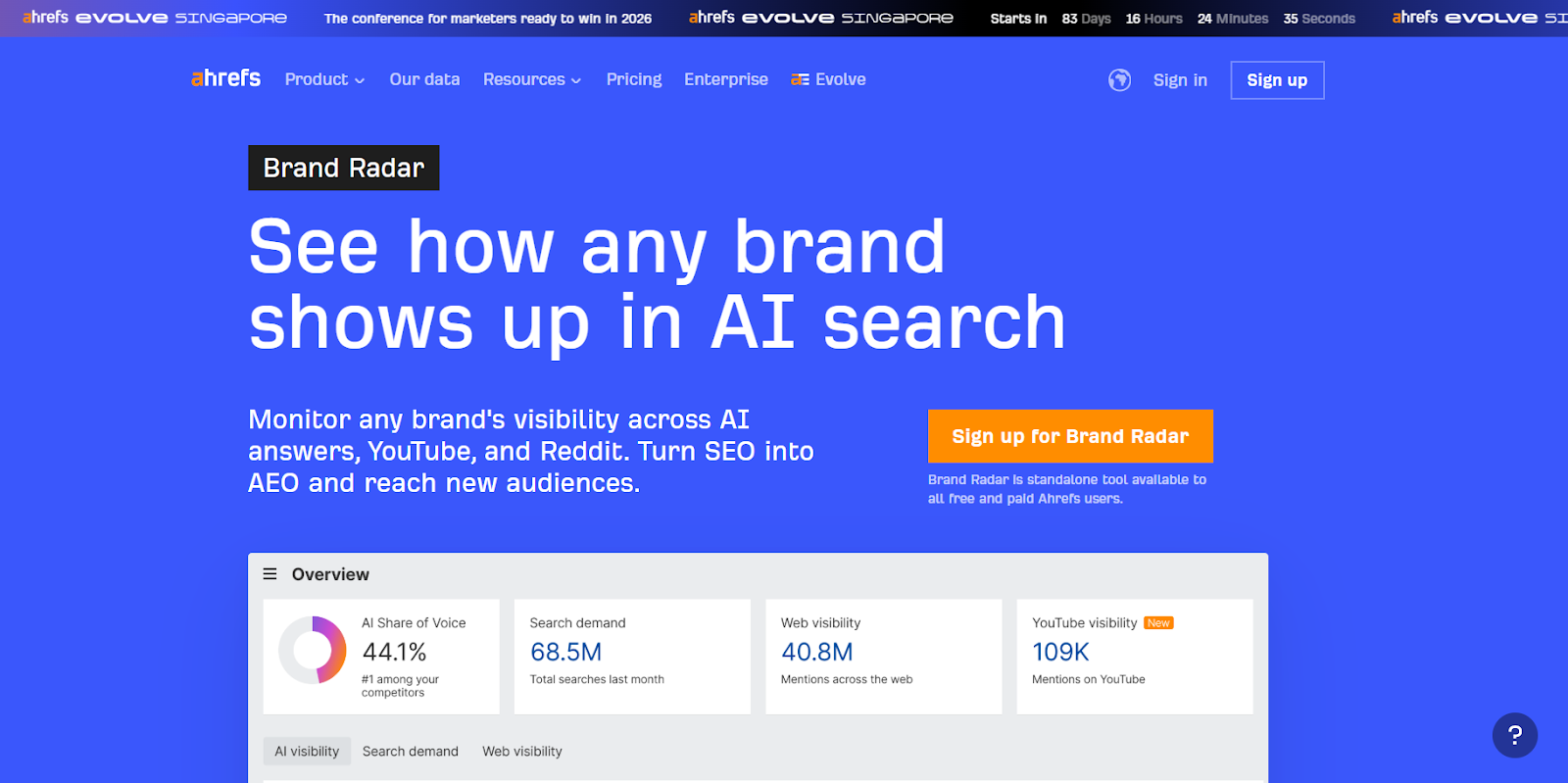
Ahrefs adds AI brand monitoring to its broader SEO platform through Brand Radar. It helps teams track brand mentions in AI answers and compare visibility against competitors without leaving the wider Ahrefs ecosystem.
What it Tracks
- Brand mentions in AI answers
- AI search visibility
- Competitor share of voice
- Topic and channel comparisons
Pros
- All-in-one context: Connects AI visibility with keywords, content, and backlinks in one suite.
- Useful for benchmarking: Good for comparing brand presence against competitors fast.
Cons
- Extra cost: Brand Radar can add to the cost of core Ahrefs plans.
- Less action-focused: More useful for monitoring than fixing page-level visibility issues.
Who it’s Best For
- SEO and content teams: Tracking AI visibility alongside broader SEO reporting.
3. Track Mentions Using Custom Scraper/Automation
A custom workflow makes sense when you want more control, have internal engineering support, or need to feed AI visibility data into your own dashboards.
Step 1: Set Up Your Variable Inside an Automation Platform Like n8n
Inside n8n, create a Code node where you define three things: your brand name (e.g. "Nike"), a list of 10-20 questions like "What's the best running shoe brand?", and a list of competitor names like "Adidas, Puma."
Step 2: Connect to ChatGPT API
Add an HTTP Request node that sends each of your questions to OpenAI's API automatically, one by one, and collects every response.
Step 3: Scan the Responses
A second Code node reads each answer and checks whether your brand was mentioned and whether any competitors were mentioned. It flags yes or no for each question.
Step 4: Log It All to Google Sheets
Every result gets saved in a row including the date, the question asked, the AI response, and whether your brand appeared. This builds your historical data over time.
Step 5: Get a Daily Email Report
n8n compiles everything into a clean HTML email showing your total mentions, competitor mentions, and a full breakdown, delivered to your inbox every morning automatically.
But API-based monitoring will not always match exactly what a live user sees in ChatGPT’s interface, so it is better for trend tracking than for perfect user-facing result validation.
Tools like WorkDuo position real-time browser tracking as a more accurate way to capture live AI output.
How to Know if Your AI Brand Mentions are Working
This is how you know your AI brand mentions are working.
Best Practices to Improve Your Brand Visibility in AI Search
Here are a few best practices proven to improve brand visibility in AI search.
Common Mistakes to Avoid When Tracking AI Brand Mentions
The biggest mistakes to avoid when tracking AI brand mentions are:
Use Cases for Tracking Brand Mentions in AI Search
The strongest use cases for tracking brand mentions in AI search are:
- Protect visibility before the click: See whether the brand shows up in AI answers before users ever visit a site.
- Benchmark competitors: Spot when competitors are recommended instead and find share-of-voice gaps.
- Monitor sentiment and framing: Check whether the brand is described accurately and positively.
- Find source and prompt gaps: Identify which prompts and sources are shaping answers, and where coverage is missing.
- Track changes over time: Catch shifts in visibility, citations, and competitor movement early.
- Connect visibility to business impact: Link AI mentions to branded search growth, referral patterns, and better demand signals.
AI Search Monitoring Checklist
Use this checklist to make sure your AI search monitoring is consistent, comparable, and useful over time.
Before you start:
- Build a fixed prompt bank
- Choose the AI platforms to monitor
- Define your competitors
During tracking:
- Log mentions, citations, sentiment, and position
- Compare share of voice across the same prompts
- Save screenshots or exports for reference
To measure impact:
- Track AI traffic in GA4
- Watch post-click behavior
Tie mentions to leads, demos, or sign-ups - Set alerts for major changes
Start Tracking Your AI Brand Mentions with WorkDuo
AI brand visibility is too important to leave to guesswork. WorkDuo helps you track mentions, citations, sentiment, and competitor comparisons across major AI engines, so you can see how your brand shows up where decisions happen. Turn scattered checks into clear visibility data with WorkDuo’s free trial.
FAQs
How Often Should I Track Brand Mentions in AI Search?
Track them weekly at minimum, and more often during launches, PR pushes, major content updates, or competitor moves.
How Accurate Are AI Brand Mention Tracking Tools?
They are directionally useful, but accuracy depends on method. Tools using live browser-based monitoring are generally closer to real user-facing results, while API-based outputs can differ by environment and retrieval setup.
How Quickly Will I See Results from AI Brand Mention Optimization?
Usually within days to a few weeks for some prompts, but broader improvement often takes longer. Google also notes that crawling and re-indexing can take several days after publishing changes.
What Schema or Entities Matter Most?
Start with Organization and Product, then add Review or AggregateRating where relevant. Structured data helps Google understand pages, products, companies, and attributes more clearly.
How Is a Mention Different from a Citation?
A mention is when AI names your brand in an answer. A citation is when it also points to a source, page, or publisher that supports that answer.
Can I Track AI Brand Mentions for Free?
Yes, up to a point. You can manually test prompts across AI platforms, log results in a spreadsheet, and use GA4 custom channel groups and explorations, but scaling usually needs a paid tool.
Fiona is the Co‑Founder of WorkDuo AI, where she helps brands optimize their AI search visibility. Previously, she co‑founded SHOPLINE, a smart commerce platform in Asia, and led its successful exit to a NASDAQ‑listed company in 2022. With deep expertise in scaling tech businesses and working with global investors, Fiona now advises startups on growth and data-driven decision-making, while leading WorkDuo’s mission to improve how brands are represented in AI-driven search.

Ready to try our product?
Sign up for a free consultation with our experts.


Follow Us on Social Media
Follow our profiles for daily updates, behind-the-scenes content, and more.

More articles