Peec AI vs Writesonic: A Detailed Comparison [2026]
.png)
- Peec AI: Best for SEO teams, agencies, and budget-conscious brands that want focused AI visibility tracking. It is a strong fit for teams that care most about visibility, sentiment, citations, prompt tracking, and competitor benchmarking without needing a built-in content workflow.
- Writesonic: Best for marketing teams that want AI visibility, SEO, and content creation in one platform. It suits content-heavy teams that need not just reporting, but also tools to create, optimize, and scale content based on GEO insights.
- WorkDuo: Best for agencies, e-commerce brands, and multi-brand teams that need real-time AI tracking, product-level visibility, unlimited seats, and scalable project-based pricing. It is especially useful when tracking accuracy and cross-account management matter most.
- Choose Peec AI if: you want a simpler, lighter AI search analytics tool that is easier to roll out and better suited to pure monitoring, reporting, and prompt management than end-to-end execution.
- Choose Writesonic or WorkDuo if: you need more than basic tracking. Pick Writesonic for an all-in-one GEO and content workflow. Pick WorkDuo for stronger real-time visibility tracking, broader practical coverage, and more flexible scaling for teams and agencies.
Most tool comparisons start with features. This one should start with the problem: when AI Overviews show up, organic CTR drops by ~61%, which means “ranking” is no longer the same as “being chosen.”
Peec AI and Writesonic both sit in the AI visibility space, but they optimize for different outcomes, reporting depth versus end-to-end execution. This article helps you pick based on the weekly work you actually need to do.
Peec AI vs Writesonic vs WorkDuo: A Quick Overview
Who Is Peec AI Best For?
Peec AI would be great for:
- Marketing teams and SEO professionals: Want to track how their brand appears in AI tools like ChatGPT and AI Overviews, focusing on visibility, sentiment, and citations instead of traditional rankings
- Agencies managing multiple clients: Need to monitor multiple brands, competitors, and markets, with benchmarking and reporting across regions and prompts
- Teams treating AI search as a real channel: Use GEO/AEO as part of growth strategy and want to understand how AI engines describe and recommend their brand
- SMBs or budget-conscious teams: Prefer a simple, easy-to-use tool with essential metrics like visibility and sentiment without complex setup
- Brands with existing SEO content: Already have traffic and content that AI can pick up, making visibility tracking more meaningful
Who Is Writesonic Best For?
Writesonic is best for:
- Marketing teams needing an all-in-one platform: Want content creation, SEO, and AI visibility tracking in one tool instead of using multiple platforms
- Teams that want both insights and execution: Need not just visibility data (mentions, citations, sentiment) but also tools to create and optimize content based on those insights
- Content-heavy teams and growth marketers: Produce large volumes of blog posts, landing pages, or SEO content and want to scale output efficiently with AI
- Teams entering AI search (GEO) seriously: Want to track visibility across ChatGPT, Google AI Overviews, Gemini, and more while identifying content gaps and opportunities
- Businesses managing multi-market or multilingual SEO: Need to track AI visibility across countries and languages in one dashboard for global campaigns
WorkDuo: A Better Fit Than Writesonic and Peec AI for AI Visibility Tracking
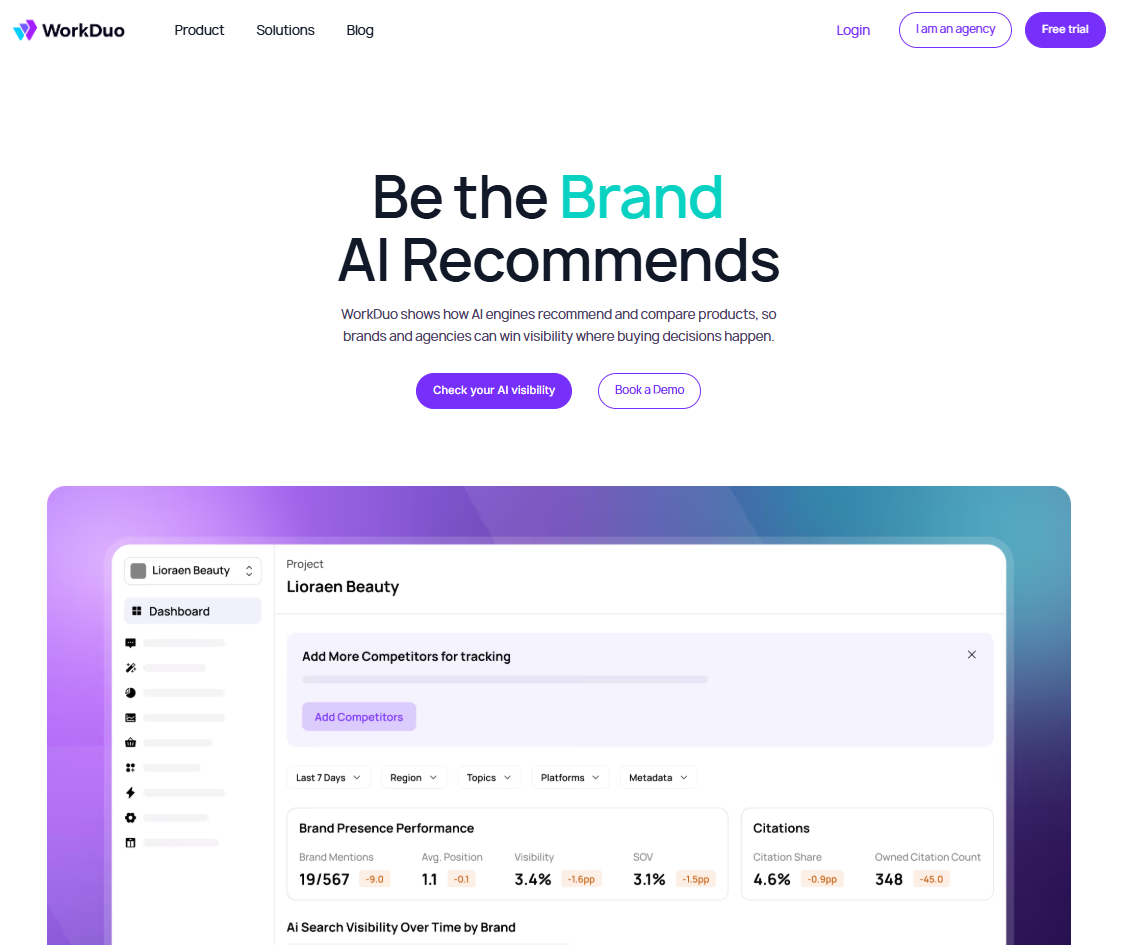
WorkDuo is a real‑time AI search visibility and sentiment platform designed for agencies and brands. Unlike other tools that poll APIs, WorkDuo uses browser‑based scraping to capture exactly what users see in ChatGPT, Perplexity, Gemini, Google AI Overviews, DeepSeek, Claude, and Copilot.
Why WorkDuo Is a Compelling Alternative
WorkDuo emerges as a strong alternative to both Writesonic and Peec AI for several reasons:
1. Lower Barrier to Entry and Better Scalability
WorkDuo’s Starter plan costs $33 per project/month with unlimited seats, while Writesonic’s entry plan is $249/month for only two users and Peec AI’s Starter is $95/month.
For agencies managing multiple team members or clients, paying by project rather than by seat makes WorkDuo significantly more cost‑effective.
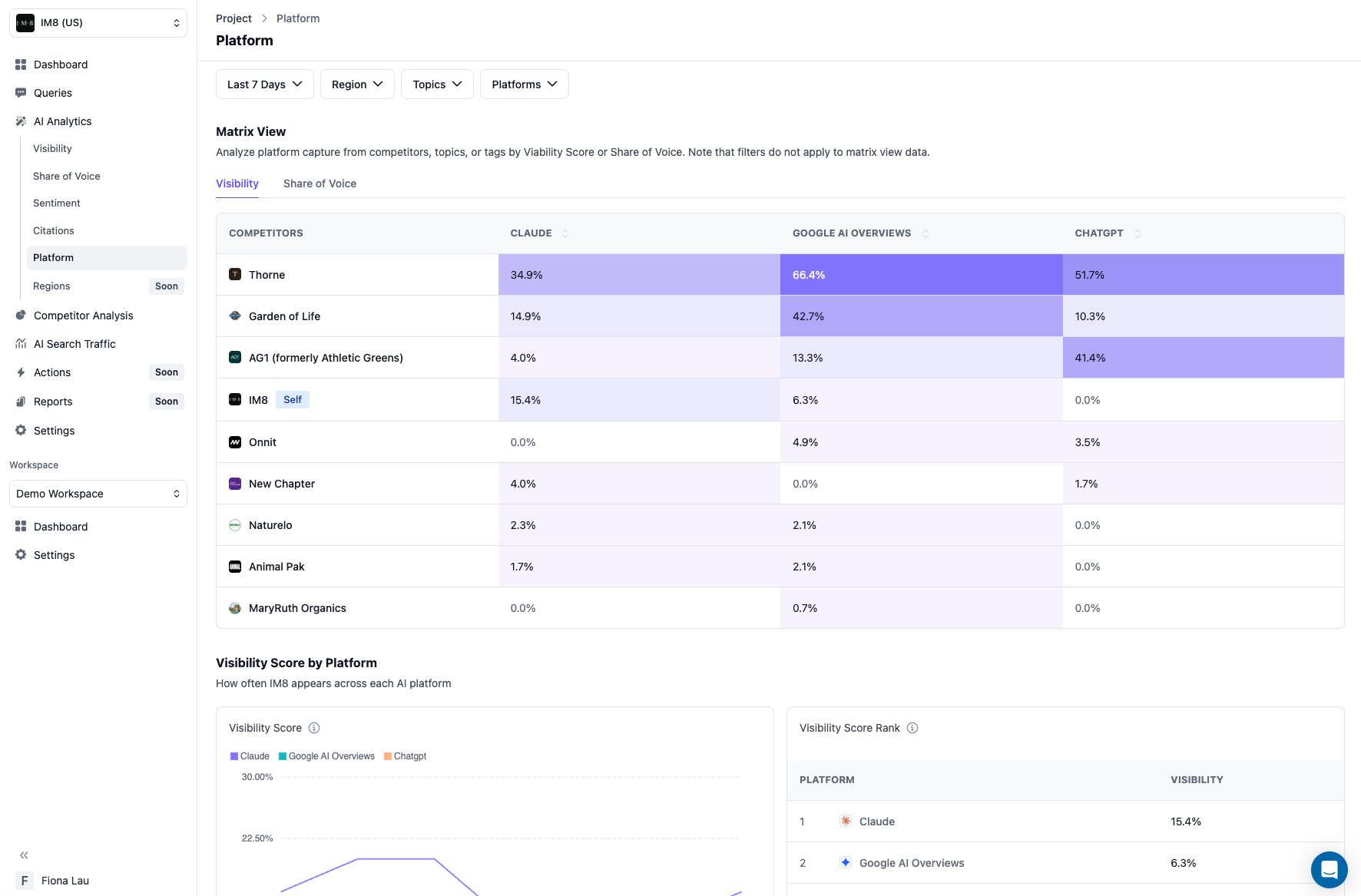
2. Comprehensive Engine Coverage at Lower Tiers
Even WorkDuo’s starter tier supports multi‑engine coverage, whereas Writesonic restricts multi‑engine monitoring (Perplexity, Claude, Copilot, Grok) to its Enterprise plan and Peec AI limits lower‑tier plans to three models.
This means WorkDuo users can monitor all major AI surfaces without jumping to high‑end plans.
3. Deeper Narrative and Sentiment Analysis
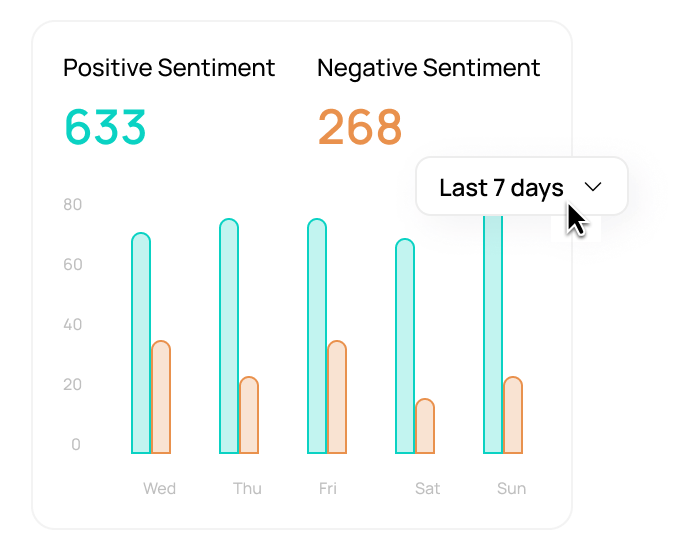
WorkDuo goes beyond “visibility” by analysing the narratives and sentiment associated with a brand, showing which strengths and weaknesses AI tools highlight. Peec AI offers basic sentiment scores without context, and Writesonic’s sentiment analysis is limited to higher tiers.
4. Agency‑Friendly Features
Unlimited seats, white‑label reporting and API access allow agencies to integrate WorkDuo’s data into their own reporting stacks and brand the reports for clients. Writesonic charges per seat and offers white‑label features only at the enterprise level, while Peec AI lacks advanced integrations
Peec AI vs Writesonic: Price
Pricing is often a deciding factor, so let’s look at both tools side by side and see which one offers the stronger value.
Peec AI Pricing
Peec AI offers four pricing tiers for brands and four for agencies.
For Brands
For Agencies
Writesonic Pricing
Writesonic has three plans designed for SEO and AI content workflows.
Our detailed Peec AI review breaks down exactly how these tiers scale based on features.For
Peec AI vs Writesonic Price Verdict
Peec AI offers stronger pricing value if your main goal is AI Search tracking, especially because its plans include unlimited users, more projects, and clearer scaling for brands and agencies. Writesonic can be the better value for teams that also want built-in SEO, AI content creation, site audits, and content workflow tools, but for pure AI visibility monitoring, Peec AI looks more cost-effective.
Peec AI vs Writesonic: Ease of Use
Let’s break down both tools and see which one is easier to use in day-to-day work.
Peec AI: Ease of Use
Peec AI comes across as the simpler tool to get moving with quickly. Its docs say the quickstart takes less than 10 minutes, its onboarding materials say teams can get actionable insights within the first week, and its site emphasizes a straightforward flow of setting up prompts, seeing visibility, and acting on top citations.
Writesonic: Ease of Use
Writesonic still looks user-friendly, but it appears to have a bit more interface depth because it combines GEO, content, analytics, and action workflows in one product.
Its docs walk users step by step from project setup to metrics interpretation and action, and its overview page is designed as one central dashboard for visibility, citations, competitors, sentiment, and prompt-level data.
That makes it structured and learnable, but it also suggests more moving parts than Peec AI.
Peec AI vs Writesonic Ease of Use Verdict
Peec AI has the edge because it looks more focused, lighter, and faster to grasp. Writesonic is still approachable, but it seems better suited to teams that are comfortable with a broader platform and a little more complexity in exchange for more functionality.
Peec AI vs Writesonic: Customer Support
These support differences can help you see which platform is more likely to support your team well after sign-up.
Peec AI: Customer Support
Peec AI’s public support setup looks direct and practical rather than heavily layered. Its docs point users to product documentation, a help center, and direct support from the team, and its onboarding materials say the team helps users get actionable insights in the first week.
Peec also offers sales calls and its Looker connector docs explicitly direct users to support when setup issues come up, so the overall support model looks hands-on but fairly lightweight.
Writesonic: Customer Support
Writesonic’s support appears more tiered and expansive. Publicly, it offers help-center documentation, support by email, and personalized onboarding for GEO, while its enterprise plan adds a dedicated account manager, strategist, and white-glove onboarding. That makes Writesonic look stronger for teams that may need more structured onboarding and higher-touch support as they scale.
Peec AI vs Writesonic Customer Support Verdict
If customer support is the deciding factor, Writesonic looks stronger because its public support model is more layered, especially for larger customers. Peec AI still looks solid and hands-on, but it appears more lightweight and direct than enterprise-heavy.
Peec AI vs Writesonic: Integrations
If reducing manual work is a priority, integrations can make a big difference in how smoothly a tool fits into your workflow. These differences can help reveal which platform may fit better into your existing stack.
Peec AI: Integrations
Peec AI shows a lighter integration setup that is centered on reporting and custom data access, so it fits better for teams that mainly want to plug AI visibility data into dashboards and internal workflows rather than into a large technical stack.
- BI and reporting: Google Looker Studio community connector for custom dashboards and client-ready reporting.
- API: Customer API is available in beta and currently limited to Enterprise customers.
- Exports: CSV exports for sharing insights and building reports in other tools.
- Workflow fit: Public docs position Peec AI as something that can plug into an existing analytics stack for custom analysis and reporting workflows.
- CMS, CDN, and infrastructure: I could not find a broader public list of native CMS, CDN, or server-log integrations beyond reporting, exports, and API access.
Writesonic: Integrations
Writesonic shows a broader integration setup across infrastructure, CMS, BI, and API access, so it fits better for teams that want AI visibility and traffic analytics connected to both marketing workflows and technical implementation.
- CDN and edge infrastructure: Cloudflare, CloudFront, Fastly, Vercel Log Drains, and custom log drains.
- CMS and website platforms: WordPress and Drupal.
- BI and reporting: Google Looker Studio via the GEO Presence connector.
- API: Business API and Chatsonic API access.
- Custom integration path: Writesonic says AI Traffic Analytics can connect to any hosting environment through native connectors or a flexible custom integration pipeline.
Peec AI vs Writesonic Integration Verdict
Writesonic is stronger on integrations because its public setup covers more of the stack, especially infrastructure, CMS, BI, and API-driven implementation. Peec AI covers the essentials well for reporting and custom analysis, but its public integration footprint is clearly narrower
Other-Niche-Relevant-Feature
Comparing the key features side by side makes it easier to see how the two tools differ and what each one brings to the table.
Peec AI
AI Search Metrics
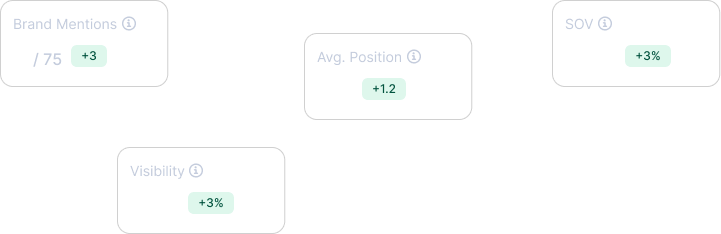
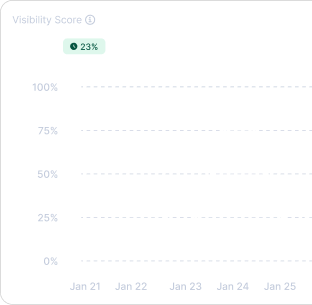
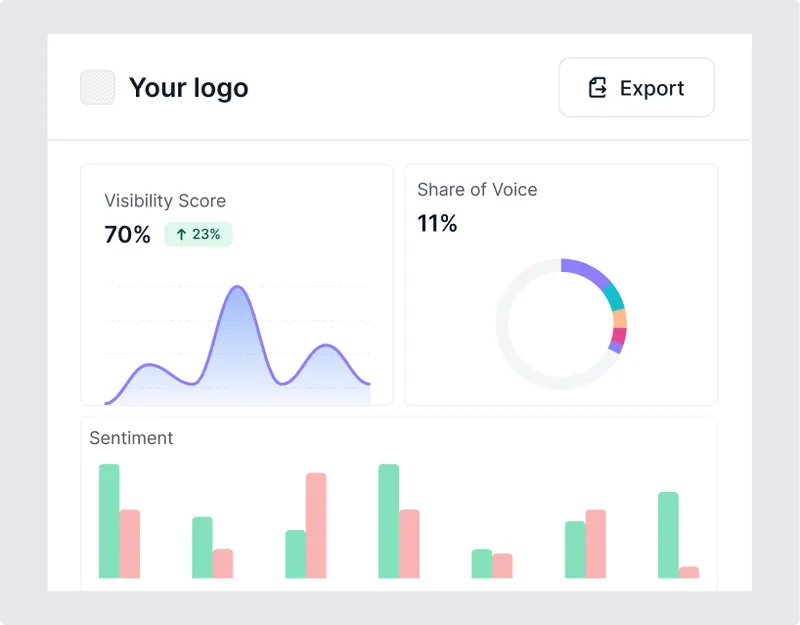
Peec AI focuses on the core measurements of generative engine optimization by tracking how often your brand appears in AI-generated conversations, where it ranks and how it is perceived. Its dashboard reports visibility, or share of chats mentioning you, position, or your ranking within AI answers, and sentiment, or how positively the brand is framed, giving marketing teams a clear baseline to improve..
Prompt Discovery and Management
A key differentiator of Peec AI is its structured approach to managing prompts. The Set up Prompts module helps you uncover and organize the queries that matter most for your brand, while the Use Data to Pick Winners feature leverages AI-suggested prompts and search-volume data so you can focus on the most promising opportunities.
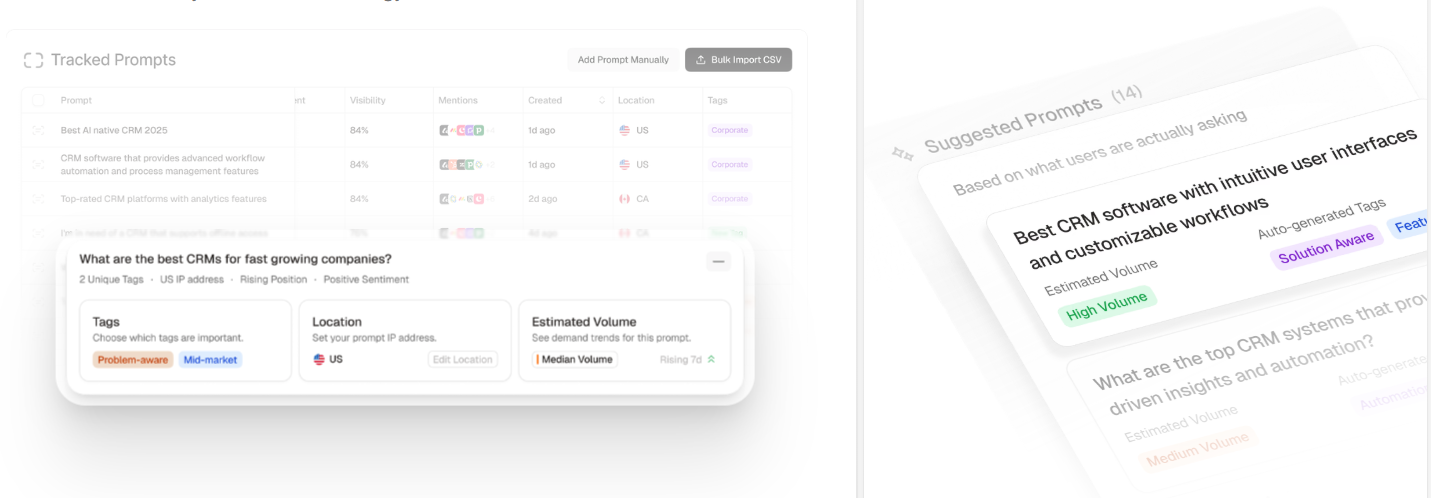
Together, these tools ensure your generative SEO strategy targets the right questions.
Competitor Benchmarking
Understanding your position relative to competitors is critical. Peec AI’s Add Brands function lets you compare your performance against key players in your market, displaying how you rank in AI search for shared prompts.
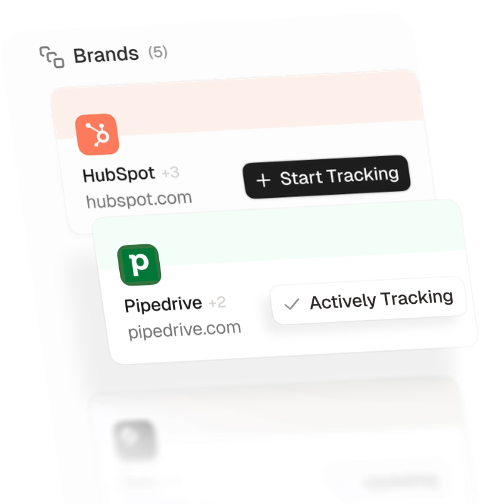
This competitive context helps you pinpoint strengths to capitalize on and weaknesses to address when planning content or outreach.
Model-Specific Tracking
Different generative models have different behaviors. The Choose AI Models feature allows you to track rankings across the engines that matter most, whether that is ChatGPT, Gemini, Perplexity or other models that drive traffic and visibility.
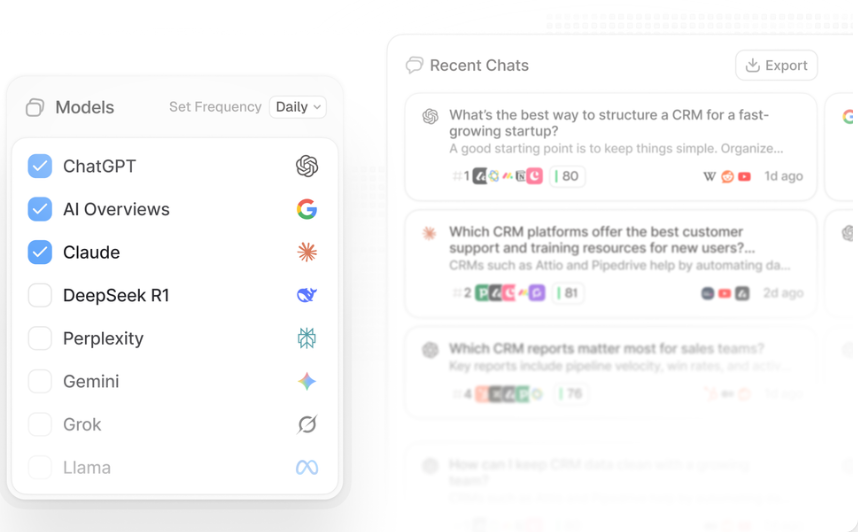
By segmenting performance by model, you can tailor your optimization efforts to each platform’s nuances.
Citation Source Analysis
Beyond ranking, Peec AI helps you understand why AI systems mention certain brands. The Find Key Sources module identifies which websites and publications are shaping your visibility, showing where citations originate.
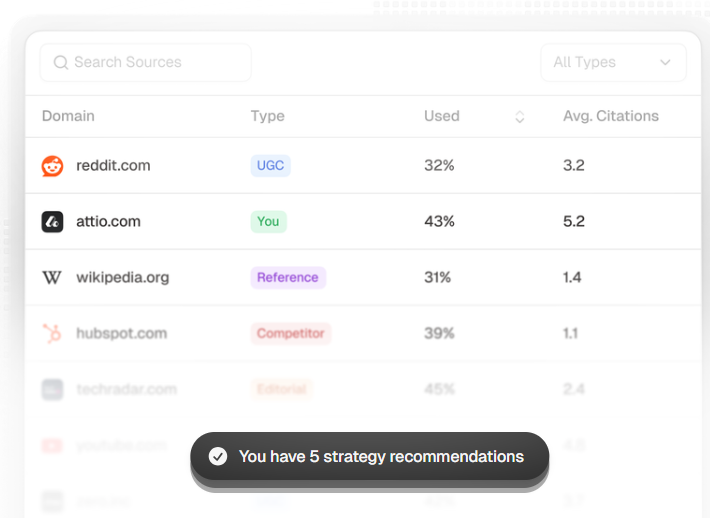
This insight guides outreach and content partnerships so you can secure the authoritative mentions that influence AI answers.
Actionable Recommendations and Reporting Integrations
Peec AI is not just a dashboard. It offers concrete next steps. Its Act on Insights recommendations suggest actions like building profiles on review sites, engaging in relevant forums and investing in digital PR to increase citations.

Reporting tools allow you to export clean CSV files, connect to Looker Studio or integrate via API, making it easy to share insights and automate workflows.
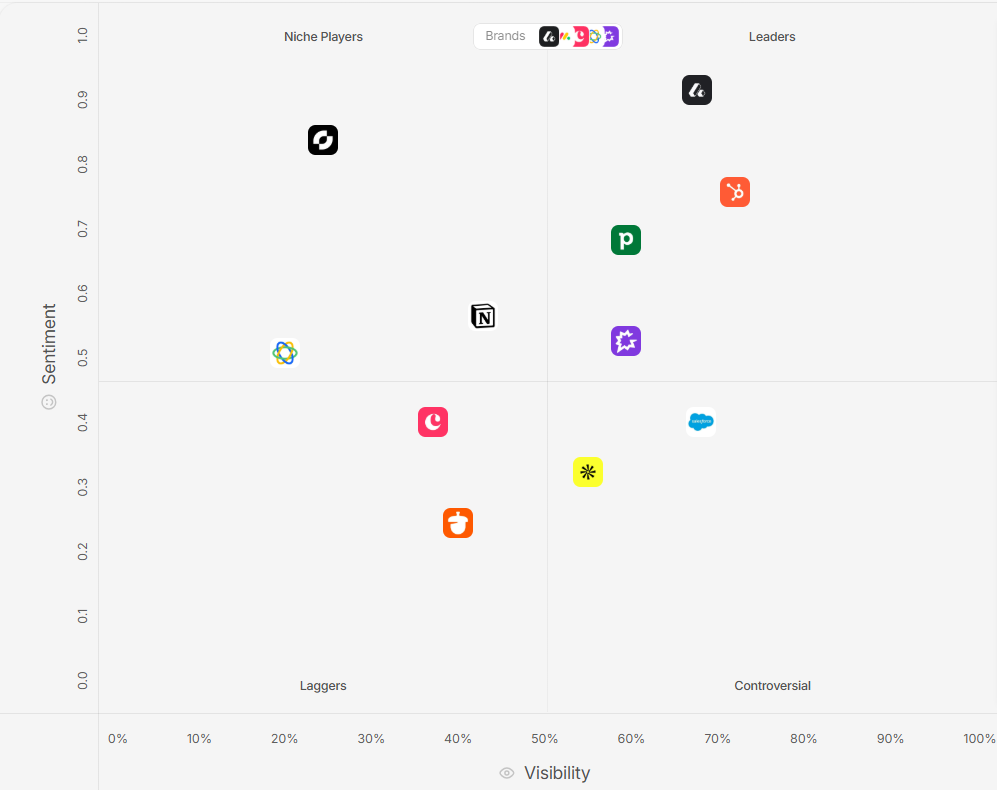
Writesonic
Visibility and Competitive Benchmarking
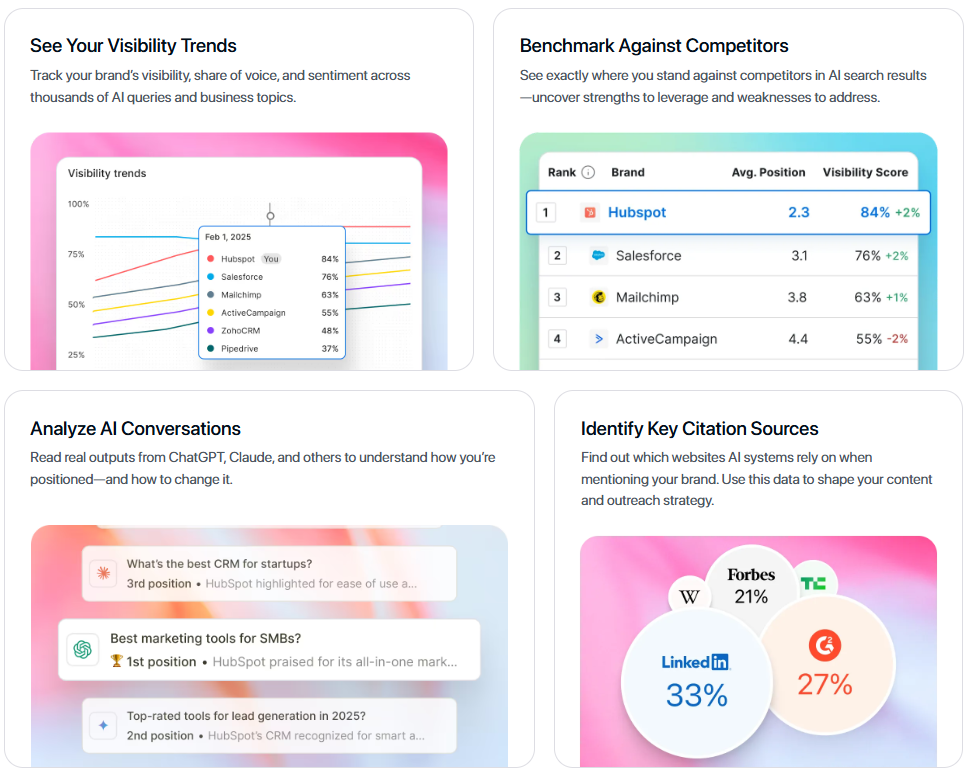
Writesonic’s Brand Presence Explorer gives marketers a 360-degree view of how their brand shows up in generative search.
It tracks visibility trends, share of voice and sentiment across thousands of AI queries and business topics, then benchmarks you against specific competitors. This comparative insight shows exactly where you lead and where you need to improve to capture AI search attention.
Conversation and Citation Insights
Simply knowing you appear is not enough. You need context. Writesonic lets you read real outputs from ChatGPT, Claude and other AI systems to understand how your brand is positioned.
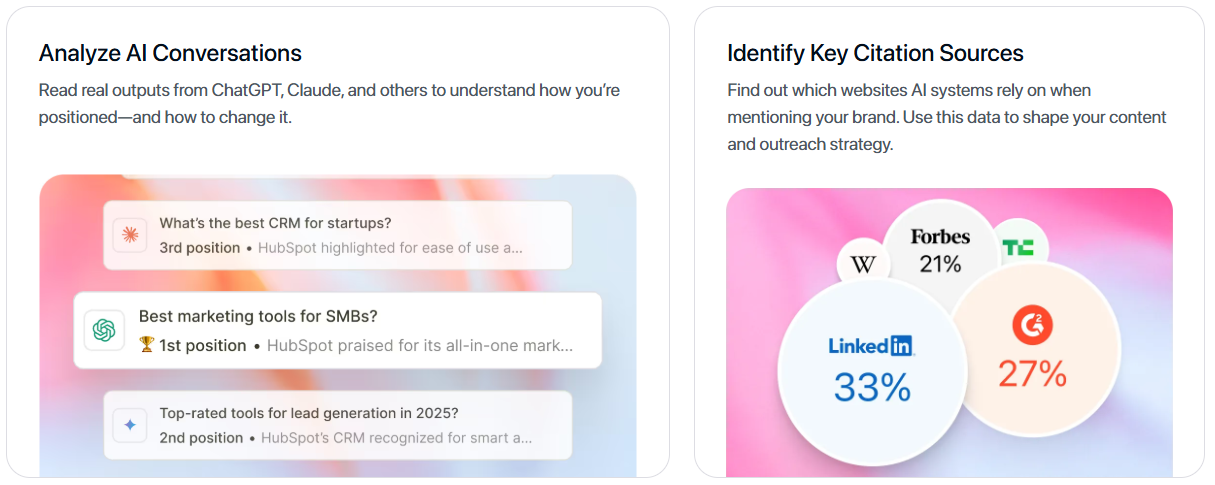
It also reveals which websites these models cite when mentioning you, helping you identify trusted sources and adjust your content and outreach strategies to influence AI answers more effectively.
Actionable Suggestions and Custom Tracking
The GEO platform provides more than analytics. It surfaces instant optimization suggestions to improve visibility, influence AI responses and close content gaps.
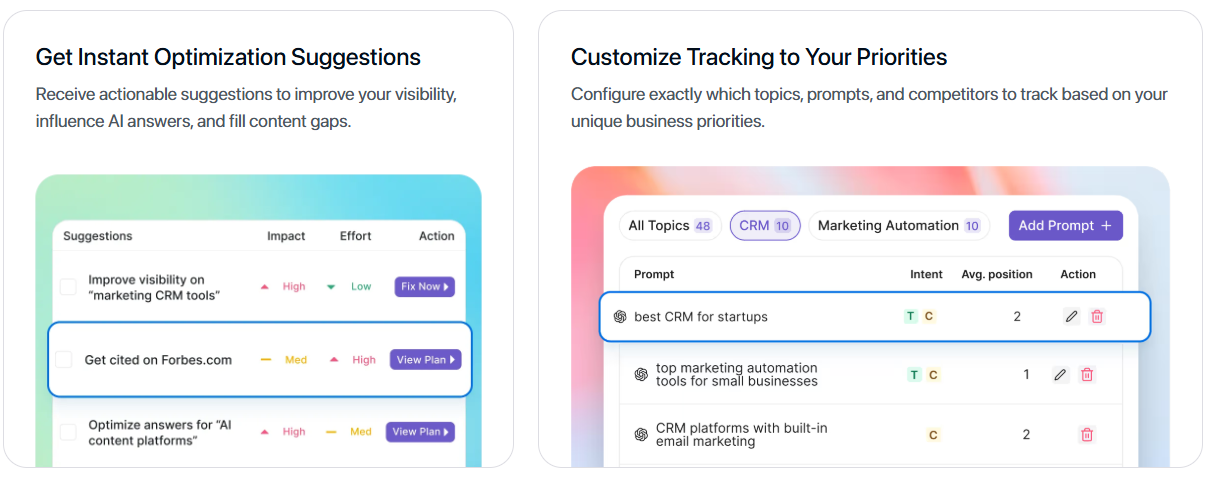
Users can customize tracking by selecting specific topics, prompts and competitors to monitor, ensuring recommendations align with their unique business priorities and are easier to act on.
AI Traffic Analytics
Writesonic exposes a type of traffic that traditional analytics tools miss, AI crawler visits.
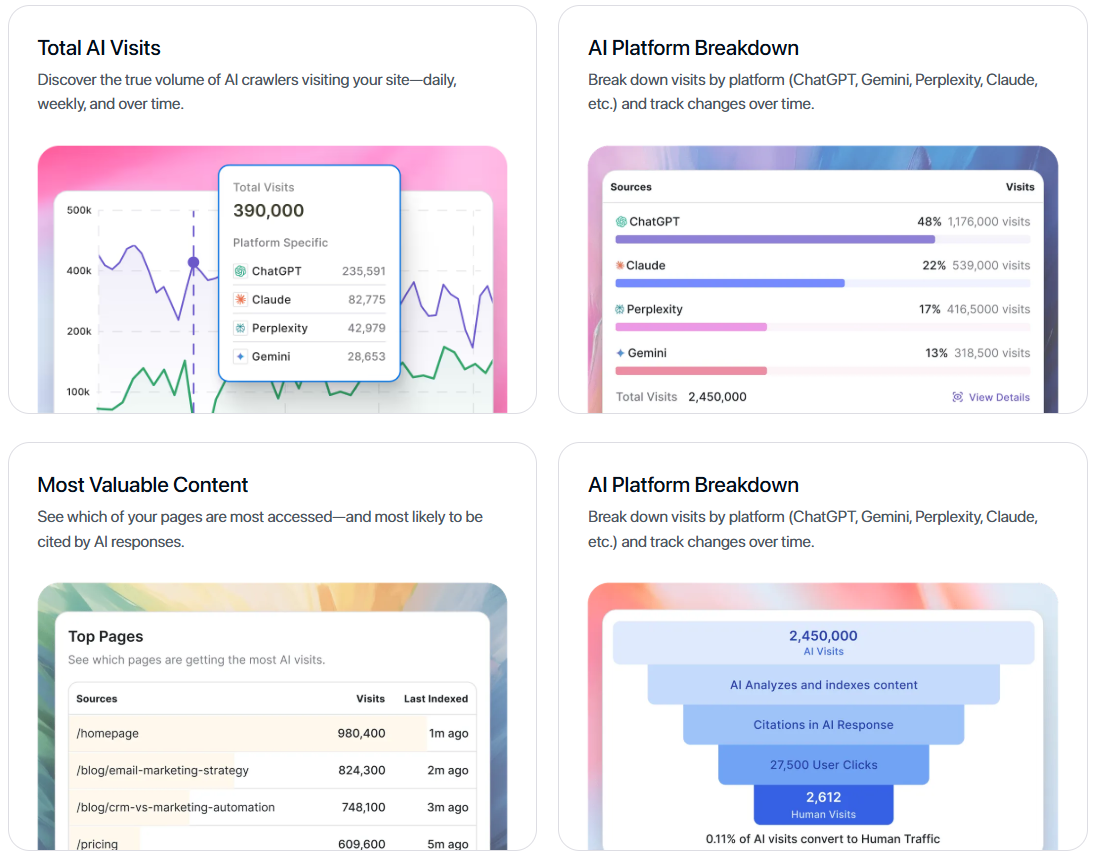
Its AI Traffic Analytics module reveals the true volume of bots visiting your site, breaks these visits down by platform such as ChatGPT, Gemini, Perplexity and Claude, and highlights which pages are most frequently accessed and likely to be cited. This helps you prioritize content updates where AI attention is highest.
Shopping Visibility
For ecommerce brands, Writesonic extends GEO into product discovery. It shows how your products appear in AI-generated shopping results, such as ChatGPT Shopping, tracks your average position and sentiment, and flags competitors to watch.
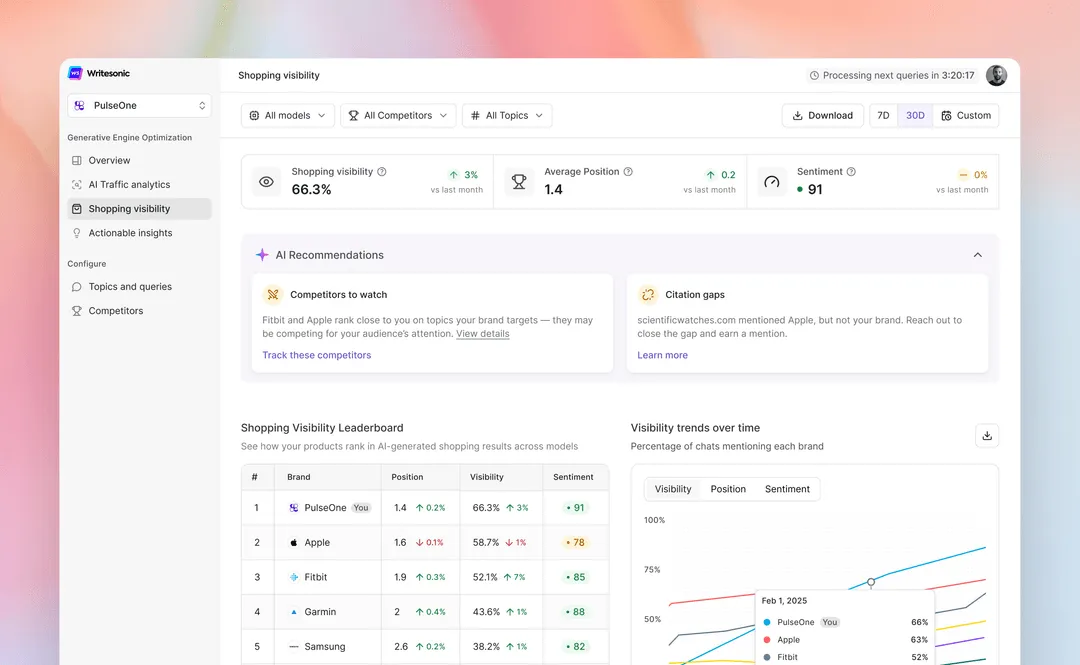
These insights help optimize product descriptions and placement to improve conversion from AI-powered shopping recommendations.
Multi-Platform Coverage
Writesonic monitors your presence across all major AI search engines in a single dashboard, including ChatGPT, Google AI Overviews, Claude AI, Perplexity, Google Gemini, Microsoft Copilot and Meta AI, and automatically adds new platforms as they launch.

This comprehensive coverage ensures you are not blindsided by performance gaps on emerging generative search tools.
Complete Workflow
A major strength of Writesonic is that it consolidates the entire generative engine optimization process. Its workflow guides you from
- Discover: AI Traffic Analytics reveals what content AI values.
- Compare: You benchmark against competitors.
- Optimize: You get AI-specific recommendations.
- Create: You generate and improve content using built-in AI SEO tools.
- Measure: You track improvements in crawler activity and mentions.
- End-to-end approach: Data turns into actions, and actions turn into measurable results.
Verdict
Choose Writesonic if you want a broader all-in-one GEO workflow, because it combines visibility benchmarking, citation and conversation analysis, AI traffic analytics, shopping visibility, multi-platform monitoring, and an end-to-end Discover-to-Measure workflow in one platform.
Choose Peec AI if you want a simpler, more focused AI search analytics tool centered on visibility, position, sentiment, prompt management, source analysis, competitor tracking, and actionable recommendations without as much emphasis on a built-in content execution layer
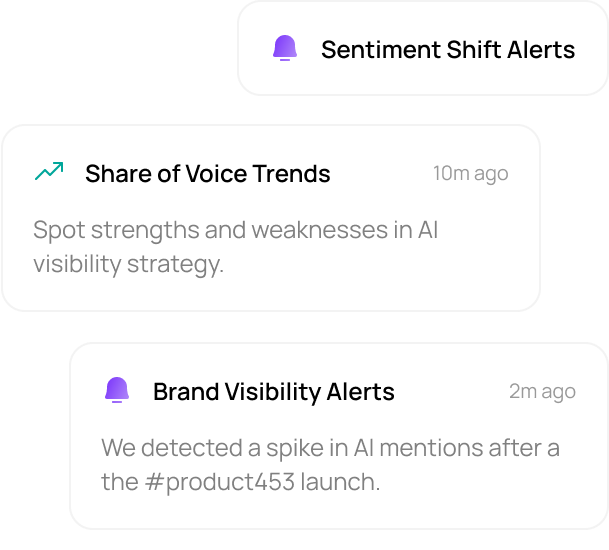
How to Choose an AI Visibility Software
These are some of the core factors to assess when choosing an AI visibility tool.
1. Look for Tools That Capture What Users Actually See
Not all GEO platforms collect data in the same way. Some depend heavily on LLM APIs, while others pull insights from live browser environments. That matters because API-generated outputs do not always match the AI results people see in real search experiences.
If accurate tracking is important, platforms that monitor live results are usually the better choice. WorkDuo stands out here because its real-time tracking gives teams a more realistic picture of their visibility across AI search.
2. Choose Software That Turns Insights Into Action
A good GEO platform should do more than show mentions, rankings, and citations. It should also help you understand what those signals mean and point you toward the next step, whether that is improving content, widening prompt coverage, or fixing weak visibility areas.
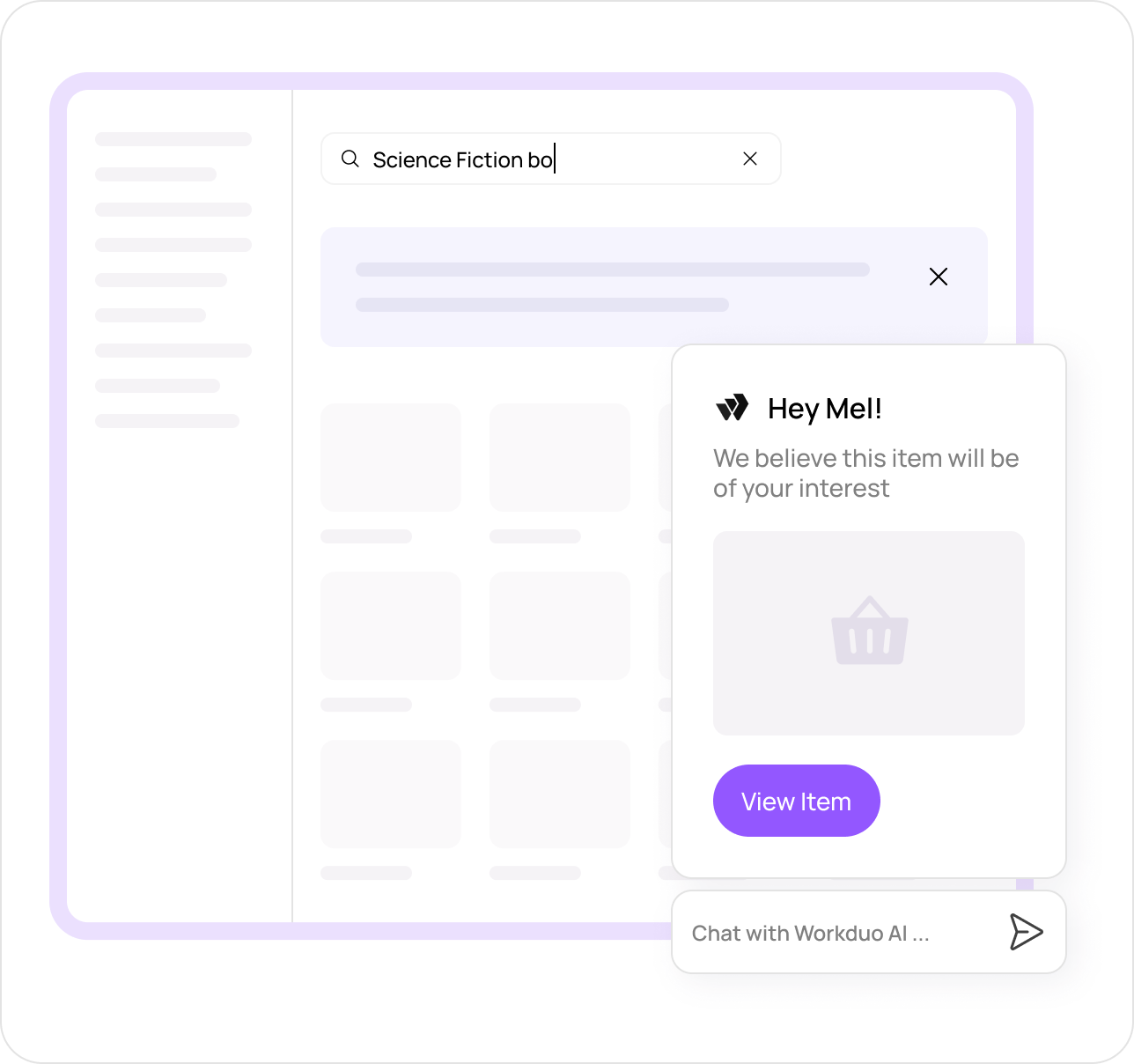
Tools that help teams take action tend to be more useful in day-to-day work. WorkDuo performs well here because it is built to turn visibility data into practical recommendations.
3. Assess Value Based on What You Can Actually Use
Cost is only one part of the equation when comparing GEO software. What matters more is how much tracking depth, model coverage, and usable monitoring capacity you get for the price.
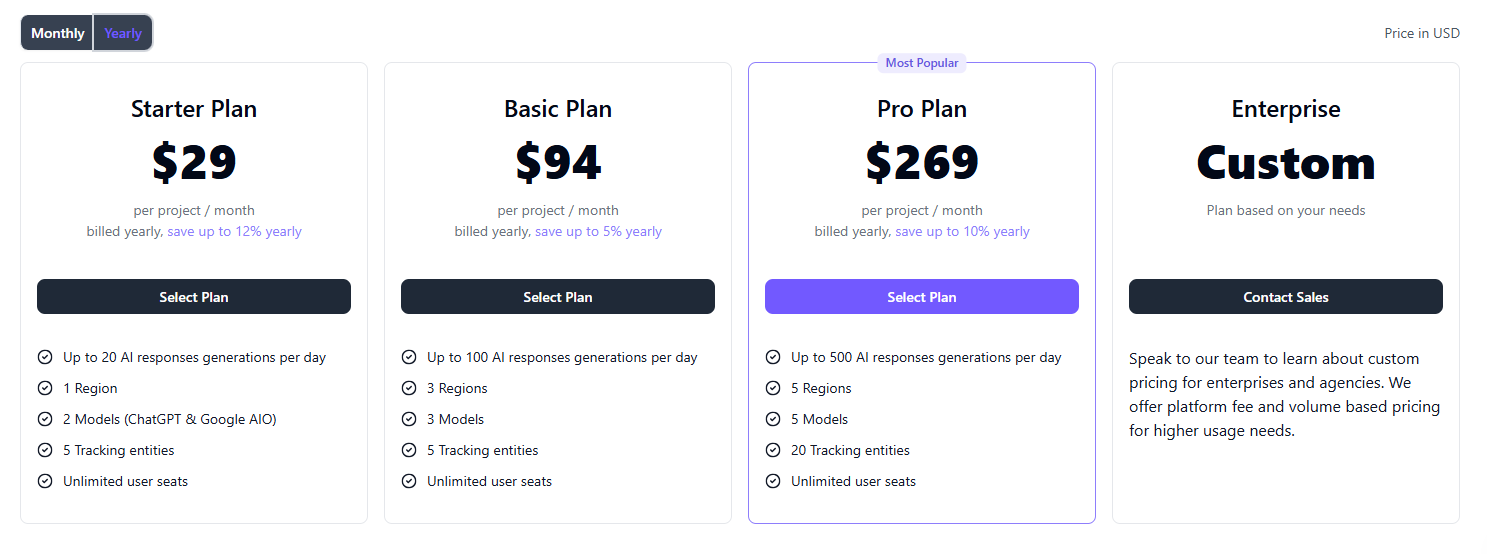
A lower-priced plan may still feel restrictive if it does not support regular use. That is why it is smarter to weigh pricing against real usage needs, and WorkDuo is appealing because it offers coverage that feels more practical for ongoing work.
4. Check Whether It Can Support Both Brands and Agencies
Flexibility becomes more important when you are managing several brands, internal teams, or client accounts. Features like project-based workspaces, flexible tracking controls, and scalable reporting can make growth much easier without adding too much complexity.
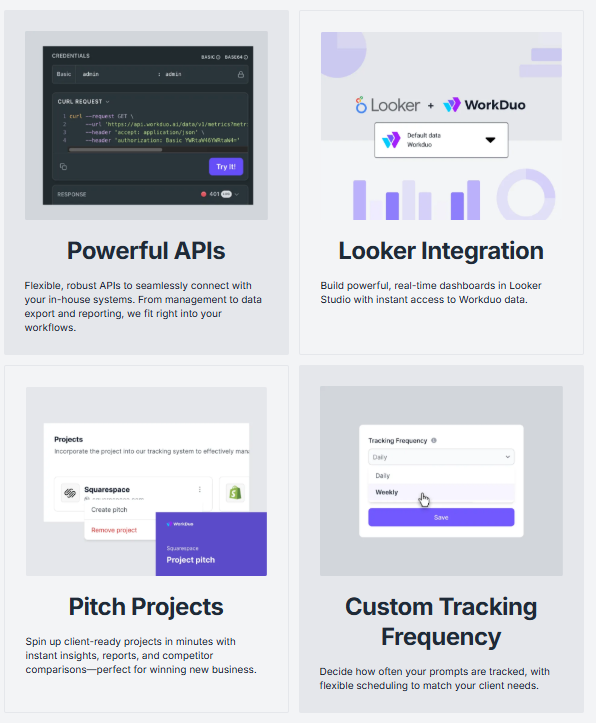
The best GEO monitoring tools should work well for both in-house teams and agencies. WorkDuo is a strong fit here because it is built to support both types of workflows effectively.
5. Evaluate Regional and Market Coverage Carefully
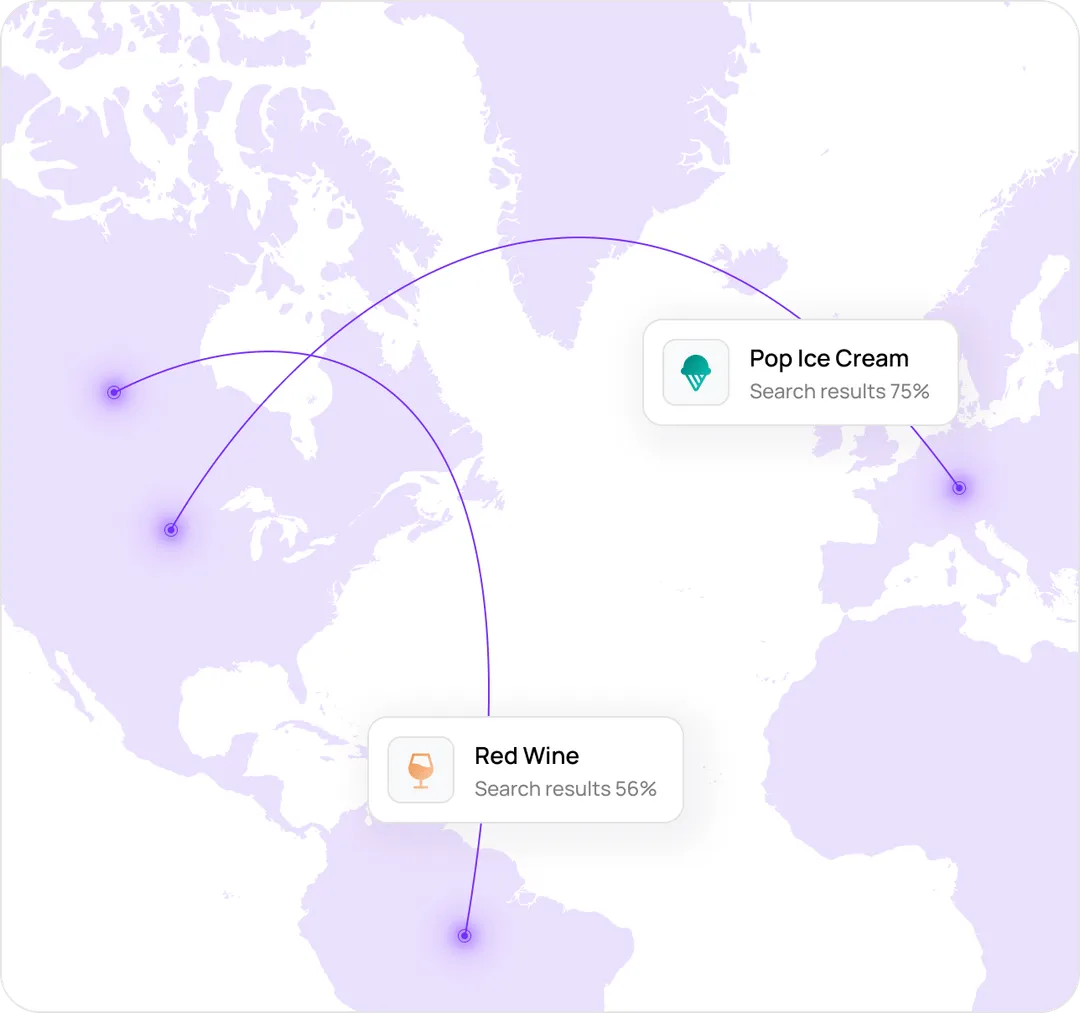
AI search results can vary a lot depending on the market, region, and language, so coverage should be part of any serious evaluation. It is worth checking what each plan includes and how expensive it becomes to add more regions over time.
For companies operating across multiple markets, this can affect long-term value quite a bit. WorkDuo stands out again because it gives teams broader market visibility without pushing them straight into a costly top-tier plan.
Alternative To Peec AI and Writesonic: WorkDuo
WorkDuo is an AI search visibility platform that tracks how brands appear across major AI engines in real time, with sentiment analysis, competitor benchmarking, and project-based pricing with unlimited seats.
It is a strong alternative to Writesonic and Peec AI because it gives broader multi-engine coverage and deeper brand insights at a much lower starting cost.
Key Features
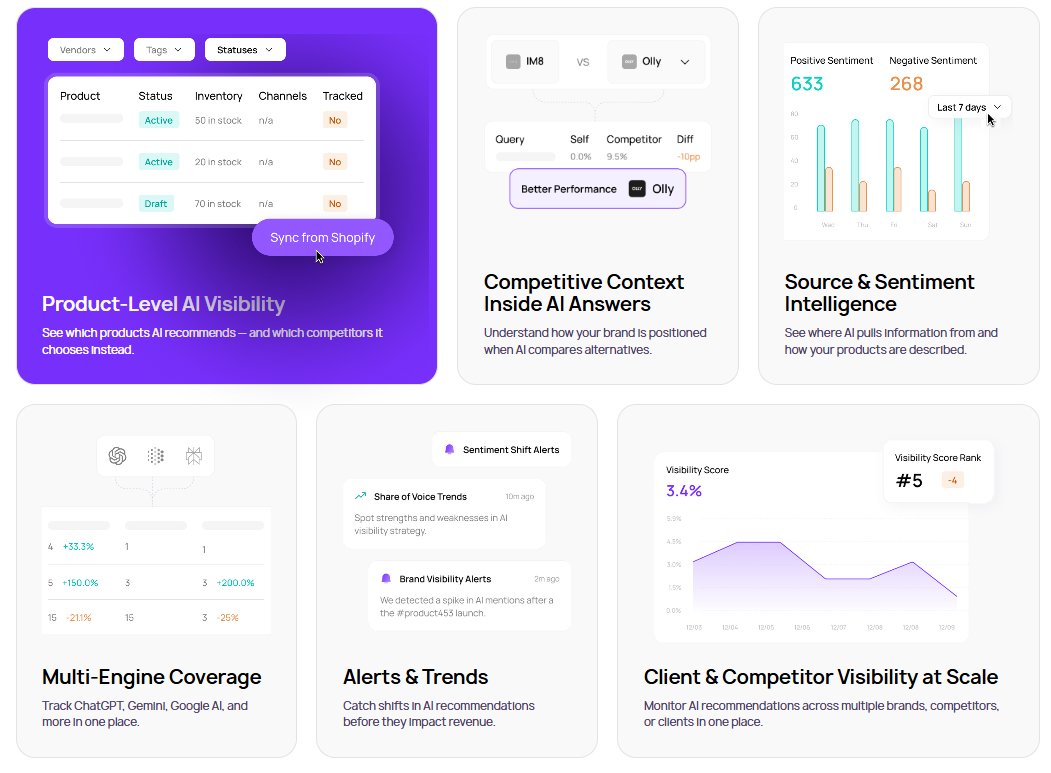
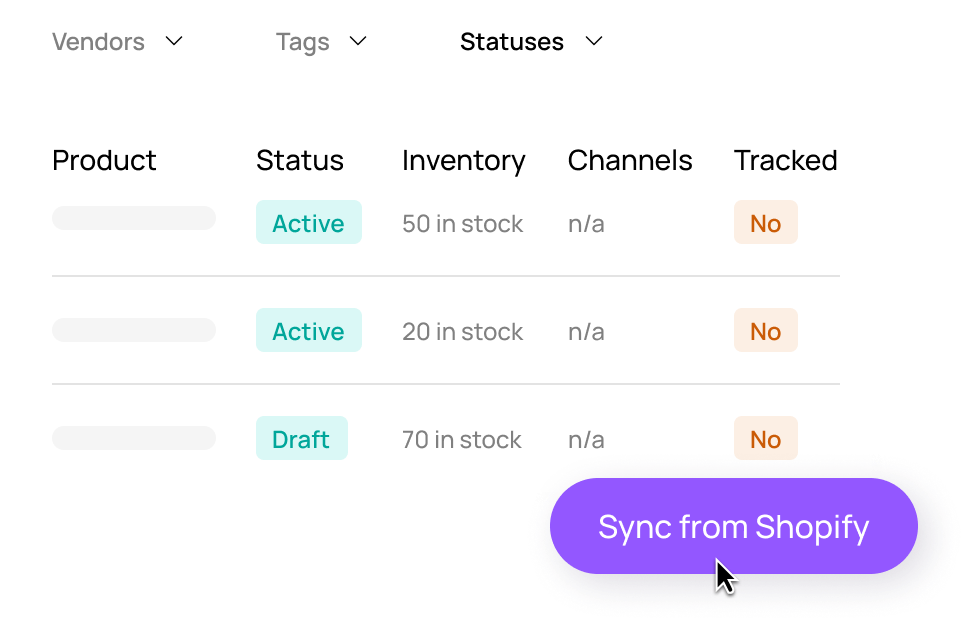
Product-Level AI Visibility
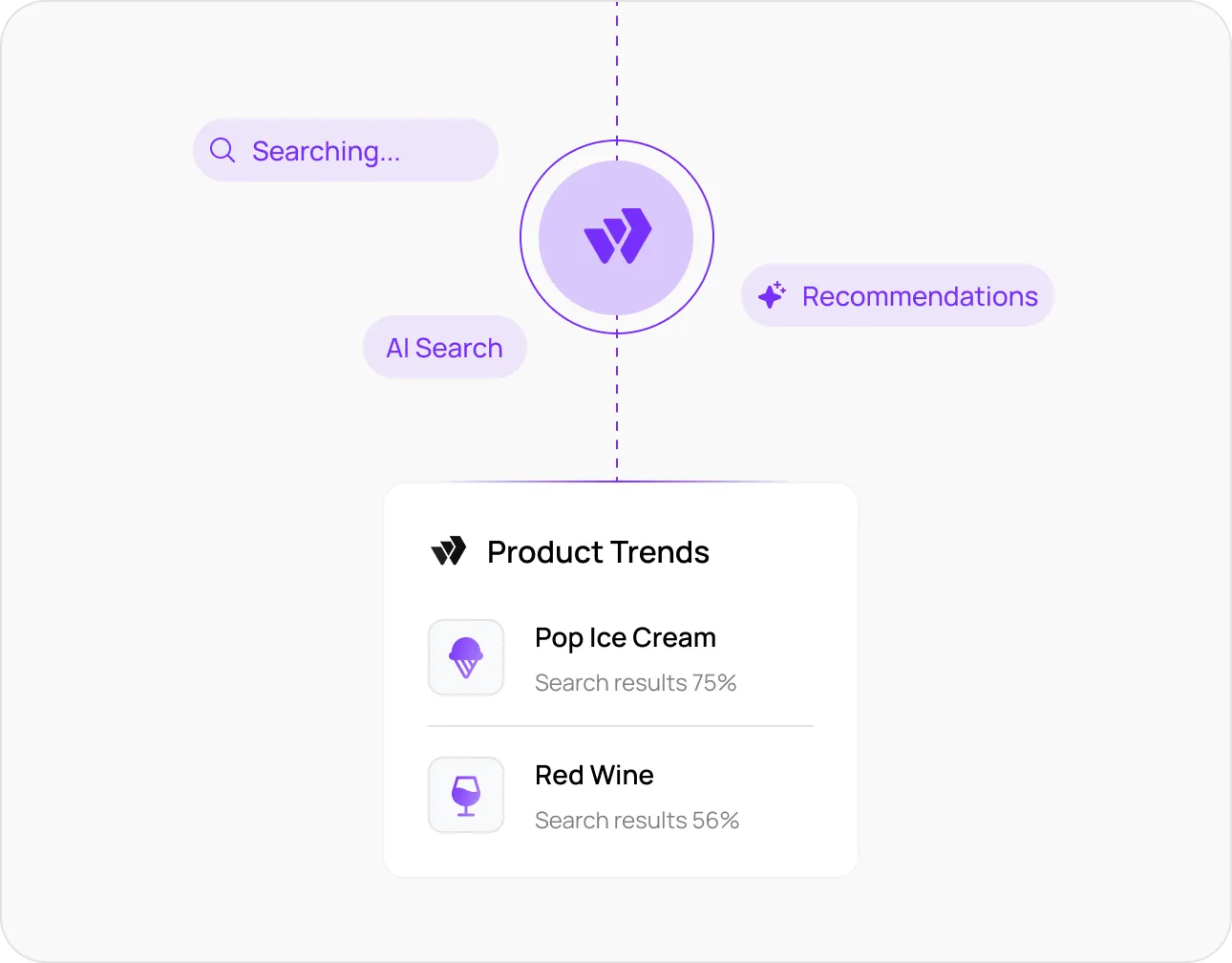
WorkDuo helps teams look beyond brand mentions by showing which individual products appear in AI recommendations. It also highlights which competing products are surfaced alongside them, which is especially useful for e-commerce and product-focused teams.
Competitive Context Inside AI Answers
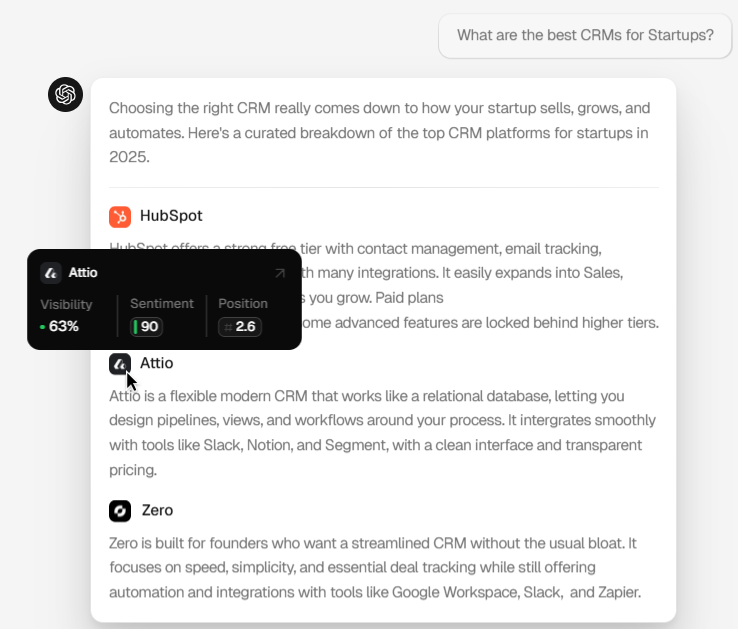
The platform gives you a better sense of how AI engines frame your brand when users ask for alternatives or comparisons. That makes it easier to see whether you are being positioned as a leading option or simply appearing in the mix.
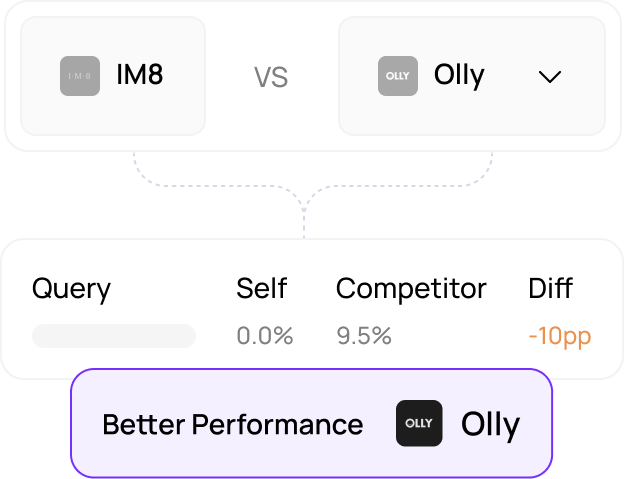
Client and Competitor Visibility Across Multiple Accounts
WorkDuo allows teams to manage visibility tracking for several brands, competitors, and client accounts in one place. This makes it a practical choice for agencies and multi-brand businesses that need a broader cross-account view without relying on separate dashboards.
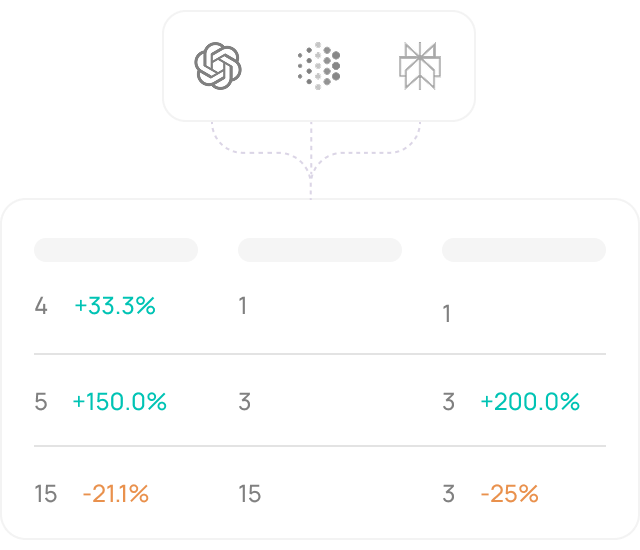
Where WorkDuo Shines
- Project-based pricing flexibility: Teams can start with a small number of projects and expand only when needed. For example, a startup might begin by tracking one brand in one market, then add more projects as it grows.
- Affordable entry and unlimited seats: The pricing model makes it easier for smaller teams and agencies to get started without paying extra for every user. For example, a five-person agency team can all access the platform without increasing seat costs.
- Agency-grade integrations: API access and white-label options make it easier for agencies to build custom workflows and branded reporting. For example, an agency can pull WorkDuo data into its own reporting setup for client presentations.
Where WorkDuo Falls Short
- Not built for AI content generation: WorkDuo focuses on monitoring and analysis rather than generating content. For example, it can show where your visibility is weak, but it will not write a blog post or landing page to fix it.
- No direct publishing workflow: It does not publish content straight to your site or CMS. For example, after spotting a content gap in WorkDuo, your team would still need to update the page manually in WordPress, Shopify or another CMS.
Who WorkDuo Is Best For
- SMBs that want practical visibility tracking: A good fit for smaller businesses that want clear AI visibility data without paying for an enterprise-heavy setup. For example, a growing SaaS company can use it to monitor brand presence across major AI engines.
- Product and e-commerce teams: Especially useful for teams that need visibility at the product or category level. For example, an online retailer can track whether AI engines recommend its running shoes, skincare range or electronics products.
- SEO and content agencies: A strong option for agencies handling multiple clients at once. For example, an agency can compare how three different client brands perform for the same AI-driven search prompt.
- Global brands: Helpful for businesses that operate across markets, languages and regions. For example, an international company can check whether its visibility changes between the UK, US and Southeast Asia.
Start Tracking Your Brand Visibility on AI Search with WorkDuo
Peec AI and Writesonic both have their place, but WorkDuo stands out for teams that want sharper AI visibility without the heavier cost structure.
Its real-time tracking, broader engine coverage, and project-based pricing make it easier to scale across brands, clients, and markets.
For teams that care about practical monitoring, not just extra platform features, it is a smarter fit for day-to-day use. Start tracking what AI really says about your brand with a free trial from WorkDuo today.
Fiona is the Co‑Founder of WorkDuo AI, where she helps brands optimize their AI search visibility. Previously, she co‑founded SHOPLINE, a smart commerce platform in Asia, and led its successful exit to a NASDAQ‑listed company in 2022. With deep expertise in scaling tech businesses and working with global investors, Fiona now advises startups on growth and data-driven decision-making, while leading WorkDuo’s mission to improve how brands are represented in AI-driven search.

Ready to try our product?
Sign up for a free consultation with our experts.


Follow Us on Social Media
Follow our profiles for daily updates, behind-the-scenes content, and more.




More articles