13 Best Tools for Analyzing Competitors in AI Search in 2026
.png)
- WorkDuo: Best for brands, agencies, and global teams that need real-time competitor visibility tracking, share of voice analysis, citation comparison, and query-level benchmarking across AI search.
- Profound, BrightEdge, and Scrunch: Best for enterprise teams that need deeper competitor benchmarking, large-scale AI search analysis, and more strategic visibility tracking across prompts, platforms, and markets.
- Promptwatch, Ahrefs, and Semrush: Best for SEO and content teams that want to connect competitor AI visibility data with prompt research, citation gaps, content planning, and broader search strategy.
- Peec AI, Otterly AI, and SE Ranking: Best for smaller marketing teams and mid-market companies that want a more focused or lightweight way to monitor competitor mentions, visibility trends, and AI search gaps.
- Writesonic, AthenaHQ, and Similarweb: Best for teams that want to turn competitor visibility insights into action, whether through content optimization, AEO and GEO improvements, or traffic and landing page analysis.
Your competitors aren’t “ranking” in AI search. They’re getting picked. And when an AI answer becomes the shortlist, being second doesn’t mean “page two.” It means you never existed in that moment. With AI platforms generating around 45 billion monthly sessions globally, this is not a side-channel anymore.
In this article, we break down 13 tools that help you track who’s winning the AI shelf, why they’re winning, and how to turn that intel into actions your team can actually run.
1. WorkDuo: Best for Competitor Visibility Analysis Across AI Search With Real-Time Tracking
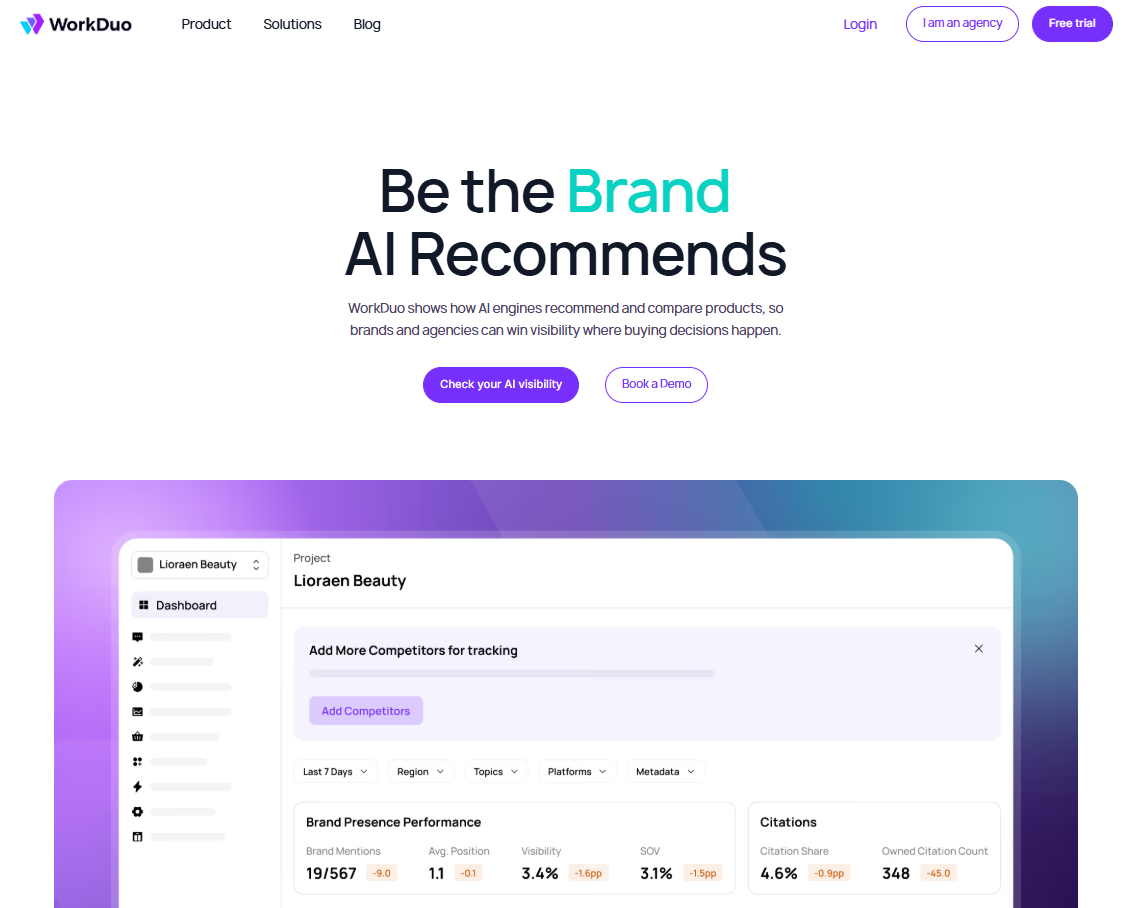
WorkDuo is an AI search visibility platform built for brands and agencies that want to compare how they perform against competitors across AI engines. It helps teams track visibility, share of voice, rankings, and query-level responses so they can see who is winning in AI-driven product discovery and comparison.
Key Features
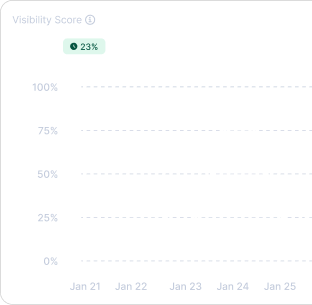
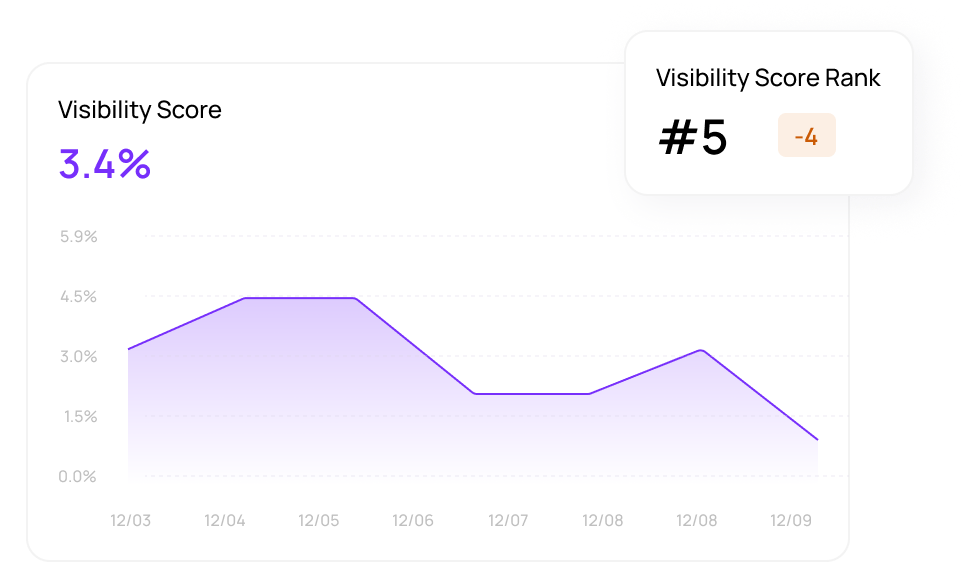
1. Visibility Score and Visibility Rank
WorkDuo lets teams measure how visible their brand is across tracked AI queries and compare that performance against competitors. This makes it easier to identify which brands are leading, losing ground, or improving over time.
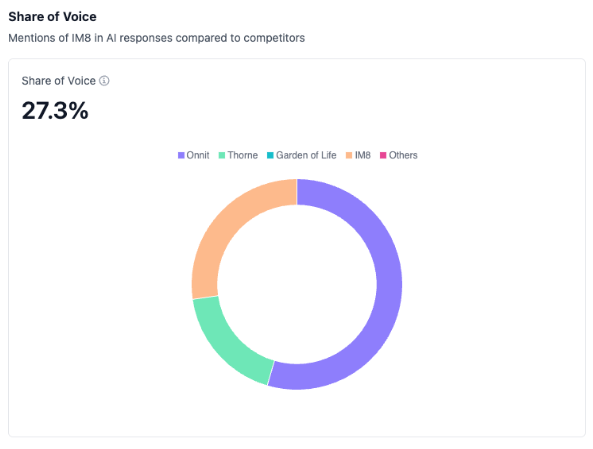
2. Share of Voice Analysis
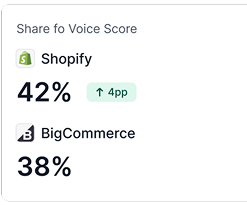
WorkDuo tracks your share of voice against competitors, helping you understand how much AI search visibility your brand owns within a competitive set. This is one of the most useful views for teams that want a quick read on market presence.
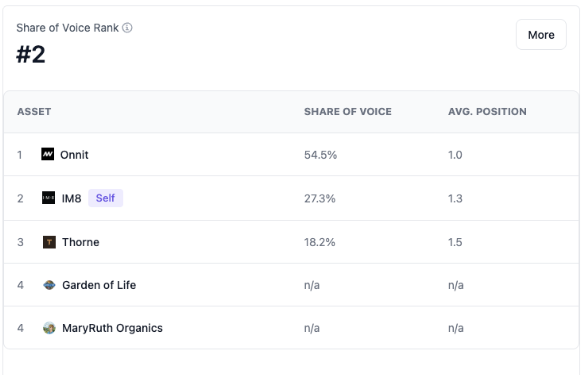
3. Share of Voice Ranking
Beyond raw share of voice, WorkDuo also helps teams rank competitors based on relative visibility. That makes it easier to see which brands are outperforming others across a chosen set of queries.
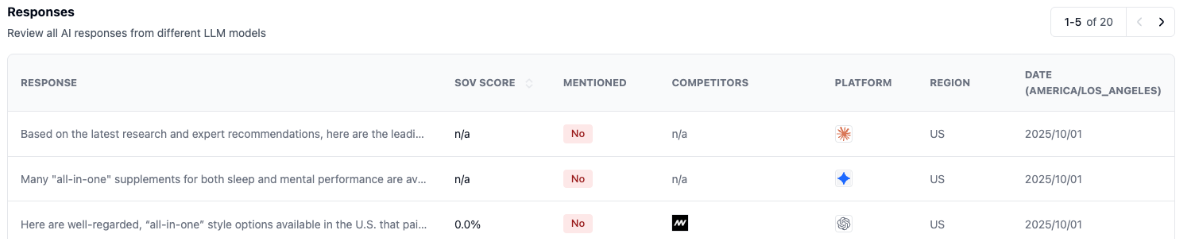
4. Query-Level Competitor Comparisons
For individual queries, teams can review AI responses and see whether their brand appears, whether competitors appear, and on which platforms those mentions show up. This gives much more context than a simple aggregated score.
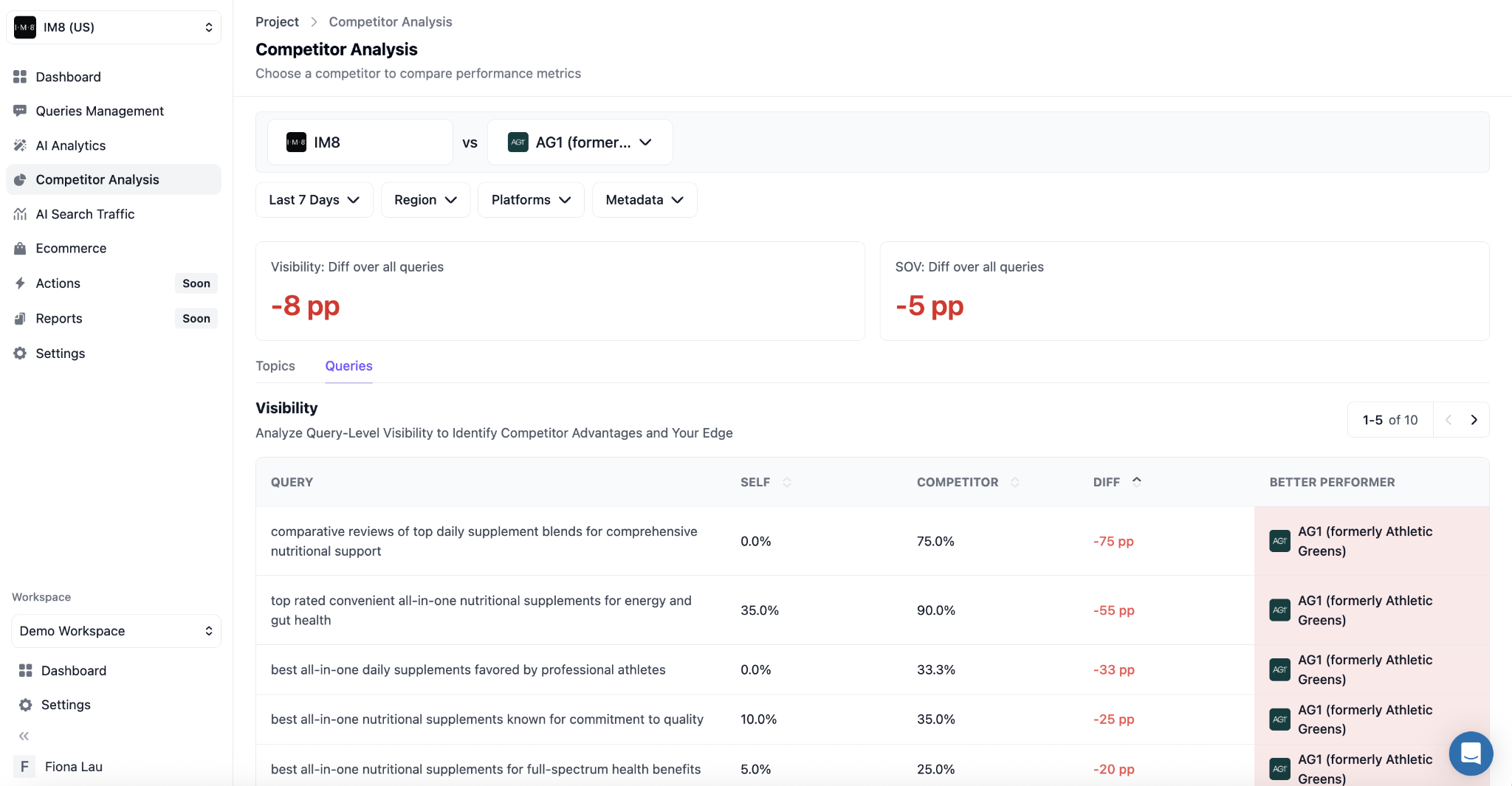
5. Competitor Performance Breakdown
WorkDuo helps users compare overall performance across tracked queries to see which competitors are consistently stronger and where they are winning. This makes it easier to find patterns instead of treating every query in isolation.
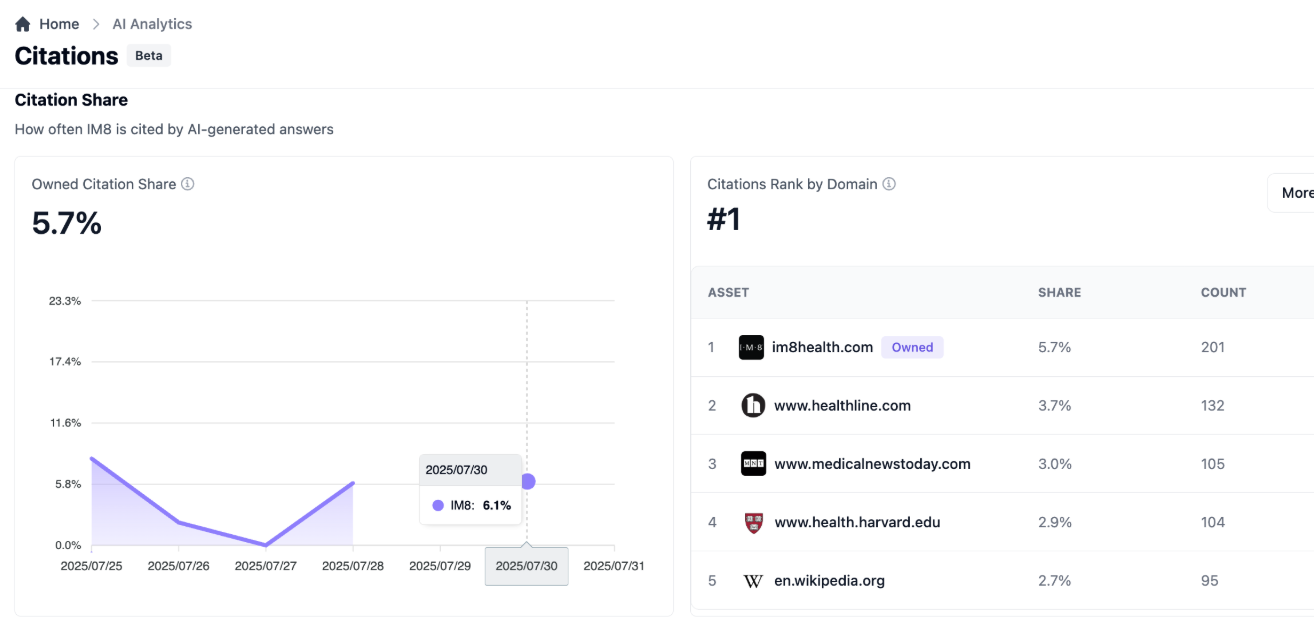
6. Citation Score and Domain Comparison
The platform also shows how often your domain is cited in AI-generated answers compared with competitors. That gives teams another way to measure authority and understand which sources AI systems rely on most within a category.
Where WorkDuo Shines
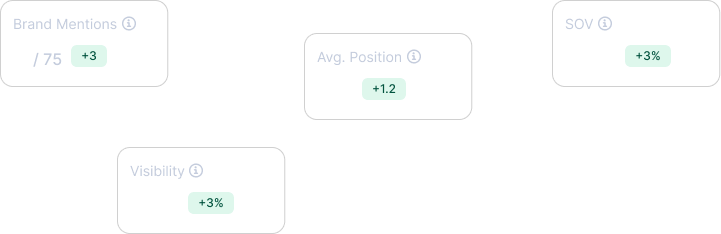
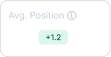
- Strong competitor analysis depth: WorkDuo goes beyond basic mention tracking by showing visibility score, rank, average position, and share of voice against competitors.
- Good for strategic benchmarking: It helps teams identify stronger and weaker competitors across a tracked query set instead of relying on isolated snapshots.
- Multi-engine coverage: WorkDuo tracks visibility across multiple AI platforms, including ChatGPT, Gemini, Google AI, and others, in one place.
- Real-time tracking method: A major differentiator is its real-time browser-based tracking approach. Compared with tools that rely heavily on API outputs, this gives a closer view of what users may actually see in live AI environments.
- Agency-friendly setup: White-label and API options make it easier for agencies to package competitor intelligence into client reporting.
- Stronger value on tracking volume: WorkDuo gives teams more AI response capacity for a lower cost than some alternatives, especially before usage limits become restrictive.
Where WorkDuo Falls Short
- Not built for AI content generation: WorkDuo is focused on tracking, benchmarking, and analysis rather than producing AI-written content.
- No publishing workflow: It does not help teams push content live to websites, product pages, or landing pages.
Who WorkDuo Is Best For
- Brands in competitive categories: Best for teams that need to understand how they are positioned against rivals in AI-driven buying journeys.
- Agencies: A strong fit for agencies that want to compare multiple client brands against competitor sets and report on AI search performance clearly.
- Growth and revenue teams: Useful for teams that want to connect AI visibility trends with demand generation, product discovery, and competitive risk.
- Global businesses: Especially helpful for companies tracking how competitor visibility shifts across markets, regions, and platforms.
2. Profound: Best for Enterprise-Grade Competitor Benchmarking Across AI Search Engines
Profound is one of the strongest choices for competitor analysis in AI search because it is built around tracking brand visibility, citations, sentiment, and prompt-level performance across major answer engines. It is especially useful when you need to compare how your brand and your rivals are being surfaced by AI systems, then turn those patterns into a larger optimization program rather than just a reporting snapshot.
Key Features
- Competitor visibility tracking: Compares how brands appear across AI-generated answers.
- Citation and source analysis: Shows which sources AI systems use when discussing competitors.
- Prompt research and monitoring: Helps teams see where rivals win for important prompts.
Pricing
Where Profound Shines
- Deep competitor analysis: Strong on benchmarking, share of voice, and AI answer comparisons.
- More strategic depth: Useful for turning competitor data into optimization work.
- Enterprise readiness: Well suited to larger brands running serious AI search programs.
Where Profound Falls Short
- Can feel heavy: More platform than some smaller teams need.
- Less lightweight for quick checks: Best when used as an ongoing workflow.
- Learning curve: Teams may need time to interpret more advanced views.
- Likely overkill for basic monitoring: Strongest when competitor analysis is a major priority.
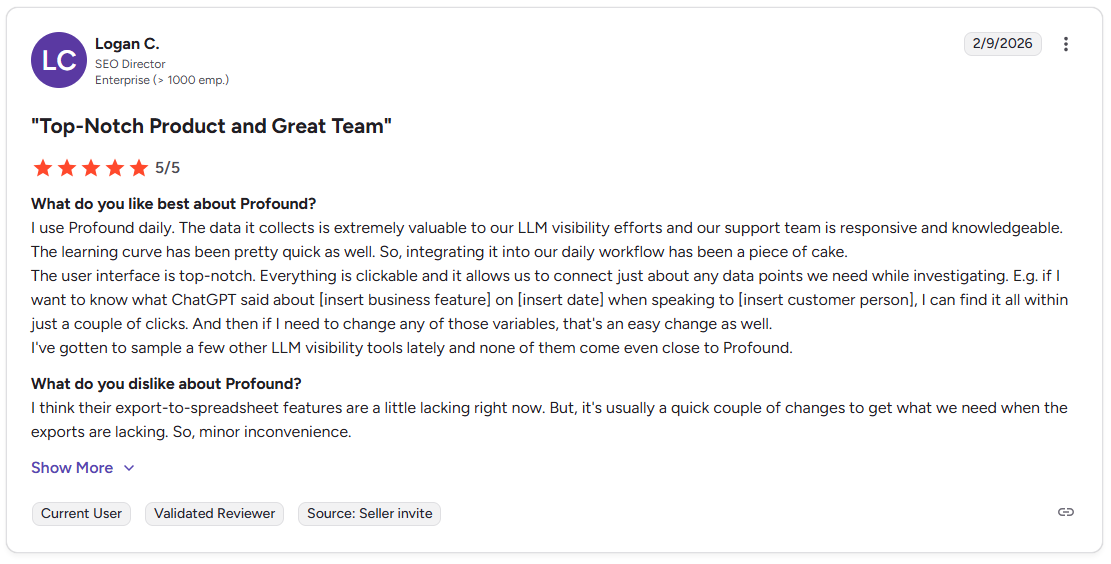
Customer Reviews
Logan C., SEO Director, says Profound stands out for its valuable daily LLM visibility data, responsive support, easy learning curve, and flexible, user-friendly interface that he finds far ahead of other tools he has tested.
A Reddit post described a “truly awful experience” working with Profound’s team

Who Profound Is Best For
- Enterprise SEO and content teams: Best for brands that need serious AI competitor intelligence.
- Cross-functional marketing teams: Useful when AI search benchmarking feeds content, PR, and strategy.
3. Promptwatch: Best for Tracking Competitor Visibility, Citation Gaps, and Share of Voice In AI Search
Promptwatch is a very strong fit for competitor analysis because it explicitly highlights competitor comparisons, visibility scoring, and share-of-voice tracking across AI platforms.
It is especially practical for teams that want to compare their brand against rivals prompt by prompt, identify where competitors are being cited instead, and use crawler and visitor data to understand what may be driving those differences.
Key Features
- Competitor analysis: Compares your visibility against rivals by prompt.
- Visibility metrics: Tracks share of voice across AI platforms.
- Prompt intelligence: Helps uncover which prompts matter most in your market.
Pricing
Where Promptwatch Shines
- Clear competitor focus: One of the most direct tools for side-by-side AI visibility comparisons.
- Good prompt-level insight: Helps identify where rivals are winning.
- Useful page-level context: Citation and crawler views add more depth than simple mention tracking.
Where Promptwatch Falls Short
- Broader than rank tracking alone: Some teams may only need a simpler view.
- Can feel operational: Strongest when teams actively optimize from the data.
- Feature depth may exceed light needs: Smaller teams may not use everything.
- Less established than bigger SEO suites: Some buyers may still compare it against broader platforms.
Customer Reviews
Andre S., Head of Marketing, described Promptwatch as a very elaborate tool that offers useful recommendations for improving AI visibility, and he also praised the team’s friendly outreach and support.

According to one Reddit user, Promptwatch works for simple AI tracking, but its outdated interface and somewhat limited feel made it less compelling than alternatives.

Who Promptwatch Is Best For
- SEO and content teams: Great for brands that want prompt-level competitor analysis.
- Agencies and growth teams: Useful for showing AI search gaps versus competitors.
4. Ahrefs: Best for Connecting Competitor’s AI Visibility Tracking With Broader SEO Research
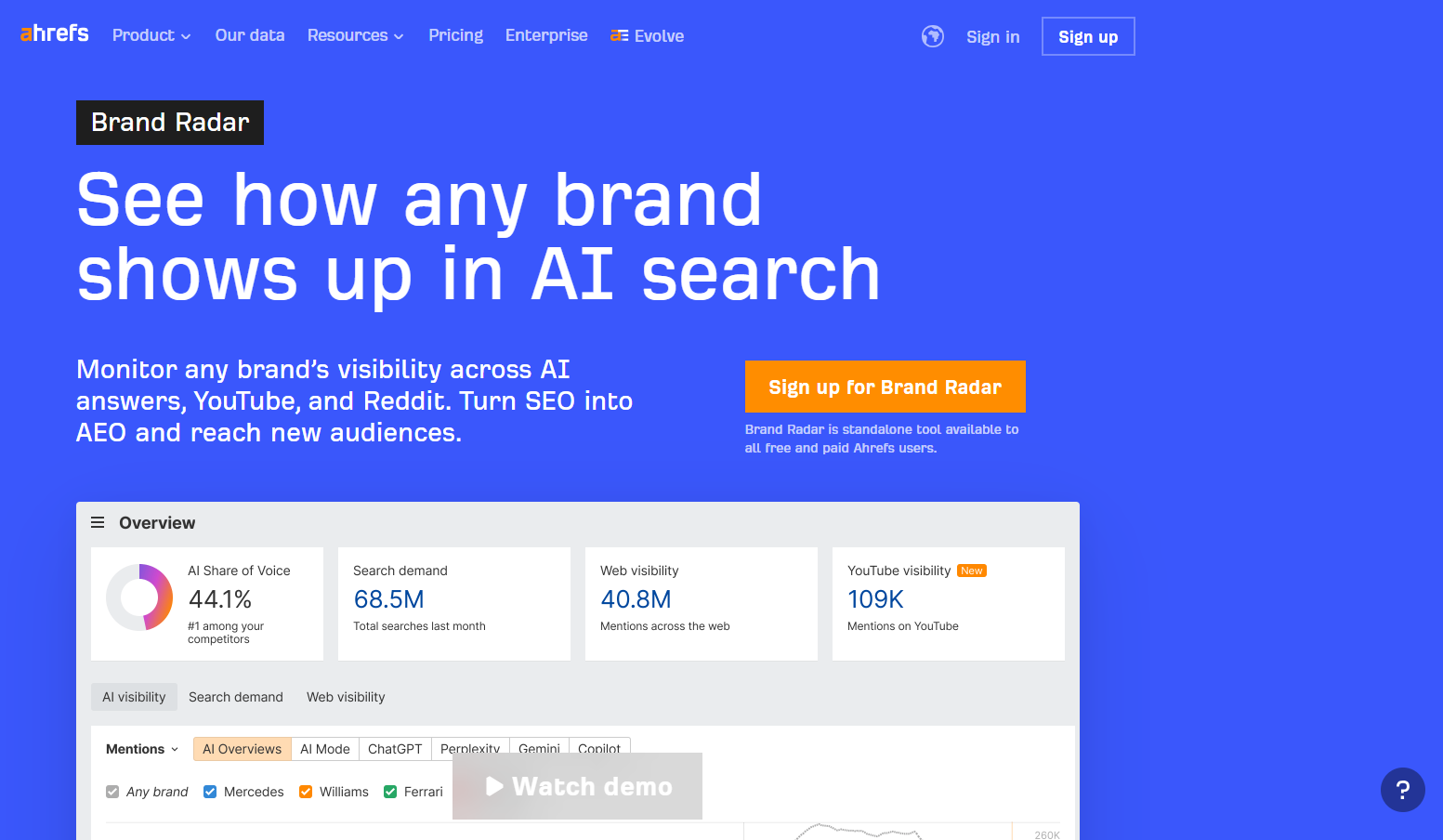
Ahrefs is a legacy SEO tool that stands out for competitor analysis through Brand Radar because it is built to benchmark your brand against competitors in AI search and spot the gaps.
It works particularly well for teams that want to understand which prompts already surface rival brands, which cited sources shape those answers, and how that AI visibility connects to a broader SEO and content strategy inside the same platform.
Key Features
- Brand Radar: Tracks AI mentions, citations, and competitive presence.
- Prompt-level research: Shows where competitors appear and you do not.
- SEO overlap: Connects AI visibility to broader search and site analysis.
Pricing
Where Ahrefs Shines
- Excellent gap analysis: Very useful for seeing where competitors are already recommended.
- Strong research workflow: Good for turning competitor findings into topic and content plans.
- Broader context: Useful if your team already works heavily in SEO.
Where Ahrefs Falls Short
- Less AI-specialist than some tools: It is broader than a dedicated AI visibility platform.
- May feel wider than needed: Especially if you only want AI competitor tracking.
- Not as operational on crawler insight: Other tools go deeper on AI bot behavior.
- Best fit improves if you already use Ahrefs: More compelling inside an existing stack.
Customer Reviews
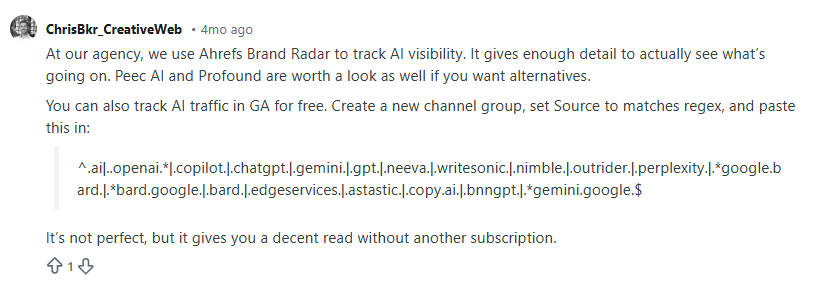
One Redditor said Ahrefs Brand Radar gives their agency enough detail to clearly see what is going on.
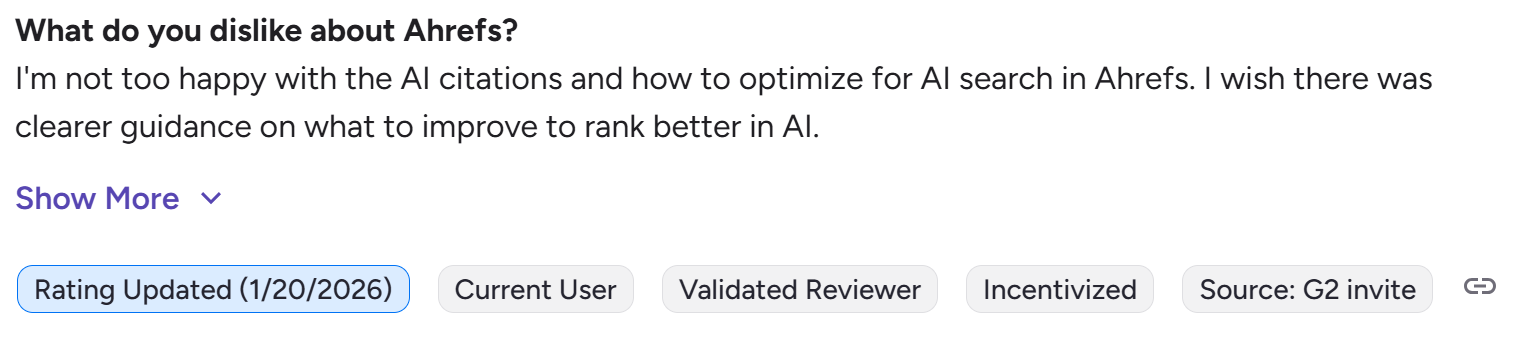
Bas S., Freelance Marketeer, said Ahrefs could do a better job explaining AI citations and giving clearer guidance on what to improve to rank better in AI search.
Who Ahrefs Is Best For
- SEO-led teams: Strong for brands doing strategic competitor and citation research.
- Existing Ahrefs users: Best for teams that want AI competitor analysis inside familiar workflows.
5. Semrush: Best for Comparing AI Market Share, Competitor Positioning, And Prompt Gaps In One Search Stack
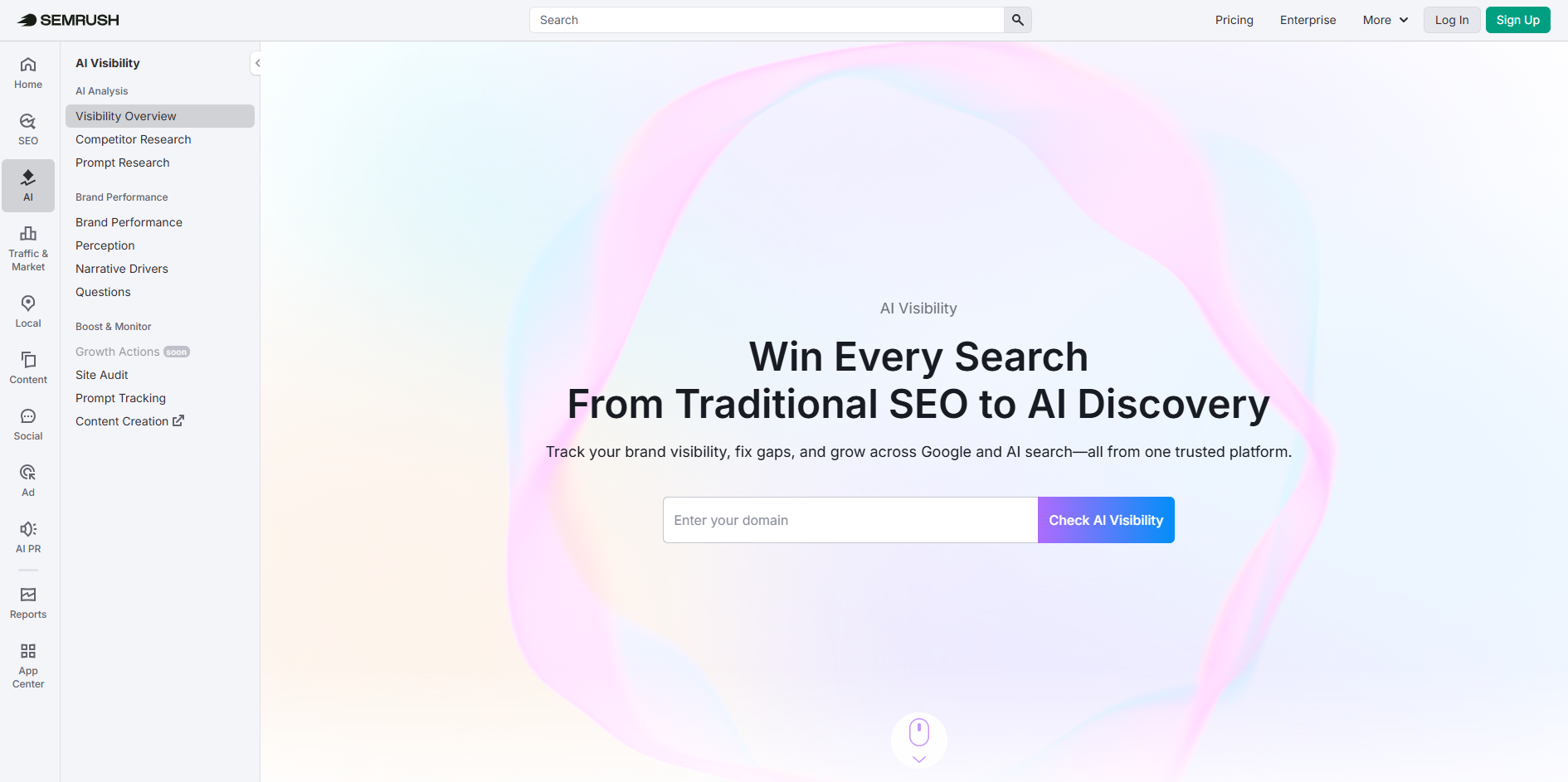
Semrush is another legacy tool that earns a spot here because its AI Visibility Toolkit is designed to benchmark brand visibility, compare sentiment and perception against competitors, and identify competitive gaps in AI search. It is particularly appealing for marketers who want AI competitor analysis to sit alongside broader SEO, traffic, and content research rather than live in a separate specialist tool.
Key Features
- AI visibility benchmarking: Compares your brand and competitors in AI answers.
- Competitor gap analysis: Finds where rivals are positioned more strongly.
- Prompt and sentiment tracking: Shows visibility trends and perception shifts.
Pricing
Where Semrush Shines
- Balanced workflow: Strong for teams that want AI competitor analysis plus broader marketing context.
- Good reporting: Useful for turning AI visibility data into shareable reports.
- Practical for agencies and mid-market teams: Designed for scalable use, not just enterprise teams.
Where Semrush Falls Short
- Not as specialist as dedicated AI tools: Some niche AI workflows may go deeper elsewhere.
- Can feel broad: AI competitor analysis is one part of a larger platform.
- May require plan evaluation: Best use depends on how much of Semrush you already use.
- Less focused on crawler-level insight: Other tools go deeper into technical AI behavior.
Customer Reviews
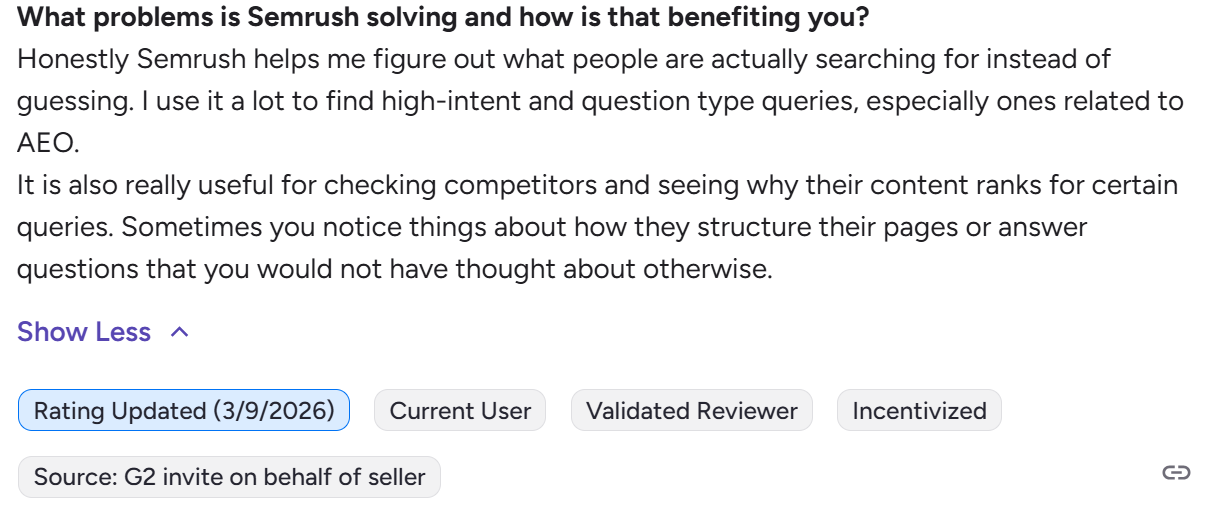
Nariman H., Growth Marketing Manager, says Semrush helps him find high-intent and question-based queries without guesswork, while also making it easier to analyze competitors and spot why their content ranks.
A Reddit user said Semrush’s AI Visibility Toolkit feels directionally useful, but not fully accurate, because it still relies on keyword-based modelling for more conversational AI behavior.

Who Semrush Is Best For
- Marketing and SEO teams: Great for brands that want AI competitor analysis tied to search strategy.
- Agencies and mid-market companies: Useful for benchmarking multiple brands and reporting progress.
6. Peec AI: Best for Monitoring Competitor Visibility and Share Of Voice In A Focused AI Search Dashboard
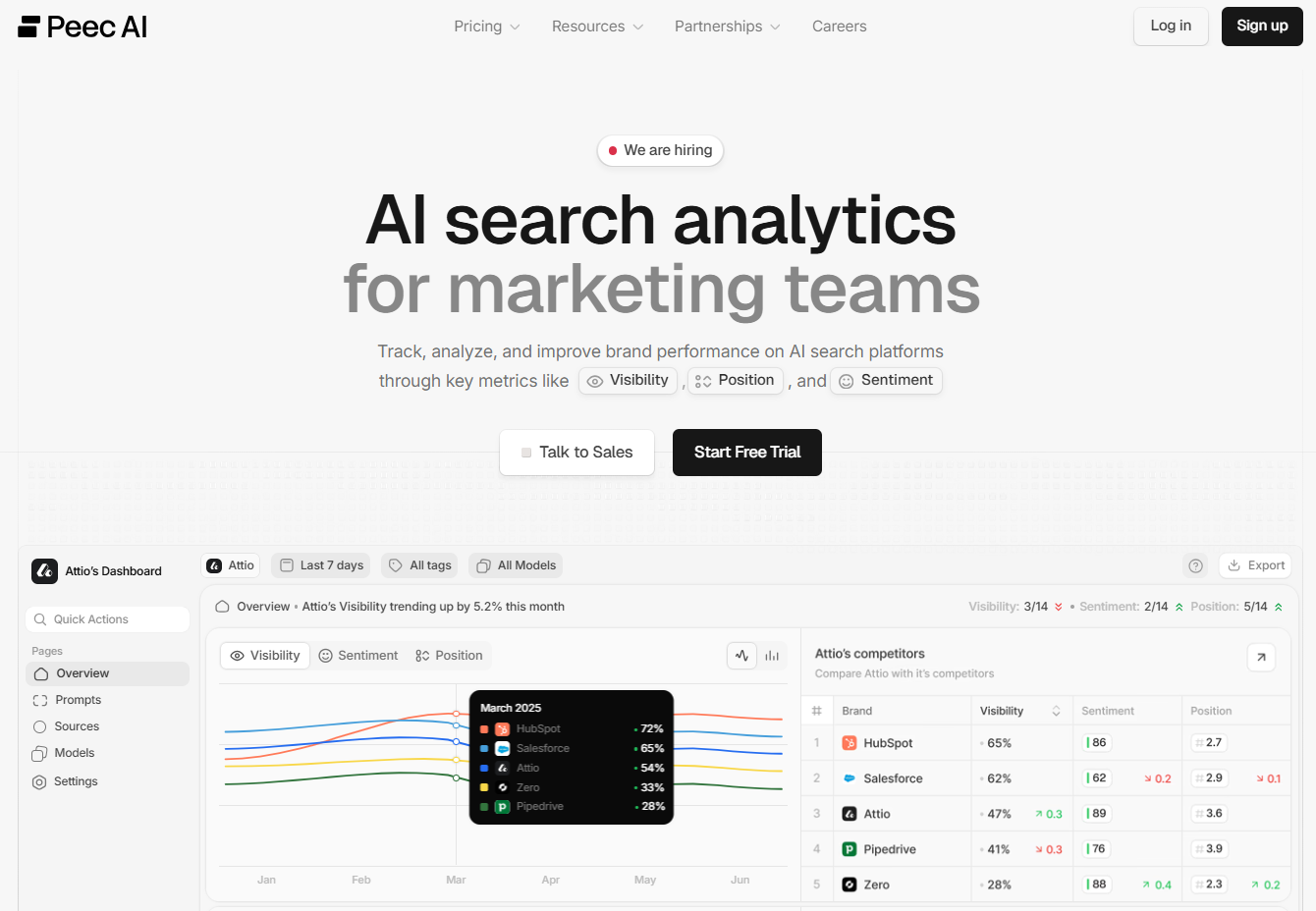
Peec AI is a specialist AI search analytics tool built for marketing teams that want a focused way to analyze brand performance, benchmark competitors, and understand which content AI systems surface most often.
Peec AI is a clean fit for teams that want competitor analysis without committing to a much broader SEO suite.
7. Otterly AI: Best For Watching Competitor Mentions And Citations In A Simpler AI Search Monitoring Workflow
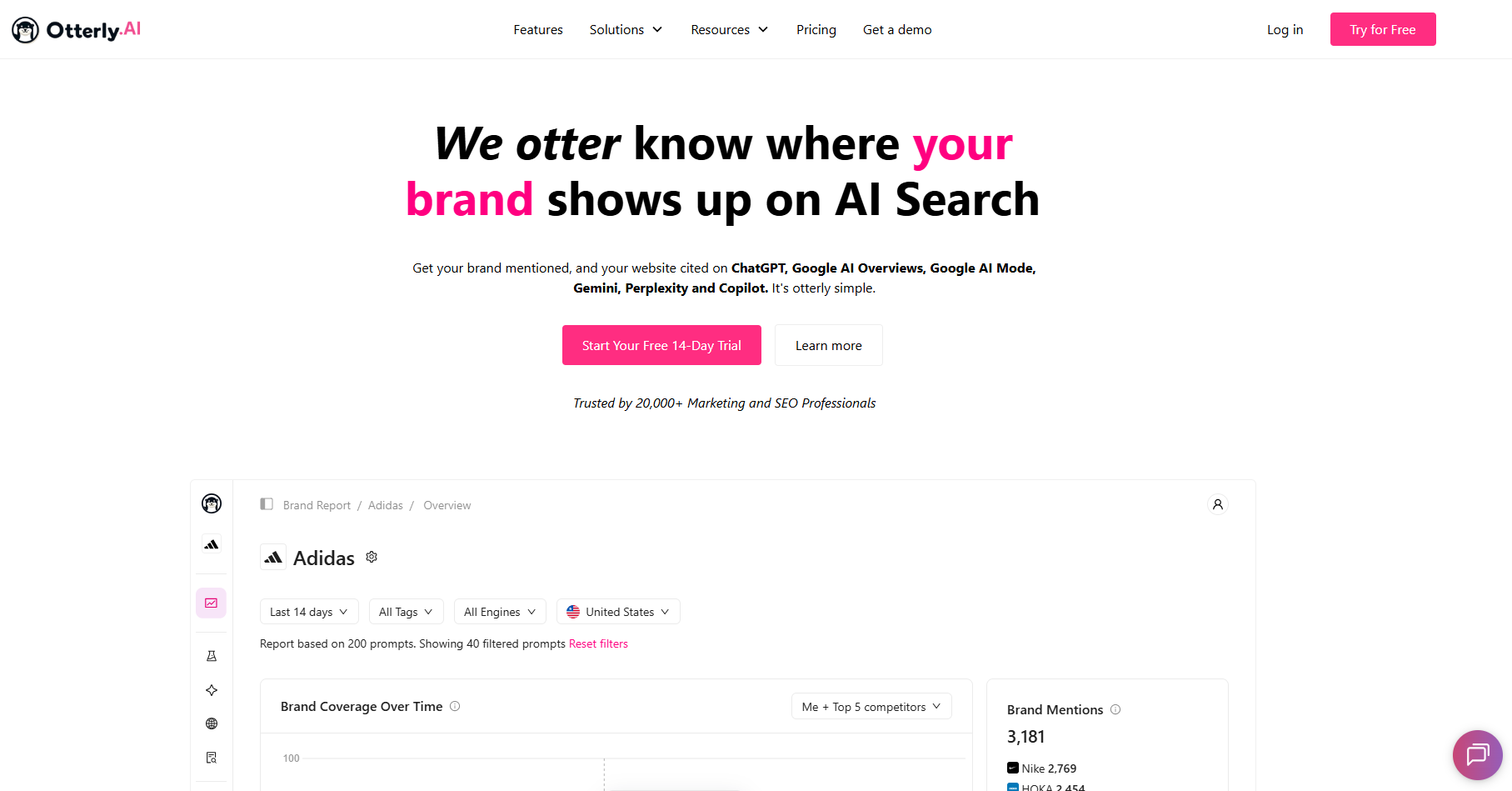
Otterly AI is better suited to teams that want competitor analysis in a more lightweight format, with tracking for brand mentions and website citations across major AI search engines.
Its strength is accessibility rather than deep enterprise analysis, so it works best when you want a practical read on how competitors are showing up without a very heavy platform.
8. SE Ranking: Best For Comparing AI Brand Mentions, Links, and Competitor Visibility Alongside SEO Work
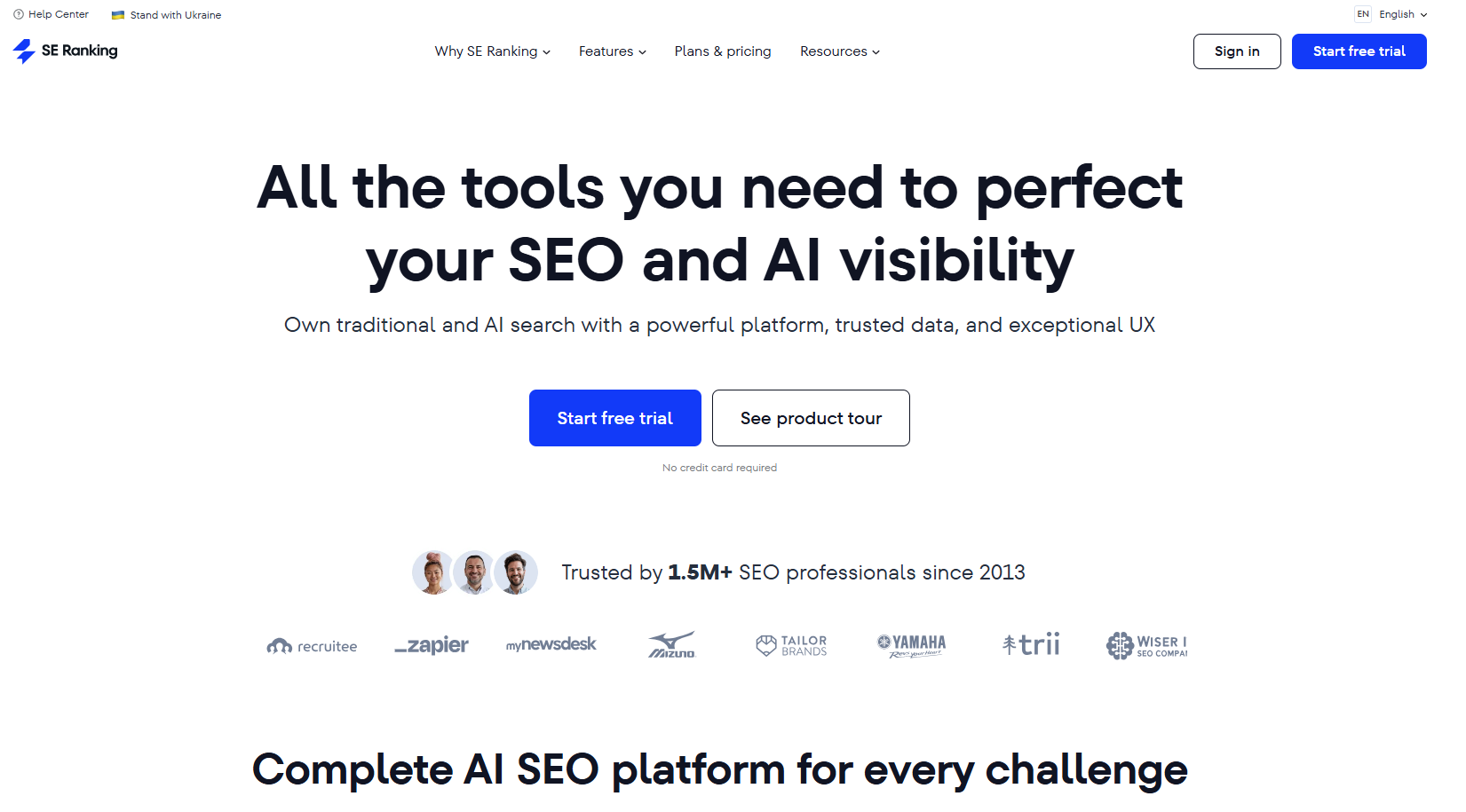
SE Ranking is a practical option for competitor analysis because its AI Visibility Tracker and related tools let teams compare domains side by side, monitor brand mentions and links in AI answers, and spot historical visibility gaps.
It is especially useful for marketers who want AI competitor tracking tied closely to their regular SEO workflow.
9. Writesonic: Best for Turning Competitor AI Visibility Gaps Into Content Actions Quickly
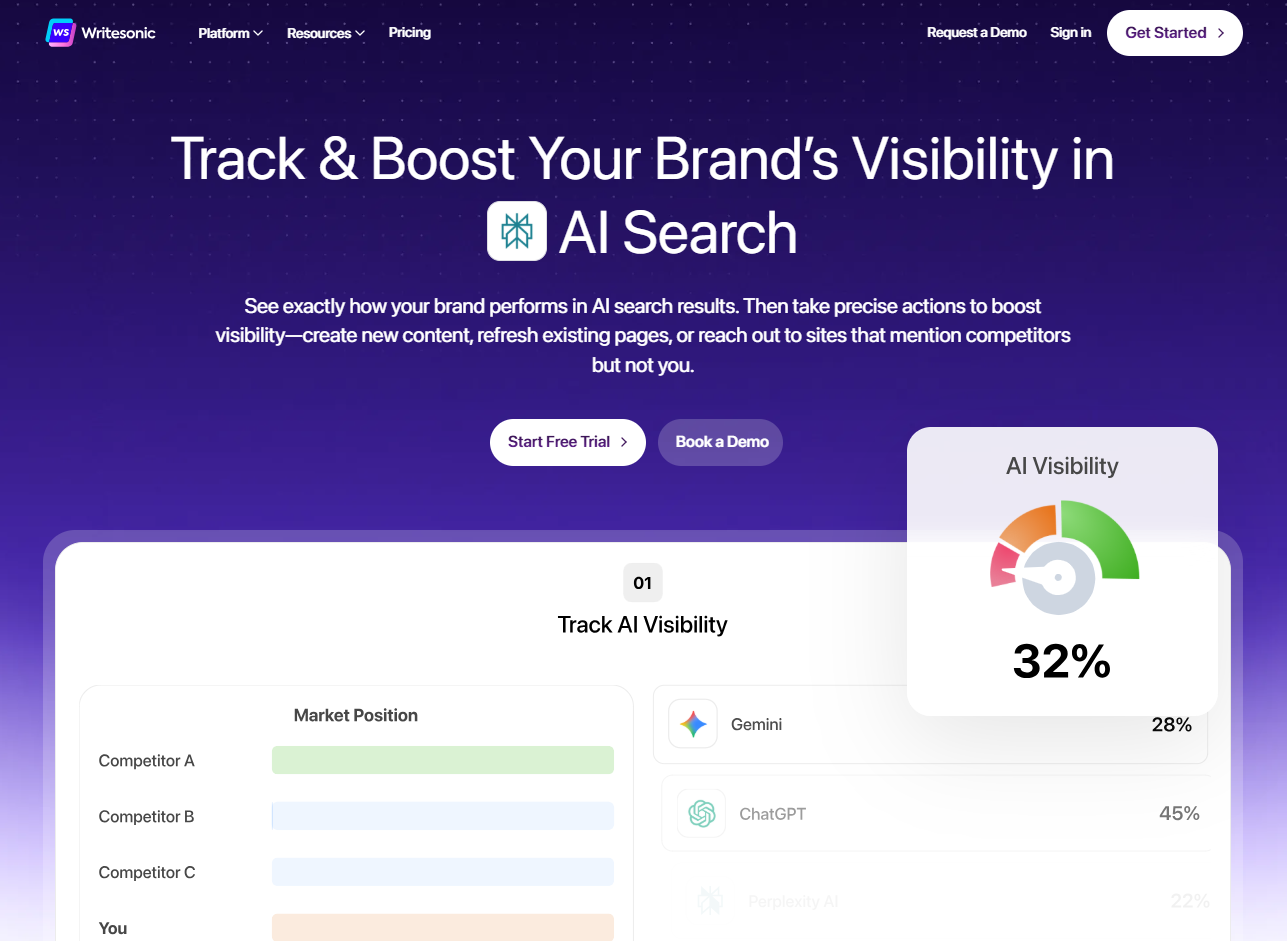
Writesonic approaches competitor analysis from a track-and-act angle, showing how your brand stacks up in AI-generated responses and where competitors are outperforming you.
This tool is particularly useful for teams that want to move from competitor visibility data into content refreshes, new page creation, and outreach based on who AI systems already trust.
10. AthenaHQ: Best for Using Competitor AI Visibility Data To Drive AEO and GEO Optimization
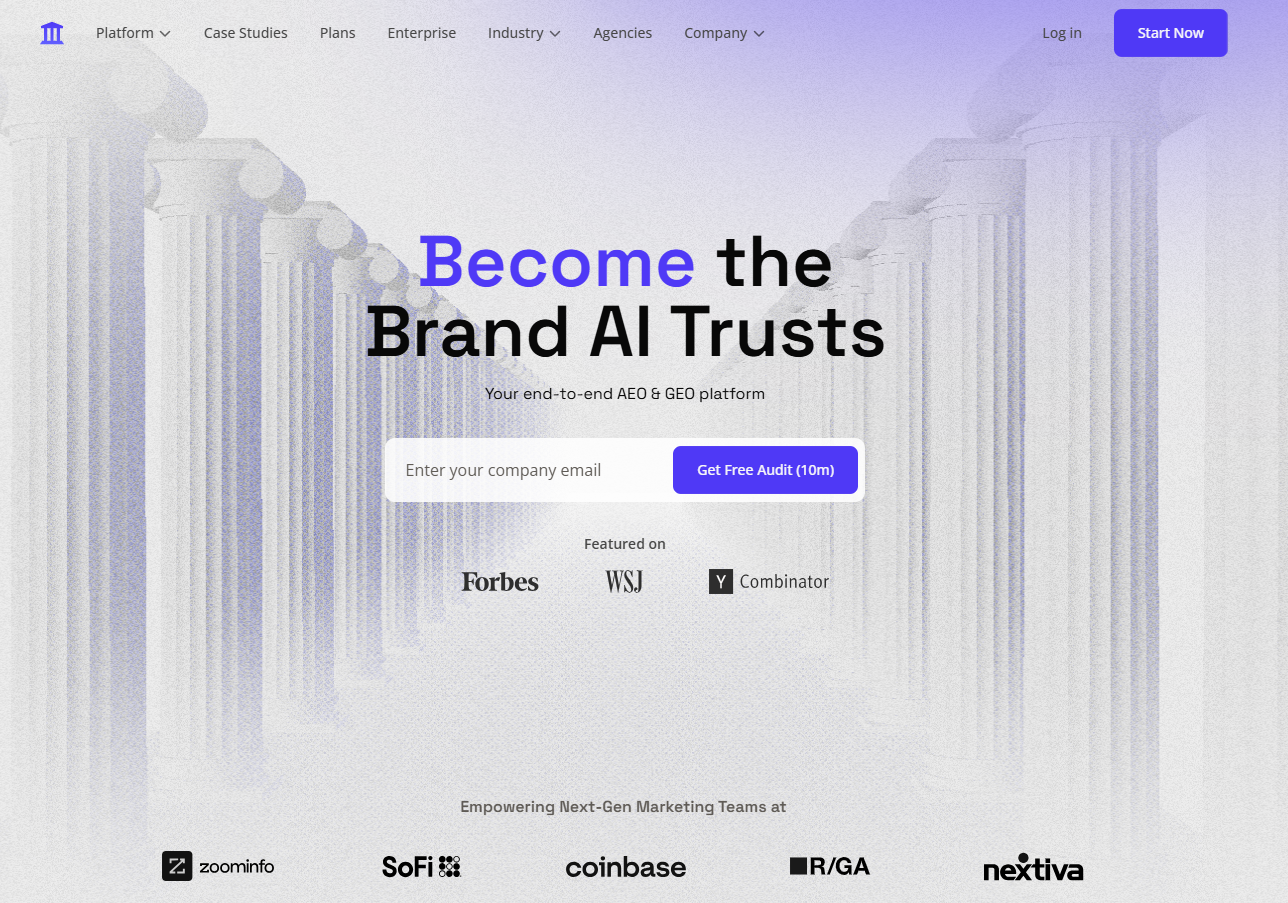
AthenaHQ is positioned more as an optimization-led platform, but it still works well for competitor analysis because it connects brand monitoring, citations, and competitor benchmarking to concrete recommendations.
For brands treating AI search as an active growth channel, it gives competitor insights more strategic value than a basic mentions dashboard alone.
11. Scrunch: Best for Tracking Where Competitors Gain Visibility In AI Search and Why
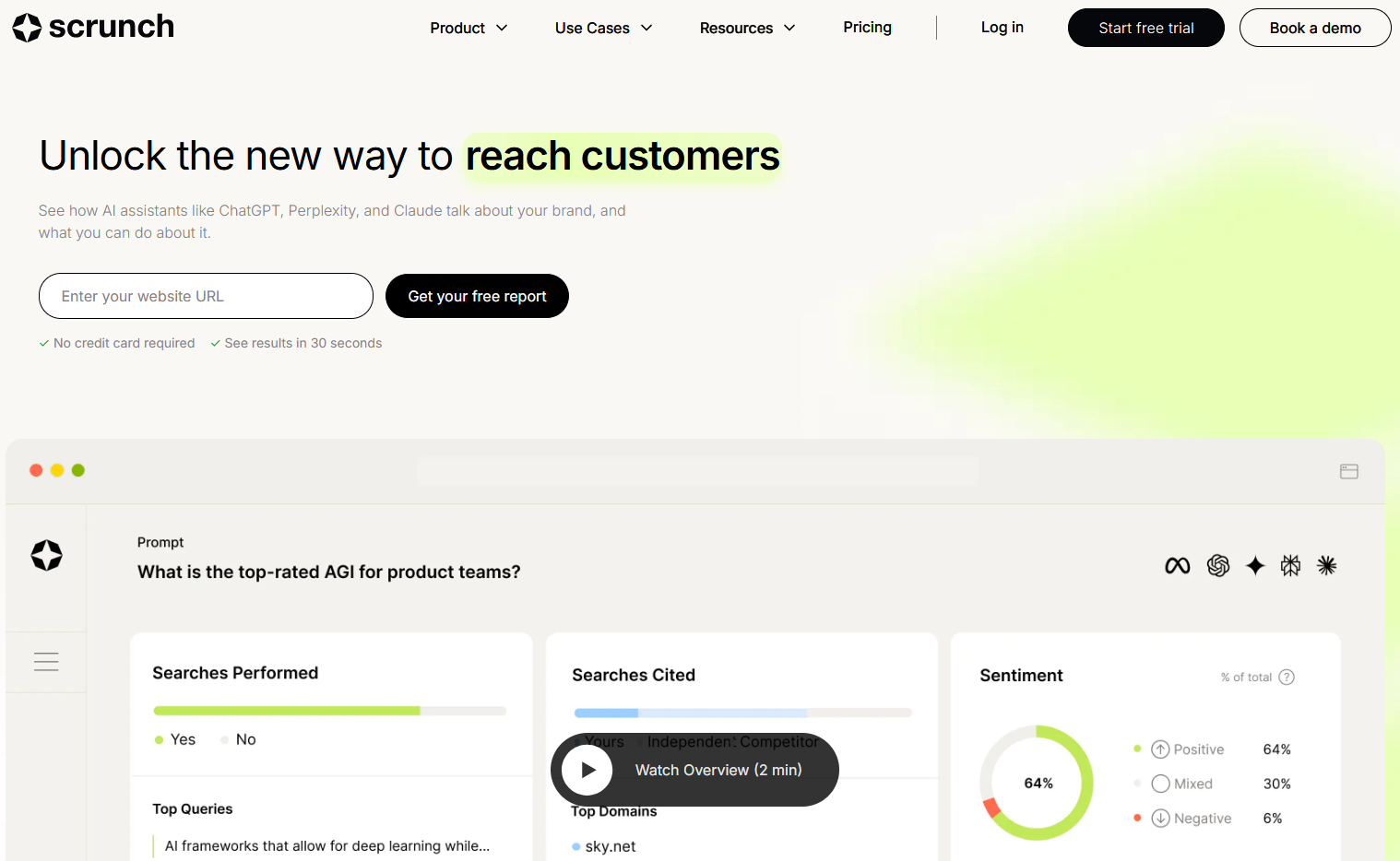
Scrunch is a strong technical choice for competitor analysis because it explicitly tracks competitor visibility across AI platforms, citation patterns, rankings, and gap detection.
The platform also adds AI bot and crawl insight, helping teams understand not only where rivals show up but what may be supporting that visibility operationally.
12. BrightEdge: Best for Enterprise Competitor Analysis Across AI Search and Traditional Search At Scale
BrightEdge is the enterprise-heavy option in this group, combining AI Catalyst visibility tracking with a broader search intelligence platform. The tool is better suited to organizations that want to study how competitors appear across AI engines, query types, and customer journeys at scale rather than run lightweight point-in-time comparisons.
13. Similarweb: Best For: Comparing Competitor Claude Traffic, Landing Pages, and Prompt-Driven Visits
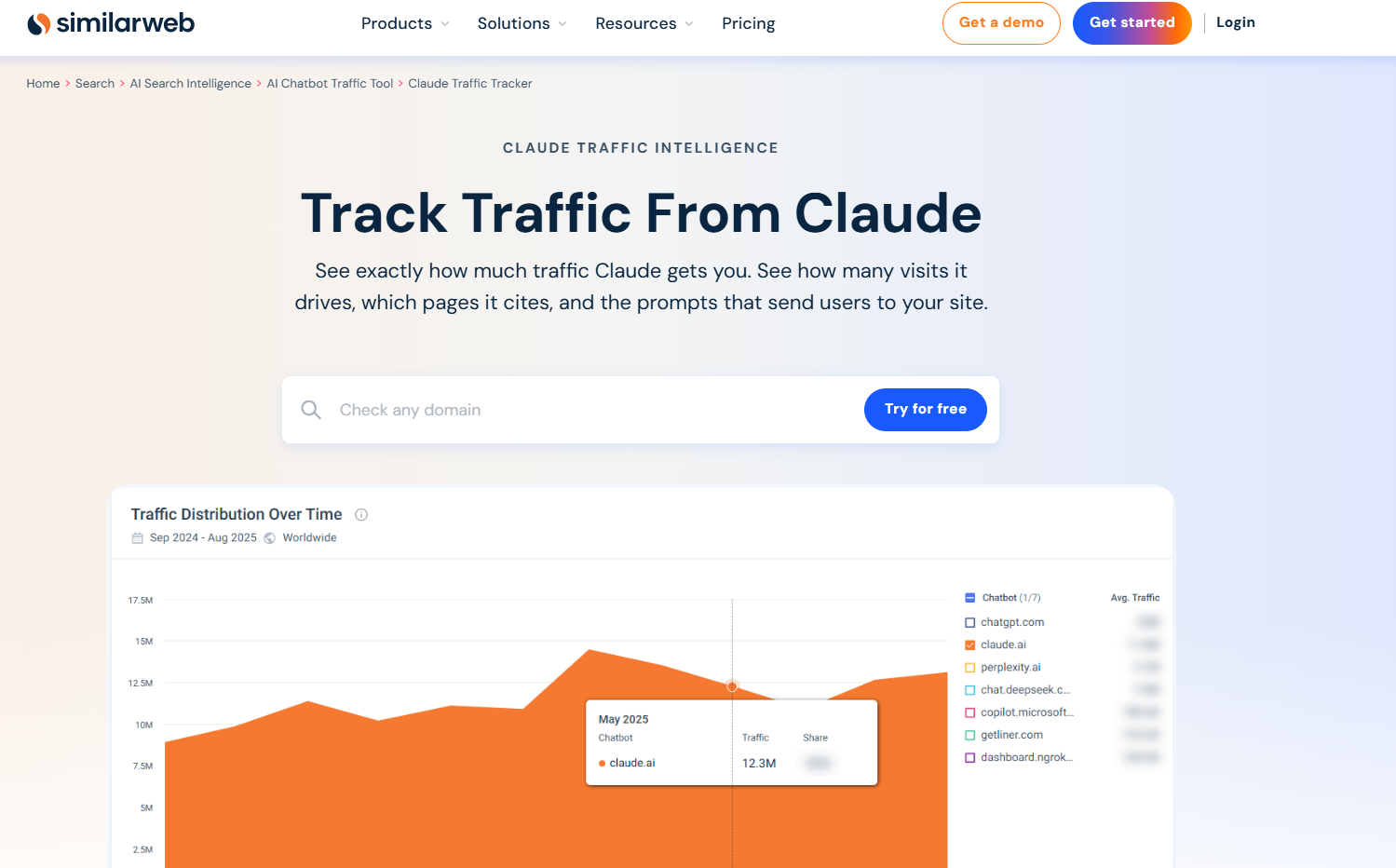
Similarweb brings a different angle to competitor analysis by focusing on traffic outcomes rather than just mentions or citations.
Its Claude Traffic Tracker lets teams estimate competitor visit volumes from Claude, review top landing pages, and study prompts behind those visits, which makes it especially useful when you want to connect AI visibility with real audience behavior.
How to Choose the Best Tool for Analyzing Competitors in AI Search
These are the key features to look at when choosing a tool to analyze competitors in AI search. The best ones do more than track mentions.
1. Real-Time Result Tracking
Some tools rely on API pulls, while others track results through real-time web browsing. That difference matters because API results can differ from what users actually see in live AI search.
An AI search tool like WorkDuo uses real-time tracking to give you a more accurate view of competitor visibility.
2. Global-Native Coverage
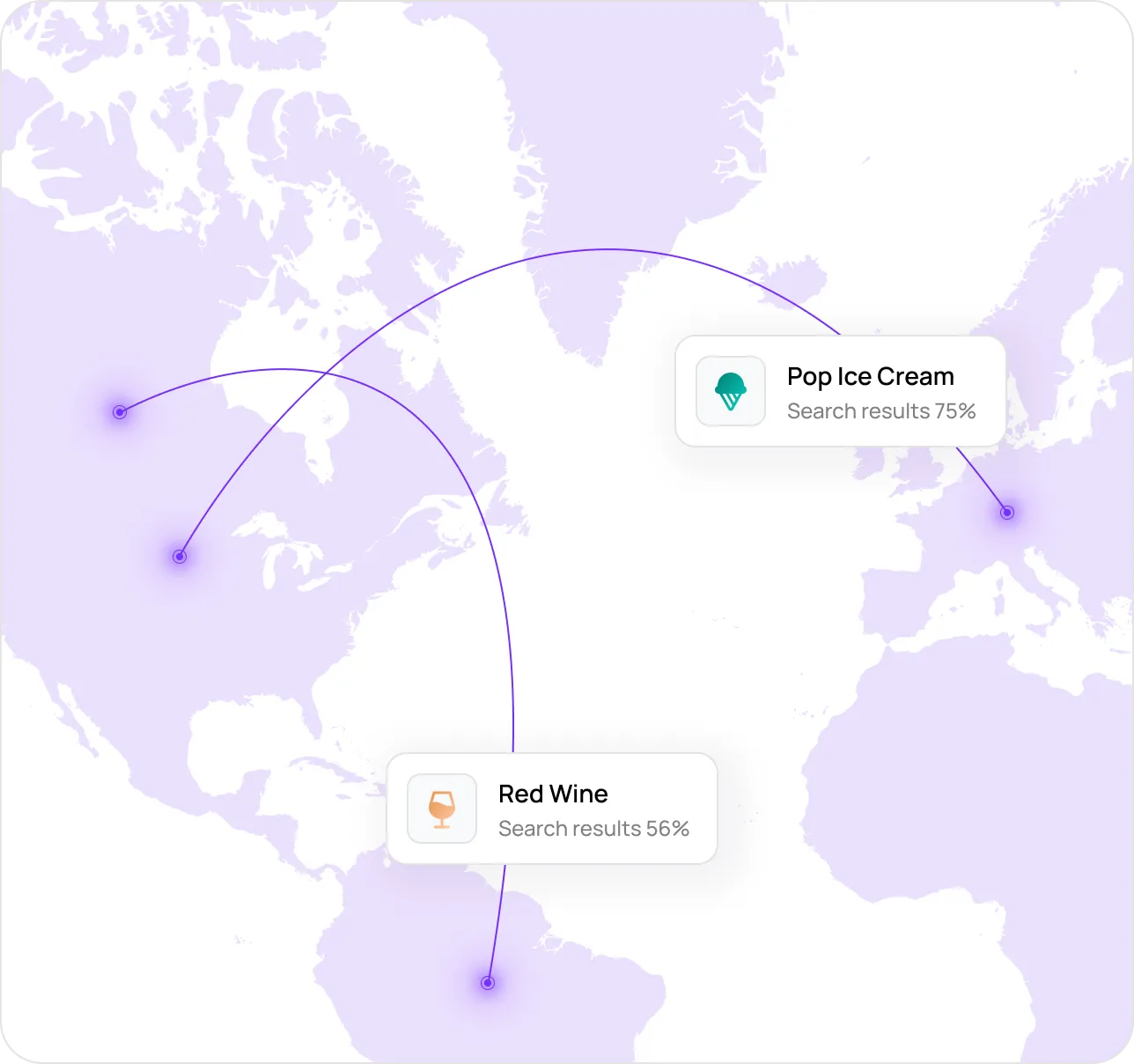
AI search results change by market, region, and language. If you work across countries, you need a tool that shows how competitors appear in each market, not just one default view.
WorkDuo is strong here because it tracks AI visibility across regions based on real local experiences.
3. Commerce-First Analysis
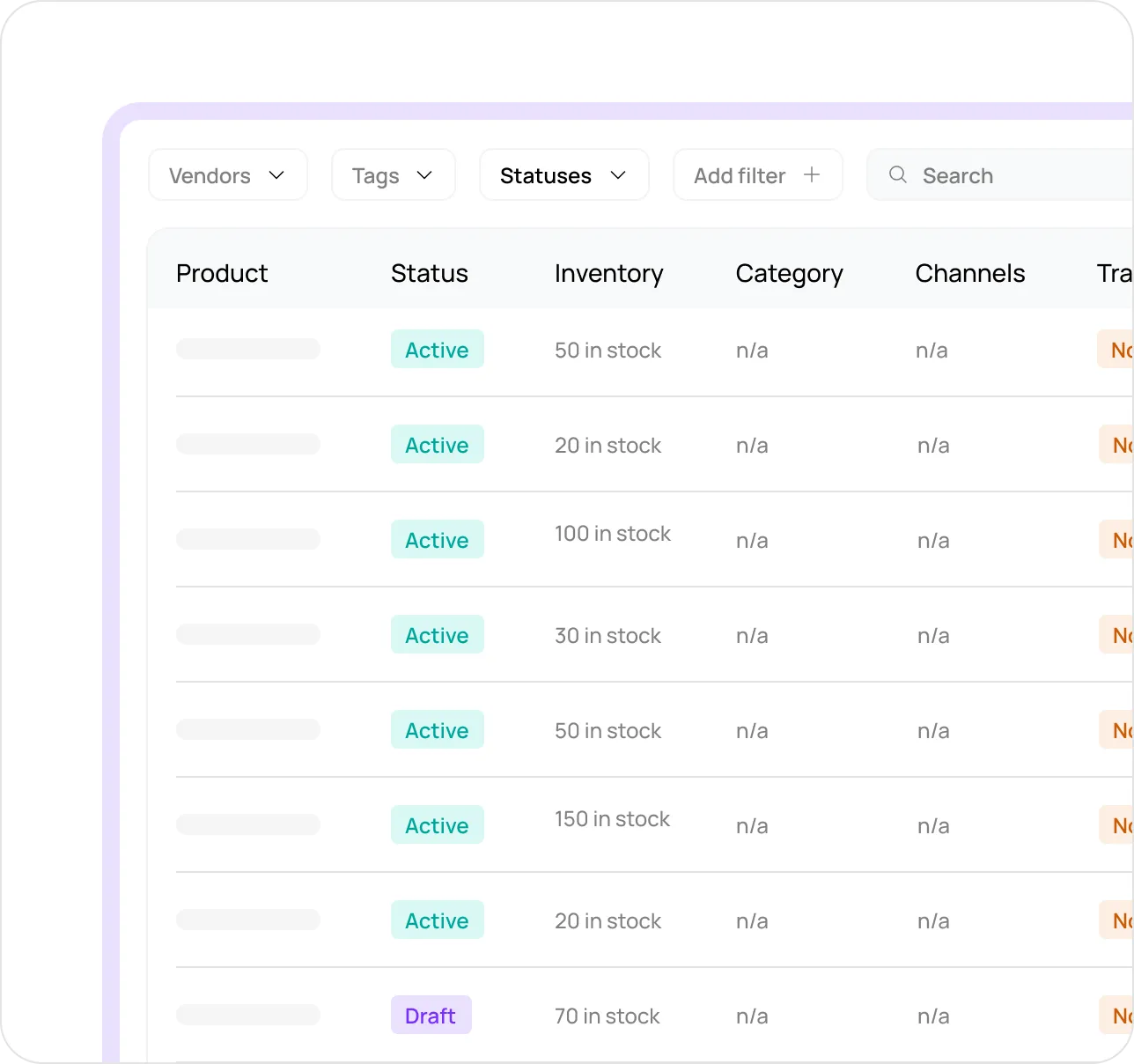
If you are in ecommerce, you need more than brand mention tracking. You need to see which products AI recommends, which competitors appear instead, and how buying decisions are being shaped.
WorkDuo does this well because it is built around product recommendations and competitive buying context.
4. Price Versus Usable Volume
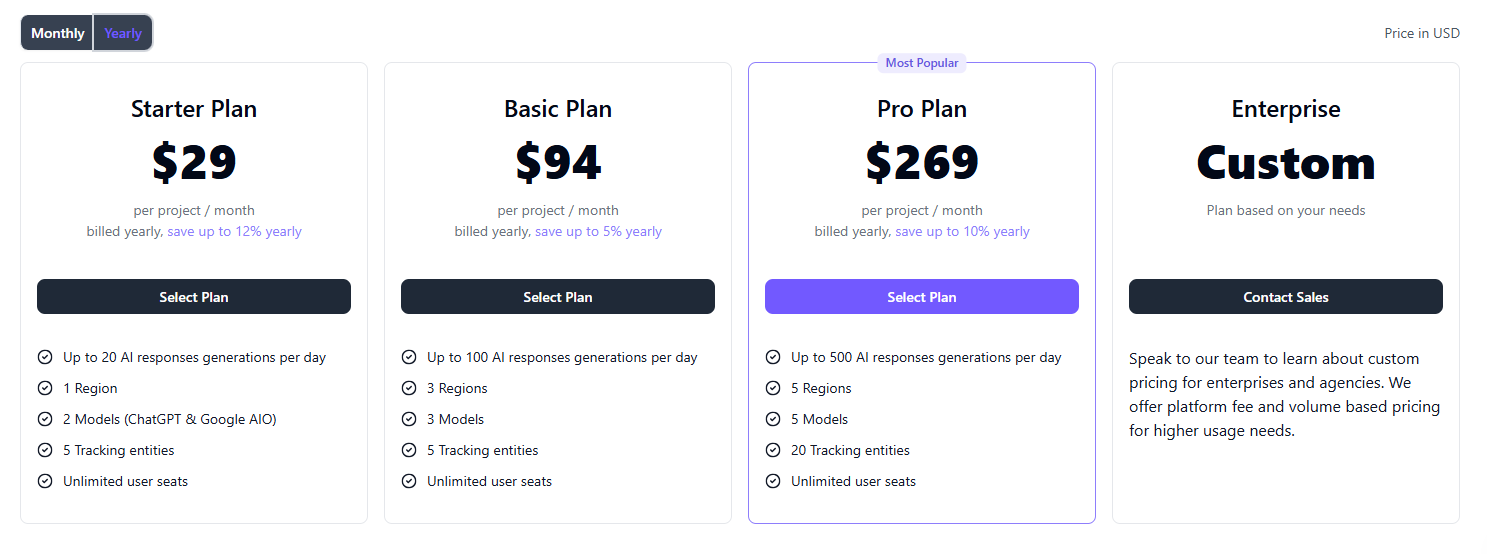
Do not judge a tool by monthly price alone. Look at how much tracking volume, model access, and monitoring capacity you actually get for the cost. WorkDuo stands out here because the value comes from practical day-to-day coverage, not just a low entry price.
5. Built for Brands and Agencies
Some teams need to analyze their own competitors, while agencies also need to manage this across clients.
The best platform should support both use cases with flexible dashboards and reporting. WorkDuo works well here because it is built for both in-house teams and agency partners.
Track and Control Your Brand’s Presence in AI Search With WorkDuo
Competitor analysis in AI search is not just about watching mentions. It is about knowing when your brand is being left out of the answer and fixing that before it costs pipeline, traffic, or trust.
WorkDuo gives you a clear view of who is showing up, why they are showing up, and where the gaps are. Take control of your AI search presence and get started with WorkDuo today.
Fiona is the Co‑Founder of WorkDuo AI, where she helps brands optimize their AI search visibility. Previously, she co‑founded SHOPLINE, a smart commerce platform in Asia, and led its successful exit to a NASDAQ‑listed company in 2022. With deep expertise in scaling tech businesses and working with global investors, Fiona now advises startups on growth and data-driven decision-making, while leading WorkDuo’s mission to improve how brands are represented in AI-driven search.

Ready to try our product?
Sign up for a free consultation with our experts.


Follow Us on Social Media
Follow our profiles for daily updates, behind-the-scenes content, and more.


More articles