9 Best Tools For Monitoring AI Overviews in 2026 (Reviewed)
.png)
- WorkDuo: Best for brands and agencies that want multi-platform tracking, global coverage, alerts, and room to scale.
- Otterly.AI: Best for teams that want a simpler way to monitor AI answer visibility without heavy setup.
- Scrunch AI: Best for enterprises focused on controlling and optimizing how site content is retrieved by AI systems.
- Semrush AI Visibility Toolkit: Best for existing Semrush users who want AI Overviews tracking inside a broader marketing stack.
- Profound: Best for larger teams that need deeper enterprise-grade AI search visibility and brand monitoring.
When AI Overviews appear, they reshape the click path before a user even reaches the classic results. They already show up in at least 16% of searches, organic CTR for informational queries falls by 61% when they do, and Google says AI Overviews now have more than 2 billion monthly users. If your team is not monitoring that layer, you are missing a major part of how search visibility now works.
Choosing the right software means looking beyond screenshots and dashboards to the things that shape adoption: pricing, ease of use, coverage, reporting, and how easily the platform fits into weekly work.
Best Tools for Monitoring AI Overviews at a Glance
From AI Overviews to broader AI search visibility, WorkDuo helps you track what matters now and scale as your needs grow. Get your free trial.
WorkDuo: Best for Overall AI Overviews Monitoring Platform
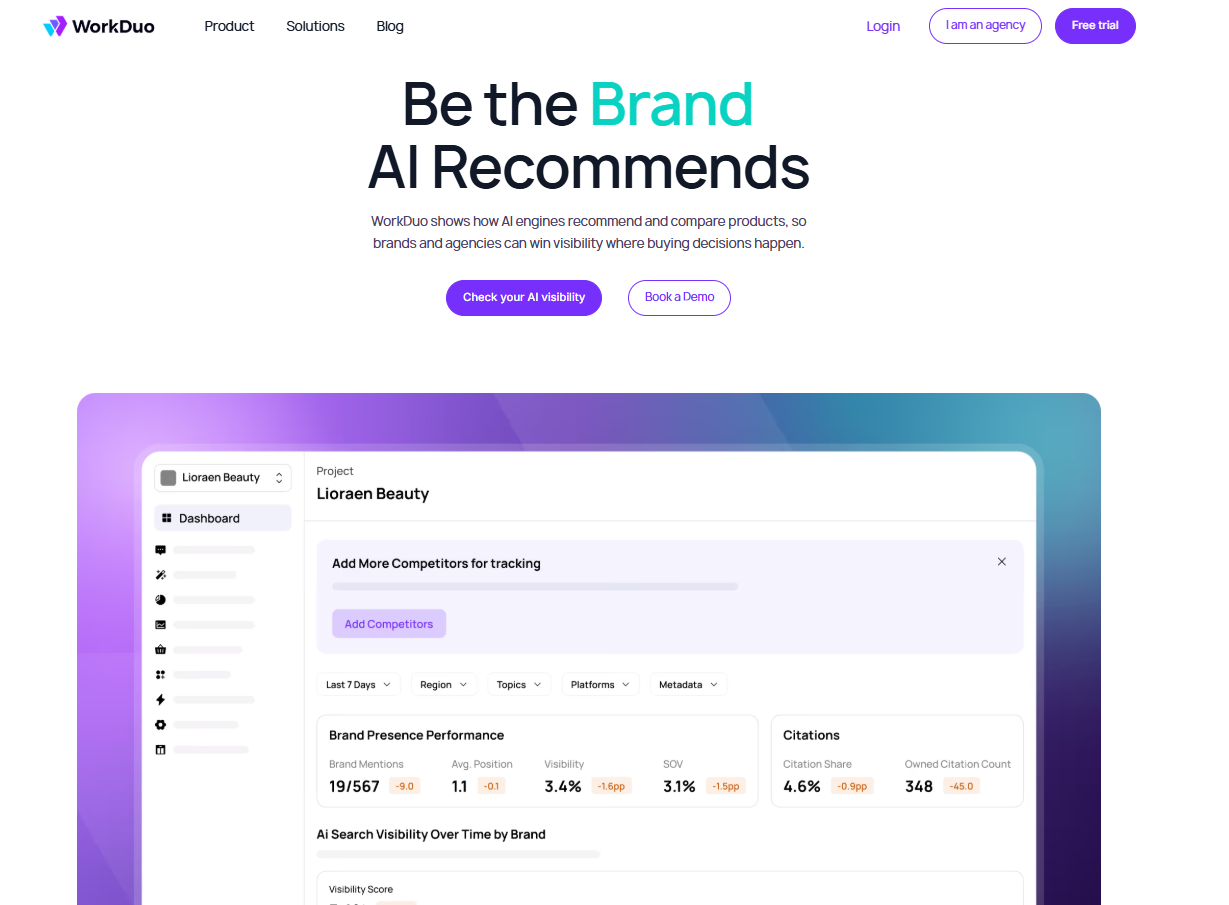
WorkDuo is an AI visibility platform built to help brands monitor how they appear in Google AI Overviews, while also tracking performance across other major AI search surfaces such as Gemini, Perplexity, Claude, Copilot, and DeepSeek.
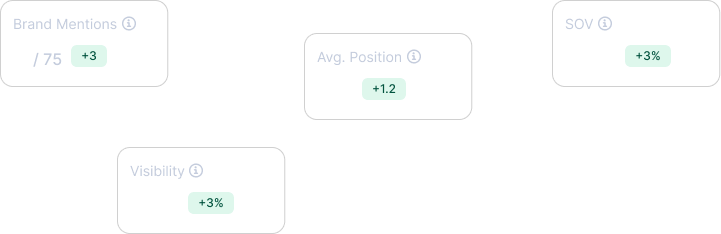
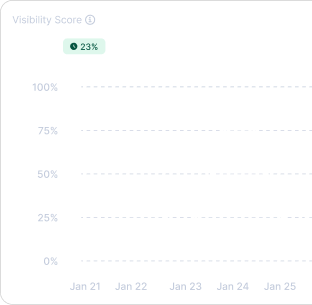
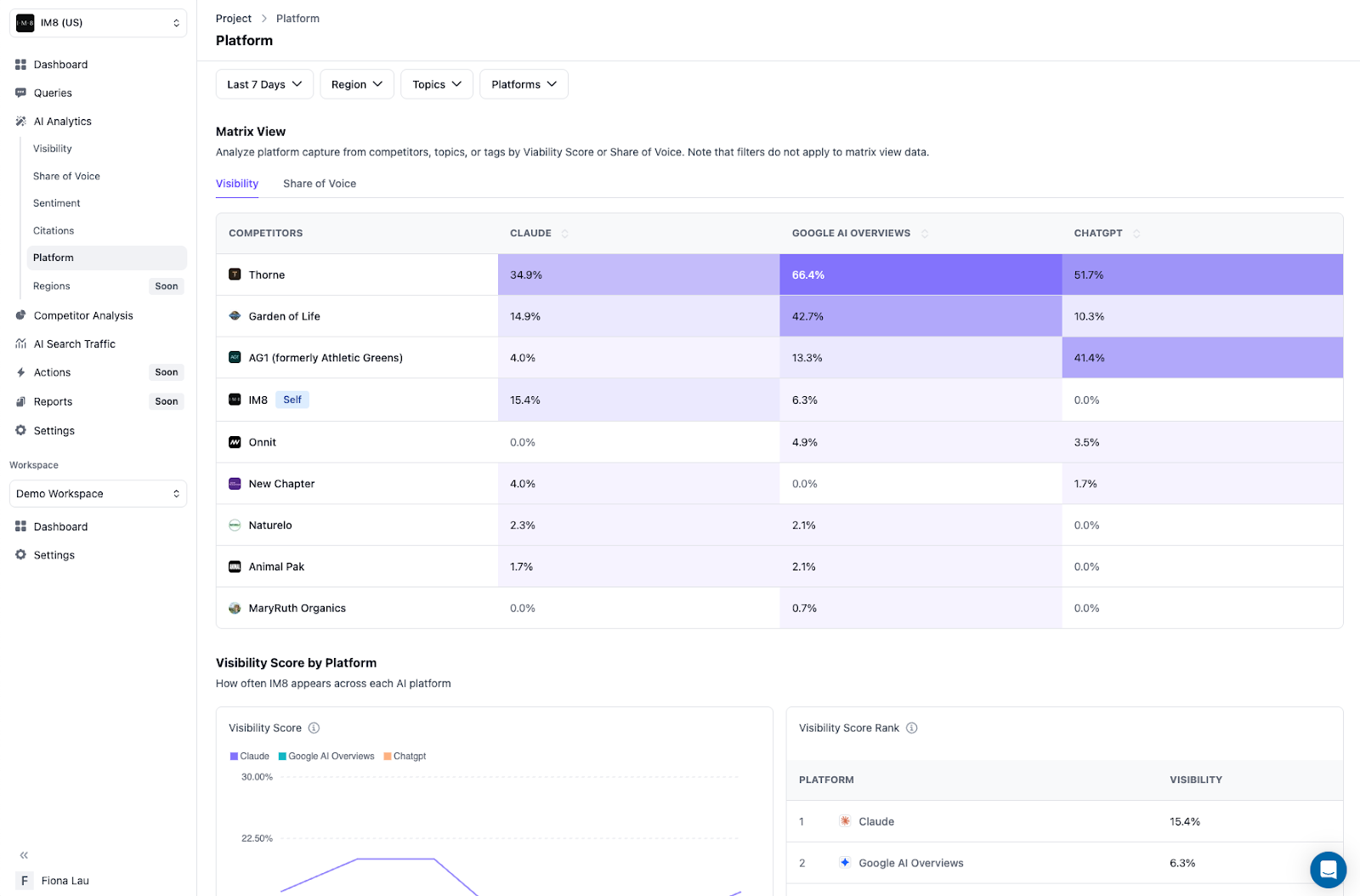
It shows where your brand is mentioned, how prominently it appears, which sources influence those answers, and how your visibility compares with competitors.
Key Features
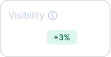
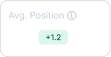
Visibility and Position Tracking
WorkDuo tracks both whether your brand appears in AI Overviews and how prominently it is featured within the answer.
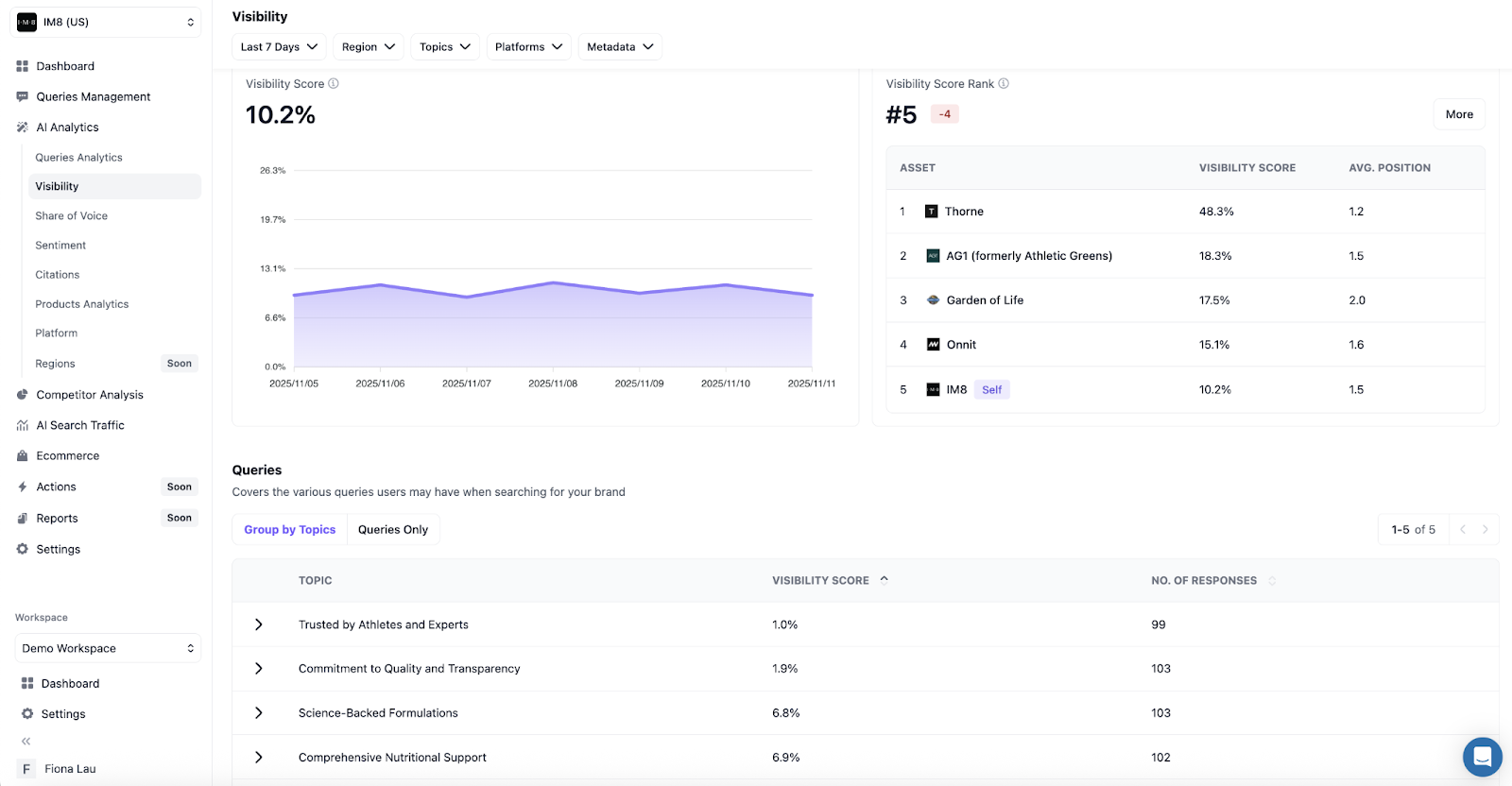
This helps teams distinguish between simply being cited and being presented as a leading recommendation.
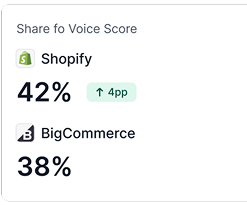
Share of Voice and Competitor Benchmarking
WorkDuo compares your visibility against competitors for the same prompts and search intent.
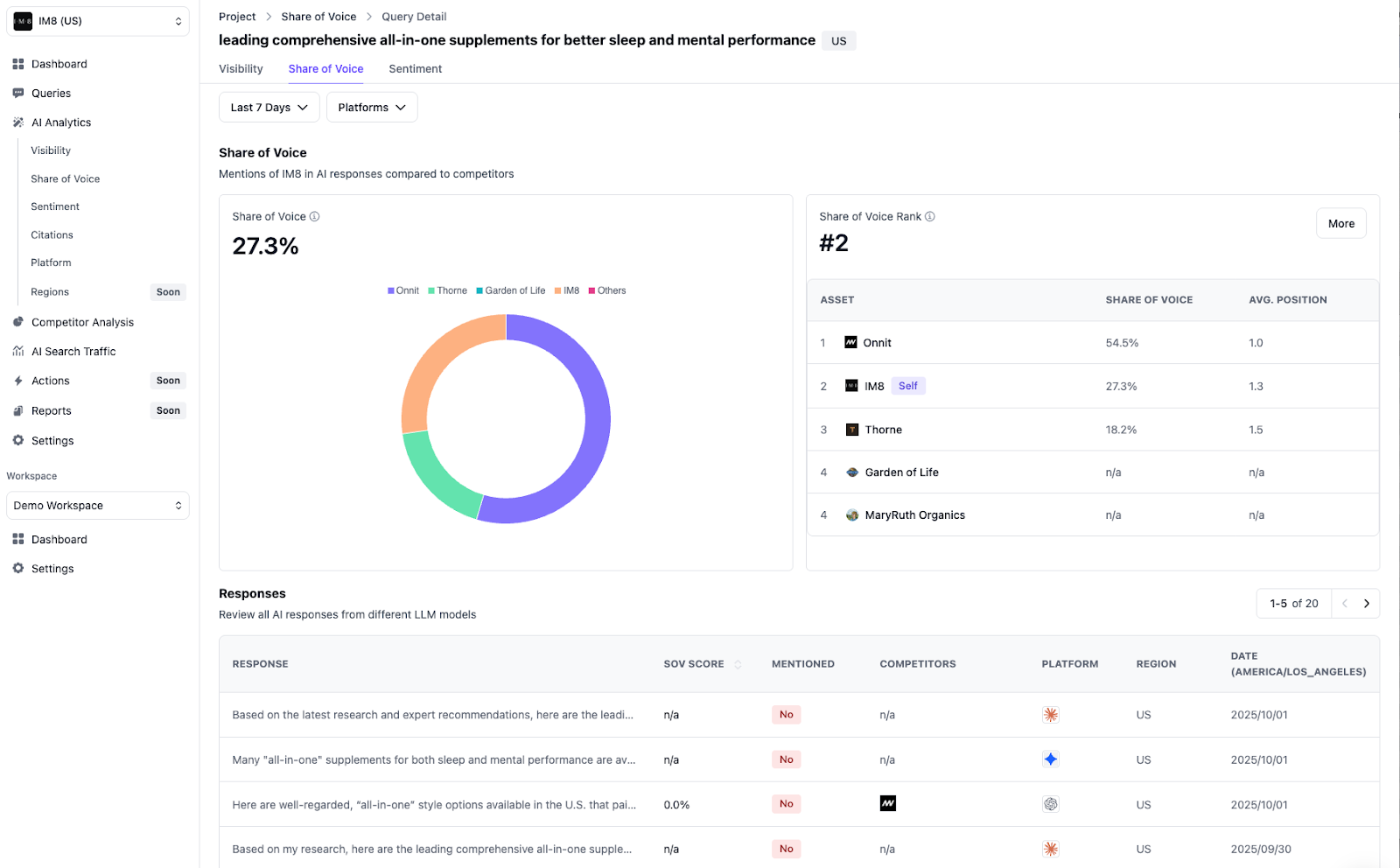
This makes it easier to spot when rival brands are winning more mentions or stronger placements in AI Overviews.
Sentiment, Themes, and Repeated Statements
WorkDuo analyzes whether brand mentions are positive, neutral, or negative and groups recurring patterns into themes such as pricing, product quality, or service.
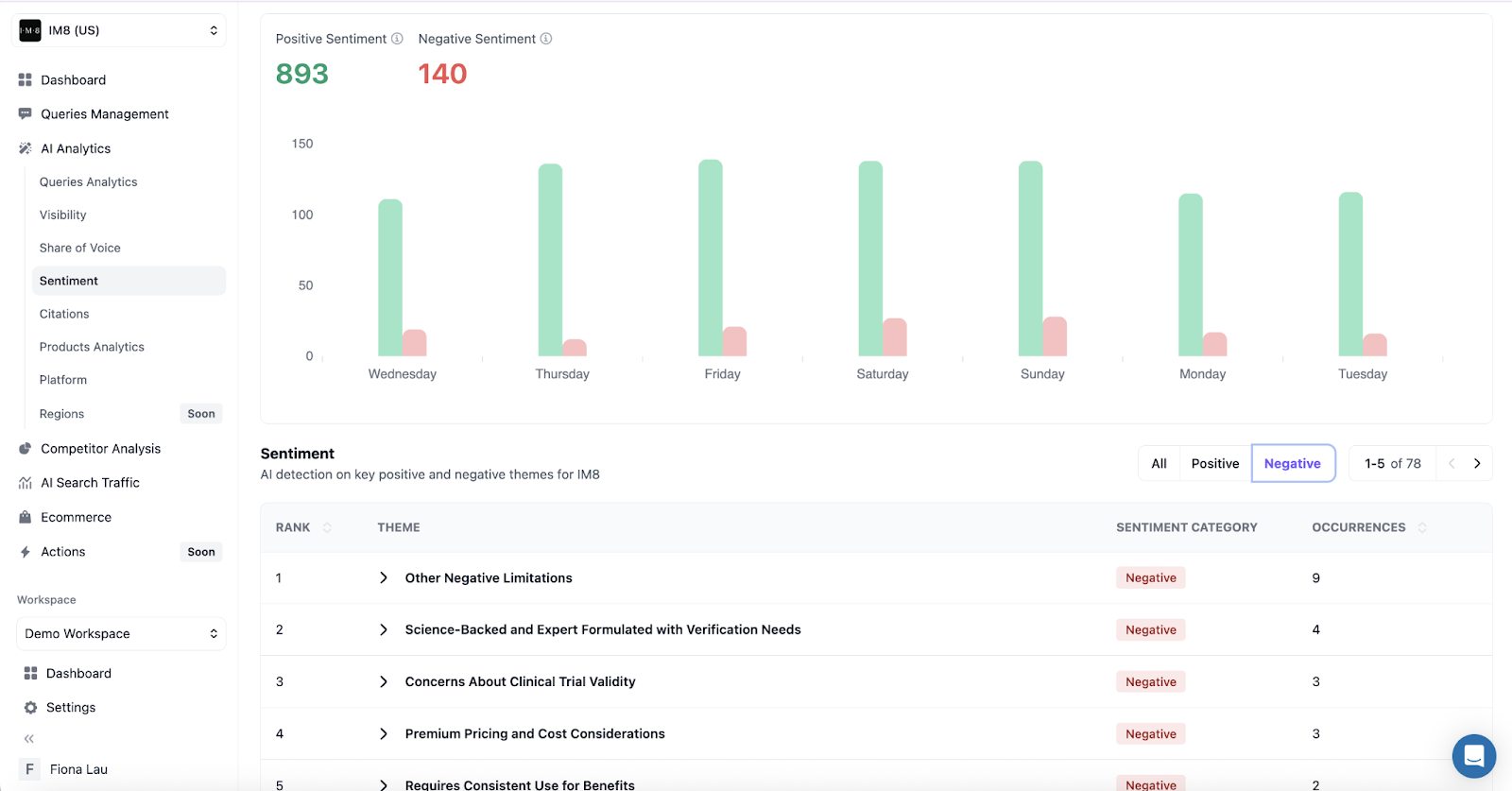
WorkDuo also shows the kinds of statements AI keeps repeating, giving teams clear direction for content, messaging, and PR improvements.
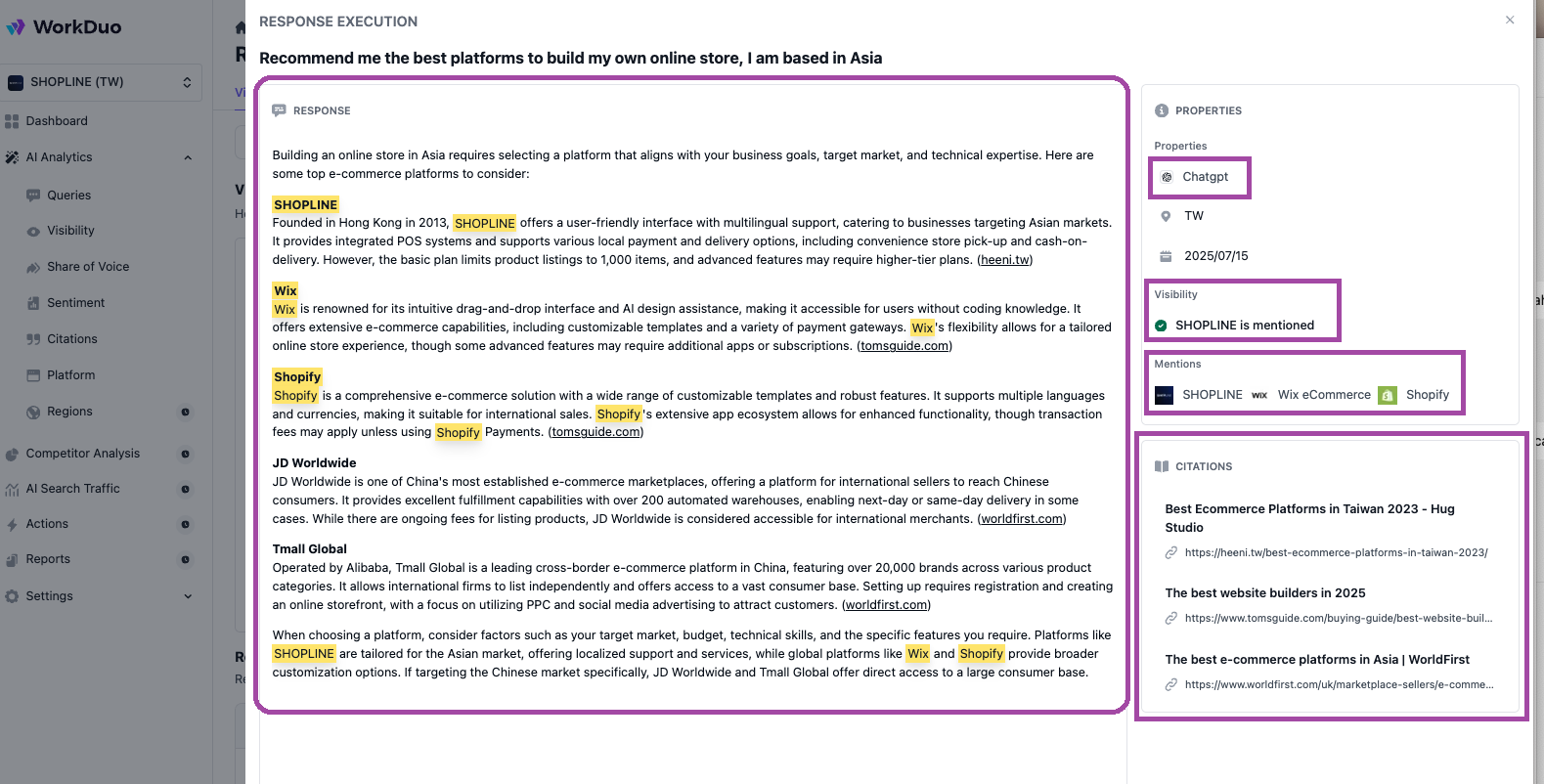
Citation Intelligence
WorkDuo shows which sources are influencing AI-generated answers, including the domains and URLs most often referenced.
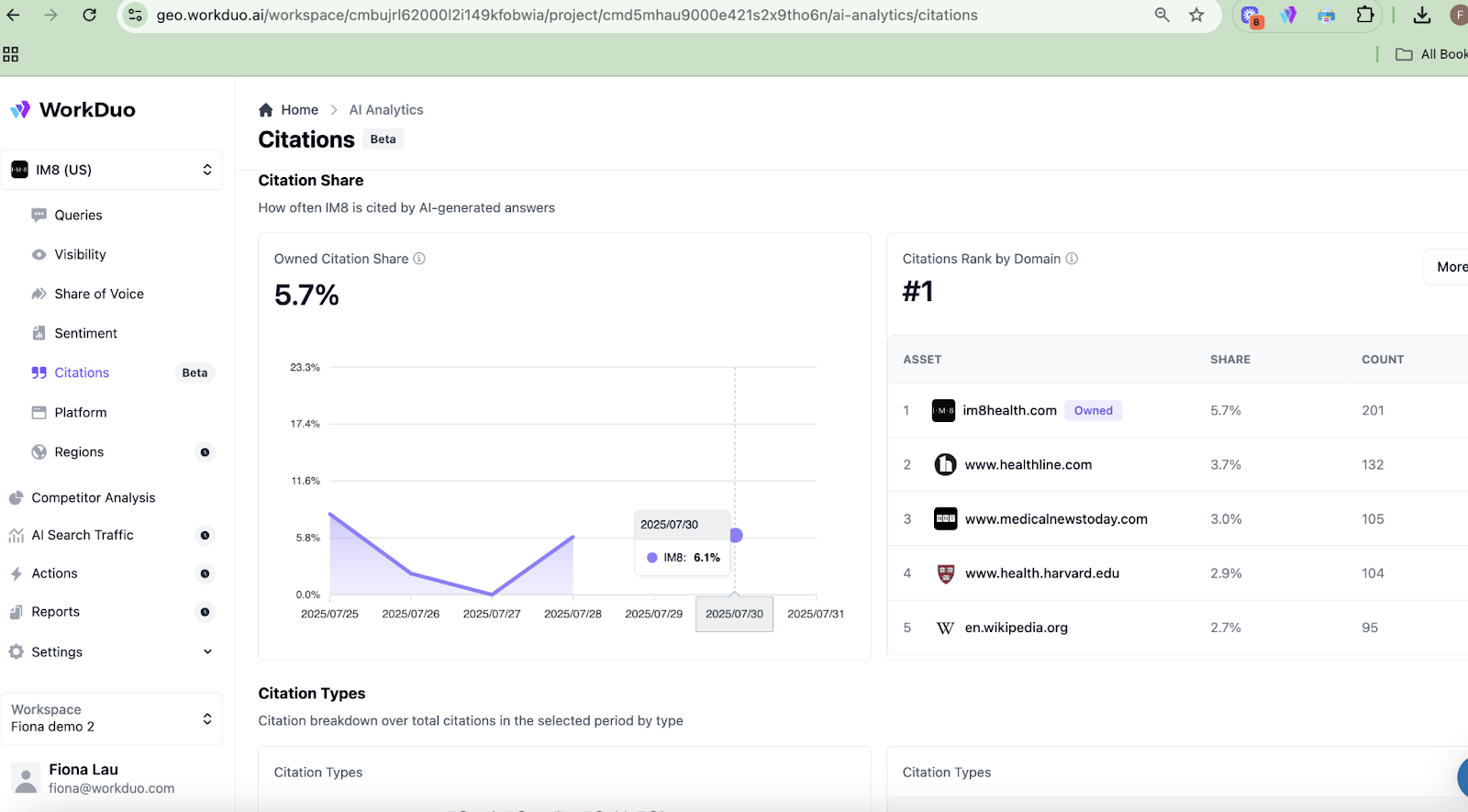
These insights help teams understand which pages, publishers, or third-party mentions are shaping their visibility in AI Overviews and where they should strengthen their presence.
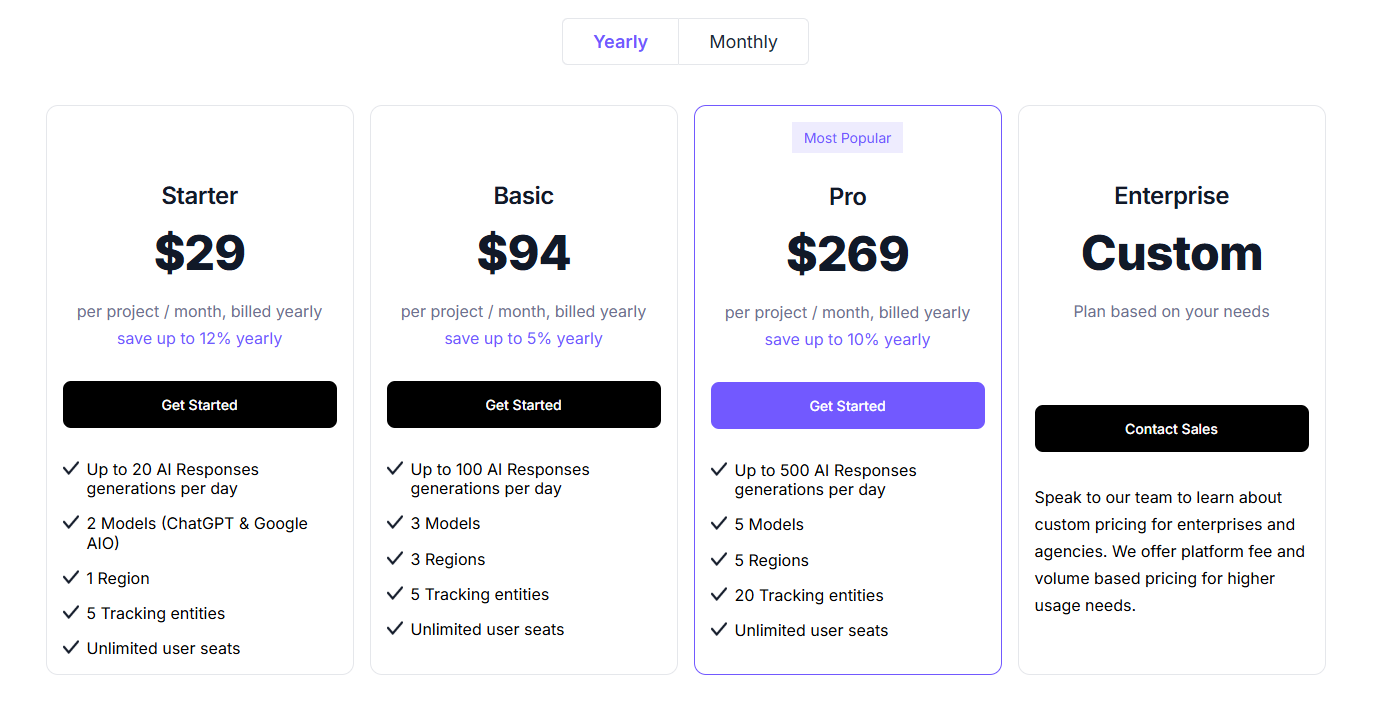
Pricing
Where WorkDuo Shines
- Real-time AI Overviews tracking: WorkDuo pulls prompt results through live browser runs, so you measure what people actually see in Google AI Overviews rather than cleaner or slightly different API-only outputs.
- White-label and API options: You can brand the platform as your own and push AI Overviews data into dashboards, reports, or client portals through API.
- Better volume at a lower price: WorkDuo gives you higher monthly tracking limits at a lower price than many alternatives, so you can monitor more AI Overviews prompts before hitting usage caps.
- Unlimited user seats on every plan: Add as many stakeholders as you need without per-seat fees, which makes cross-team collaboration much easier.
Where WorkDuo Falls Short
- Not an AI content generator: WorkDuo is built for monitoring and analysis, not for generating or mass-producing AI-written content. It also does not auto-publish content across your site or product pages.
Who WorkDuo is Best For
- SMBs: Simple AI Overviews tracking without a heavy reporting setup.
- Product and e-commerce teams: Visibility tracking at product, SKU, category, or offering level.
- SEO and content agencies: Multi-client reporting with competitor and sentiment insights.
- Global brands: Scalable cross-market tracking from one source of truth.
You can also explore our curated list of the top AEO platforms for agencies to see how different tools stack up for client management.
2. Profound: Best for Enterprise AI Visibility Tracking
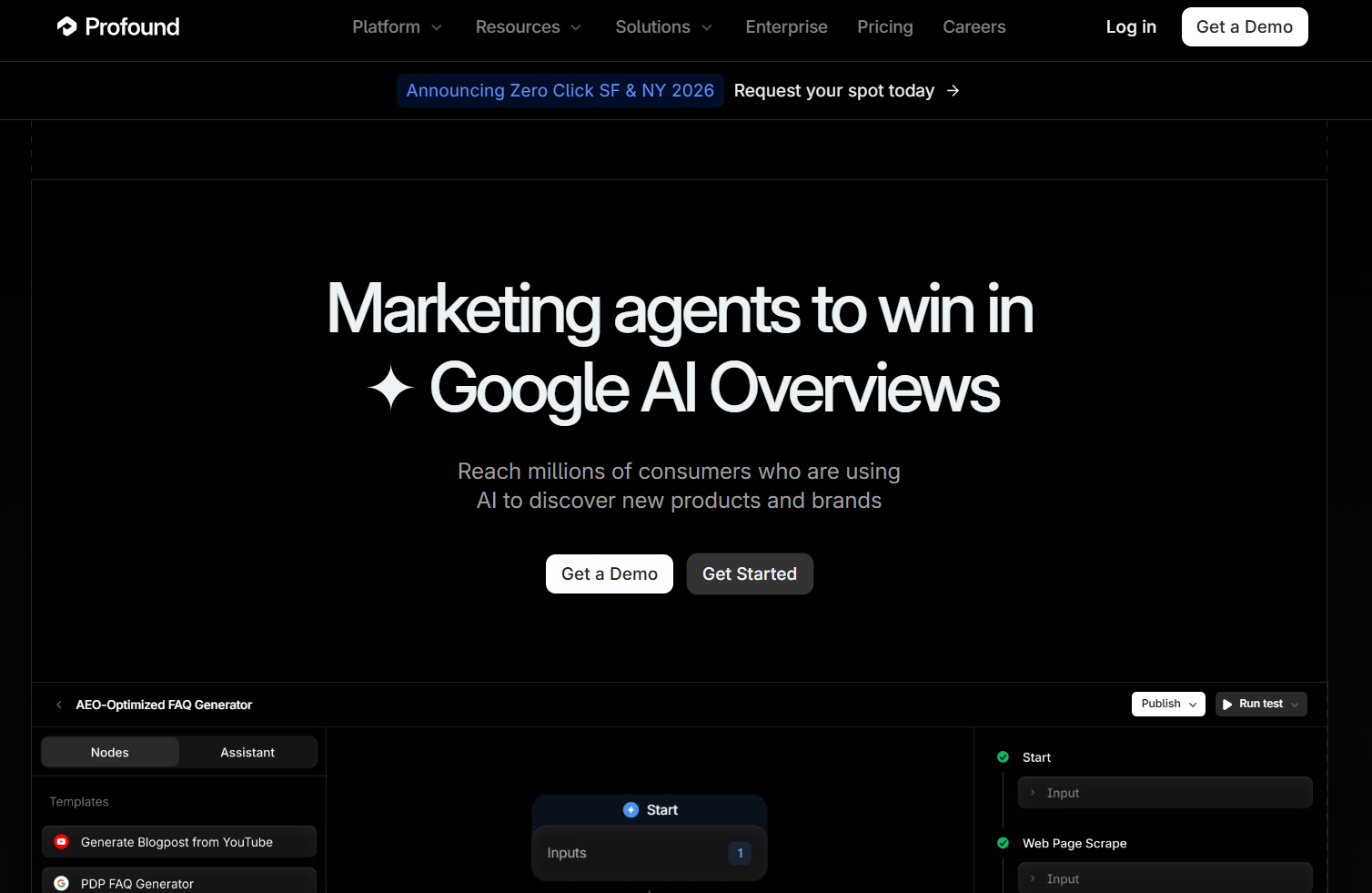
Profound helps brands track how they appear across AI answer engines like ChatGPT, Google AI Overviews, and Perplexity. It is built more for visibility intelligence, citation tracking, and competitor monitoring than for general SEO workflows.
Key Features
- AI visibility tracking: Monitors brand presence across answer engines.
- Citation insights: Shows which sources and pages get cited.
- Share of voice: Compares your visibility against competitors.
Pricing
Where Profound Shines
- Prompt tracking: Helps teams see which prompts matter and how visibility shifts across answer engines over time.
- Competitive insights: Makes AI share of voice easier to compare by showing how often your brand appears against competitors.
- Enterprise depth: Offers broader reporting and workflow coverage, making it a better fit for teams that need deeper AI-search insight.
Where Profound Falls Short
- Quote-based pricing: Harder to assess fully without a sales conversation.
- Set-up heavy: Works best when teams already know which prompts, competitors, and topics they want to track.
- Overbuilt for small teams: May feel heavier than necessary for teams with lighter tracking needs.
Customer Reviews
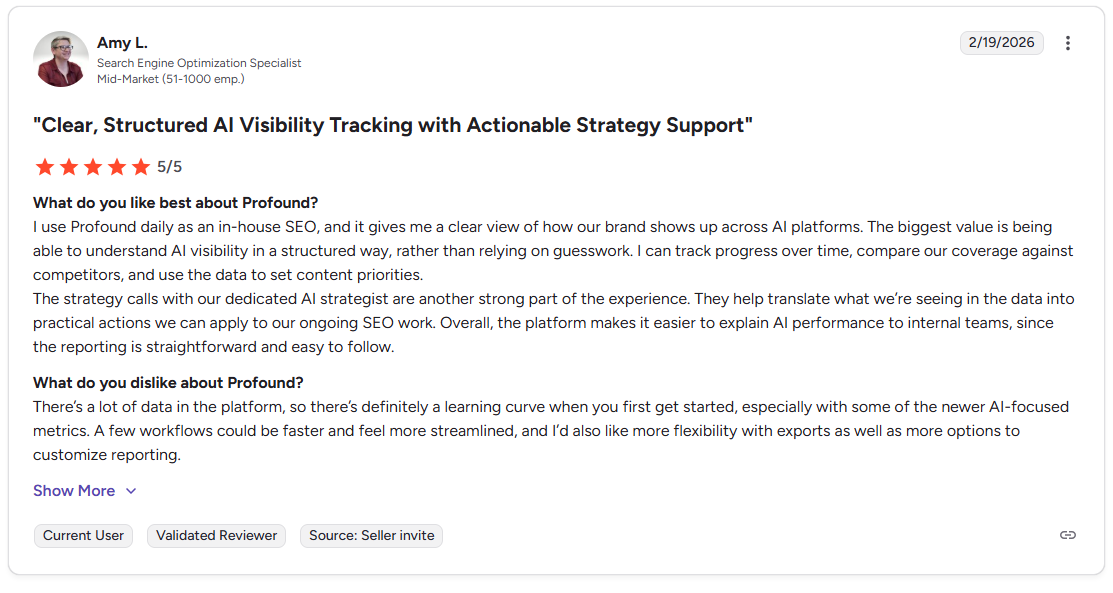
Amy L., a Search Engine Optimization Specialist, reviewed Profound on G2 and said it gives her a clear, structured view of her brand’s visibility across AI platforms.
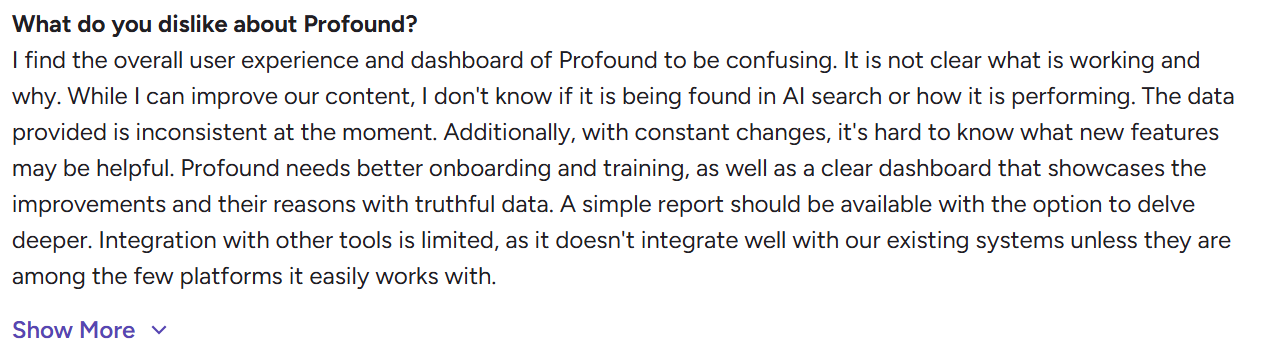
Keri R. wrote on G2 that Profound feels confusing and inconsistent, with unclear performance signals, limited integrations, and a need for better onboarding, reporting, and a clearer dashboard.
Who Profound is Best For
- SEO and AEO teams: Track AI visibility and citations.
- Digital PR teams: Monitor mentions and brand presence.
- Content teams: Find topics to update or expand.
- Agencies: Manage AI visibility across client accounts.
3. Otterly.AI: Best for Lightweight AI Search Monitoring
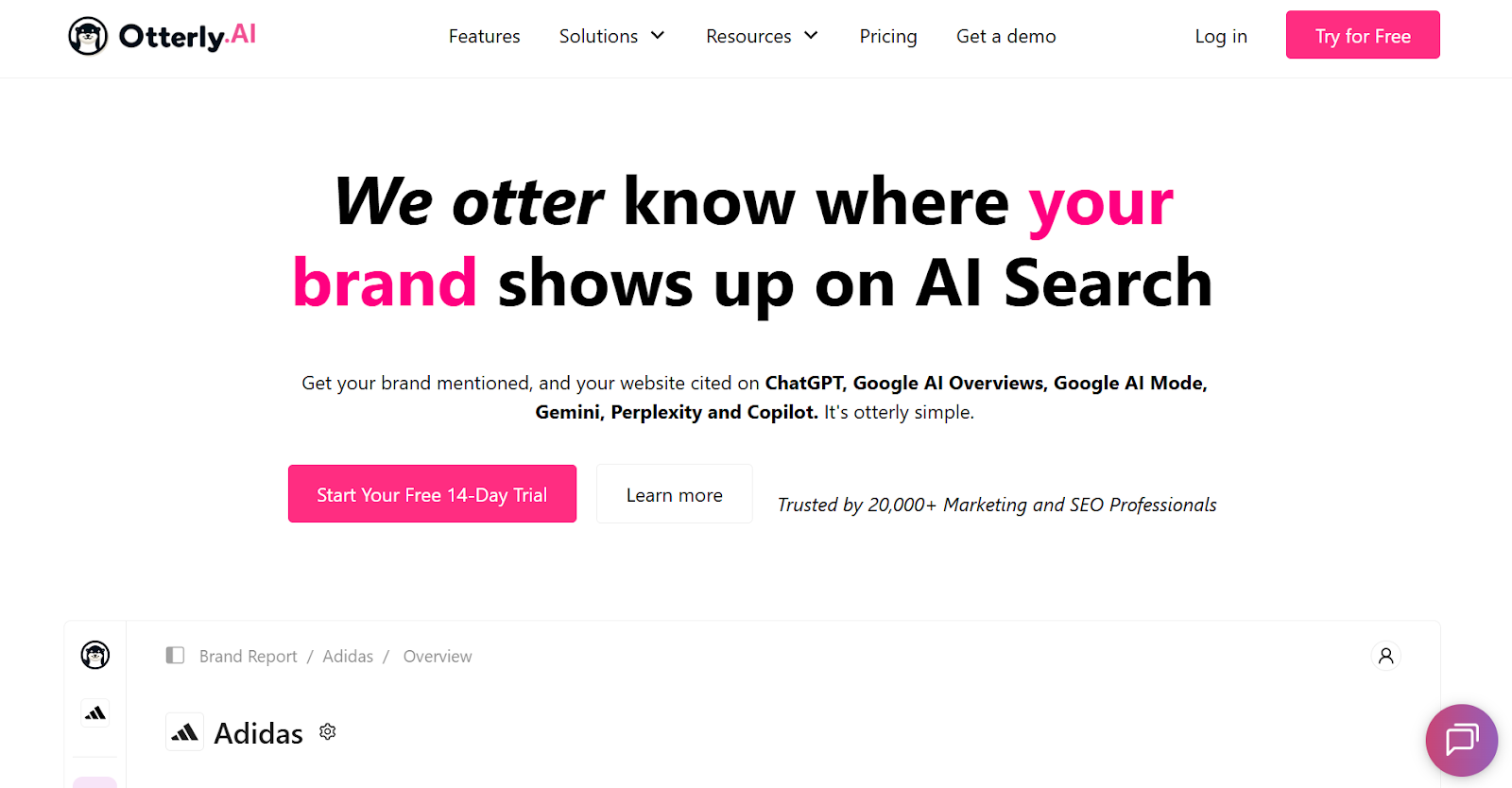
Otterly.AI helps brands track how they appear in AI search results across tools like ChatGPT, Perplexity, and Google AI Overviews.
A lighter entry point makes it more appealing for teams that want prompt tracking, citation data, and visibility reporting without jumping straight into a heavier platform.
Key features
- Prompt tracking: Monitors visibility by search prompt.
- Citation tracking: Shows which URLs and domains get cited.
- GEO audits: Highlights pages that may need content optimization.
Pricing
Where Otterly.AI Shines
- Easy starting price: Entry pricing is more accessible than many enterprise-led tools.
- Agency-friendly workflow: Workspaces, brand reports, and connectors support multi-client tracking.
Where Otterly.AI Falls Short
- Less deep analysis: Better for focused monitoring than complex enterprise workflows.
- Add-ons can stack up: Google AI Mode and Gemini cost extra.
- Prompt setup still matters: Weak inputs can limit insight quality.
- Surface-level sentiment: Labels can miss context and misclassify occasionally.
Customer Reviews
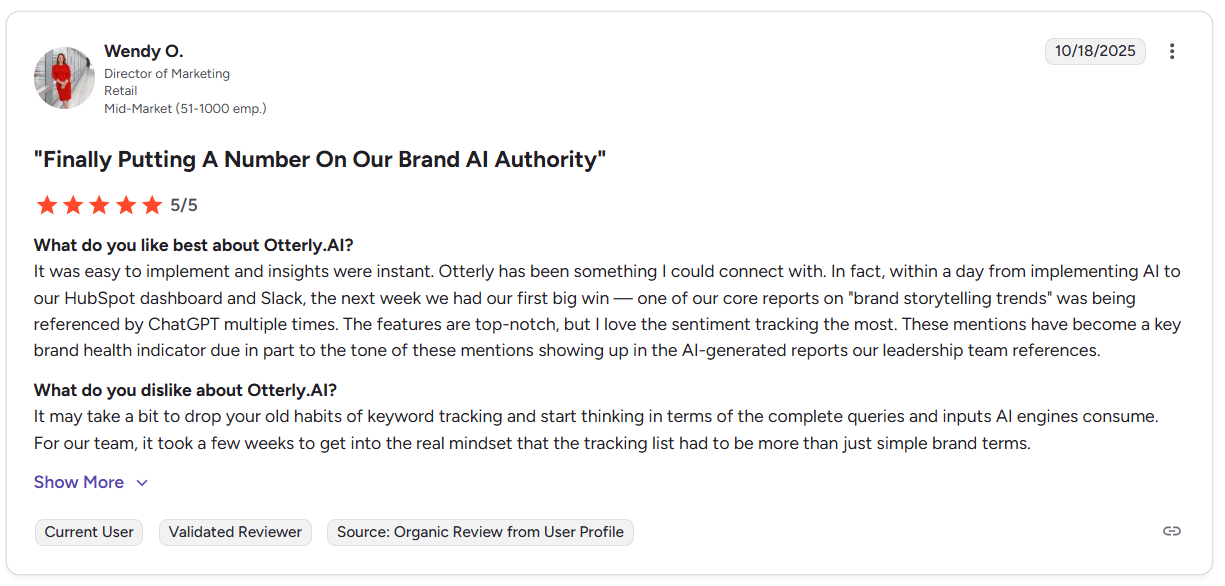
Wendy O., Director of Marketing, wrote on G2 that Otterly.AI was quick to implement and delivered fast wins, with sentiment tracking becoming a key brand health signal for her team.
A Reddit user reviewing GEO tools said Otterly.AI tracks citations but offers little practical guidance on improving content to earn more mentions.

Who Otterly.AI is Best For
- Small marketing agencies: Run client reporting across multiple brands and workspaces.
- SMBs: Start AI visibility monitoring at a lower cost.
4. Scrunch: Best for Serving AI-Optimized Site Content to Agents
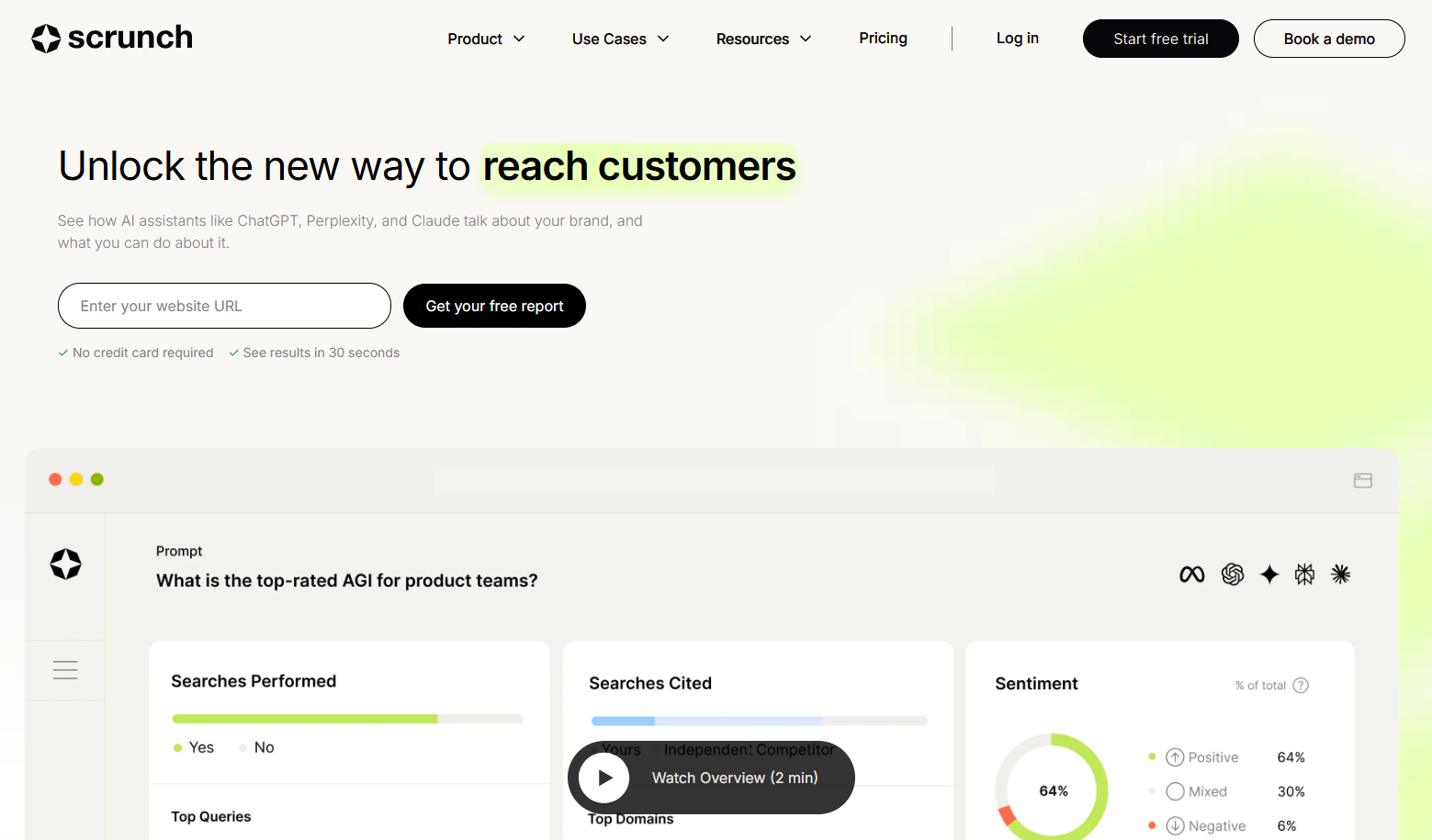
Scrunch monitors how your brand shows up across AI-driven search and answer engines, including citations, competitors, and trends.
Key Features
- AI monitoring and insights: Tracks presence, citations, trends, and competitors.
- AI share of voice: Compares visibility by prompt, persona, region, and topic.
- AXP content delivery: Serves AI-optimized versions of site content for more reliable retrieval.
Pricing
Where Scrunch Shines
- Competitor and category visibility: Clear share-of-voice views across prompts and topics.
- Prompt and sentiment monitoring: Useful for tracking how LLMs talk about your brand over time.
Where Scrunch Falls Short
- Prompt setup work: Value depends on well-scoped topics, prompts, personas, and governance.
- Integrated editing gaps: You may still need separate content workflows for execution.
- Cost can rise with scale: Pricing expands as you add usage and coverage.
Customer Reviews
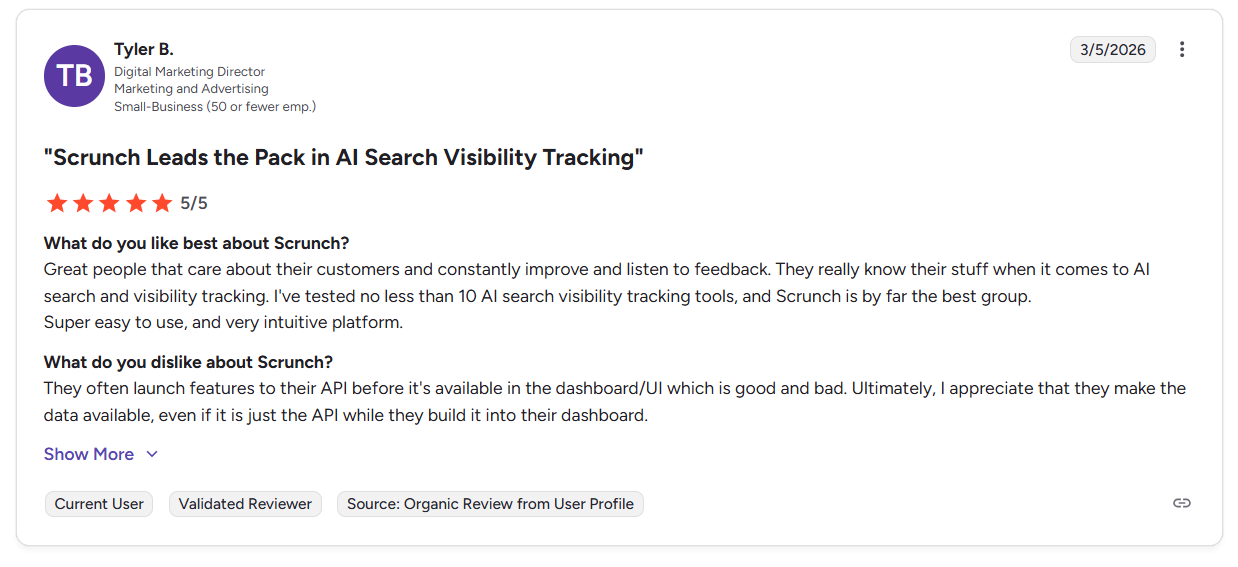
Tyler B., Digital Marketing Director, wrote that Scrunch is the most effective AI visibility-tracking tool he has tested, and that he found the platform intuitive and the team highly responsive to customer feedback.
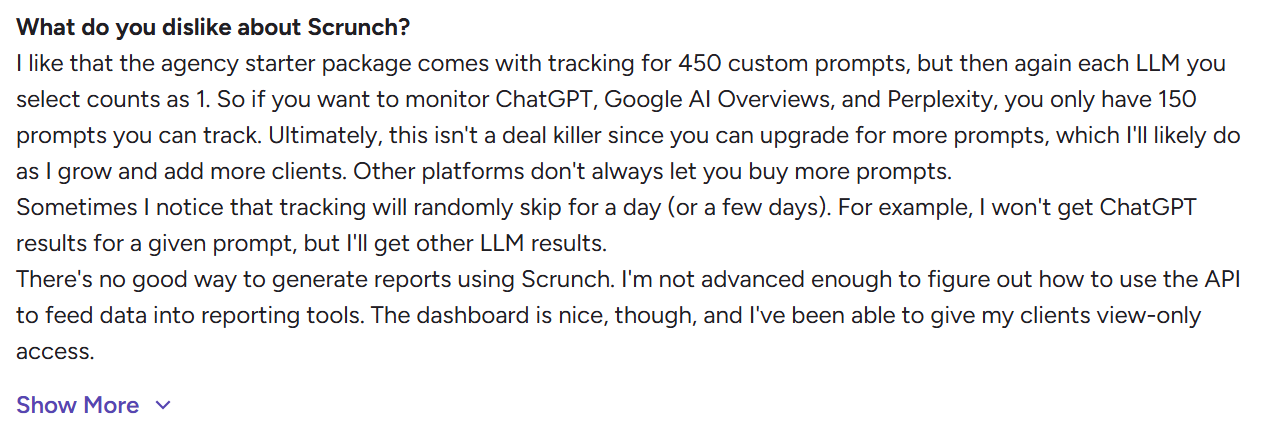
In a similar G2 review, Tehra P., Owner/President, said Scrunch’s prompt limits shrink fast across multiple LLMs, tracking can occasionally skip days, and reporting is hard to generate without using the API.
5. Semrush: Best for Adding AI Visibility Tracking to a Legacy SEO Stack
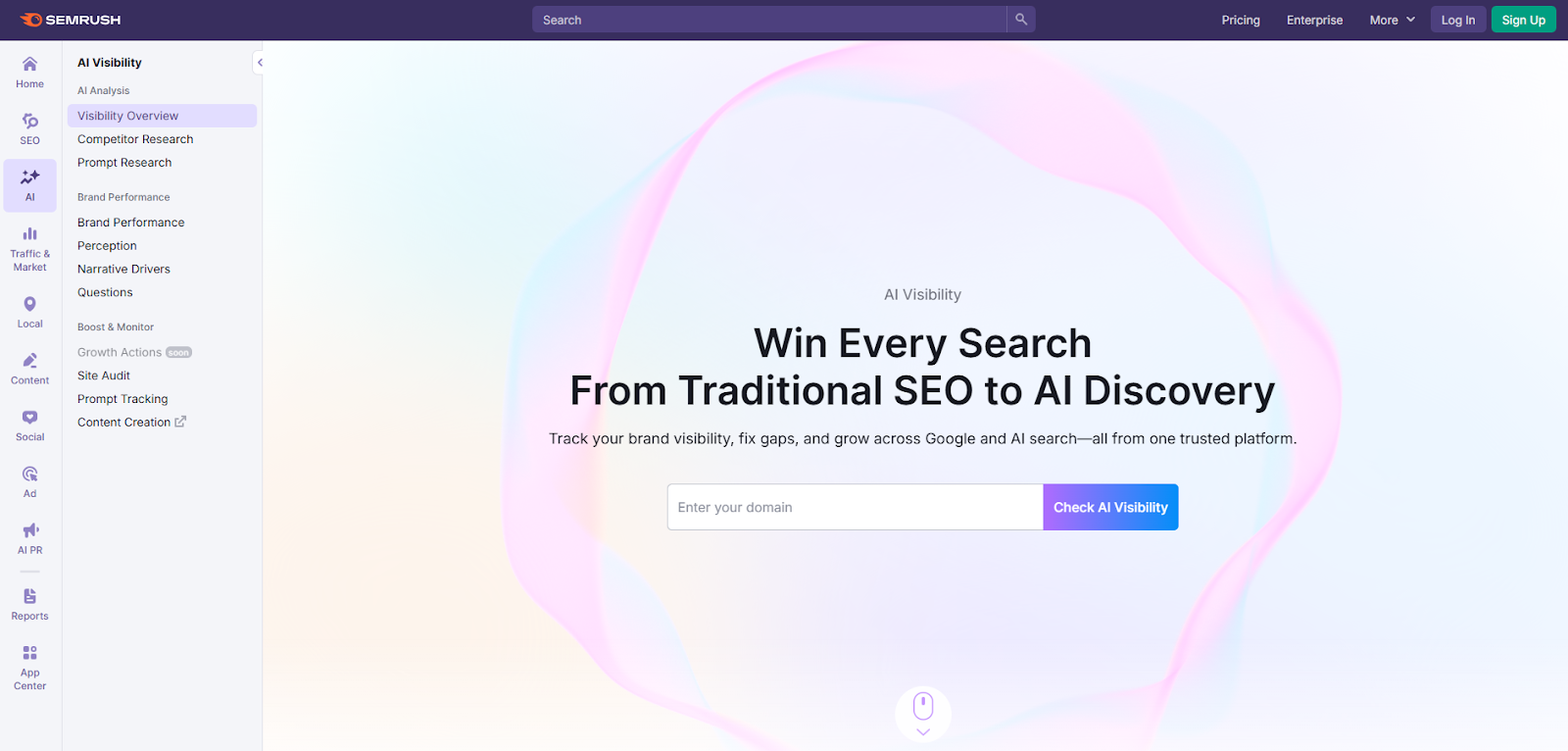
Semrush is a legacy SEO platform that now includes an AI Visibility Toolkit to track how your brand appears in AI-driven search results, such as ChatGPT and Google AI Overviews.
Key Features
- AI visibility benchmarking: Measures how often your brand appears in AI answers versus competitors.
- AI crawler audit: Flags technical issues that could block AI crawlers from accessing your site.
Pricing
Where Semrush Shines
- All-in-one SEO + AI view: Pairs AI visibility signals with the broader Semrush SEO toolset.
Where Semrush Falls Short
- Feels like an add-on: Strong feature, but not built end-to-end for AI search.
- Tight base limits: Starts at one domain and 25 prompts.
Customer Reviews
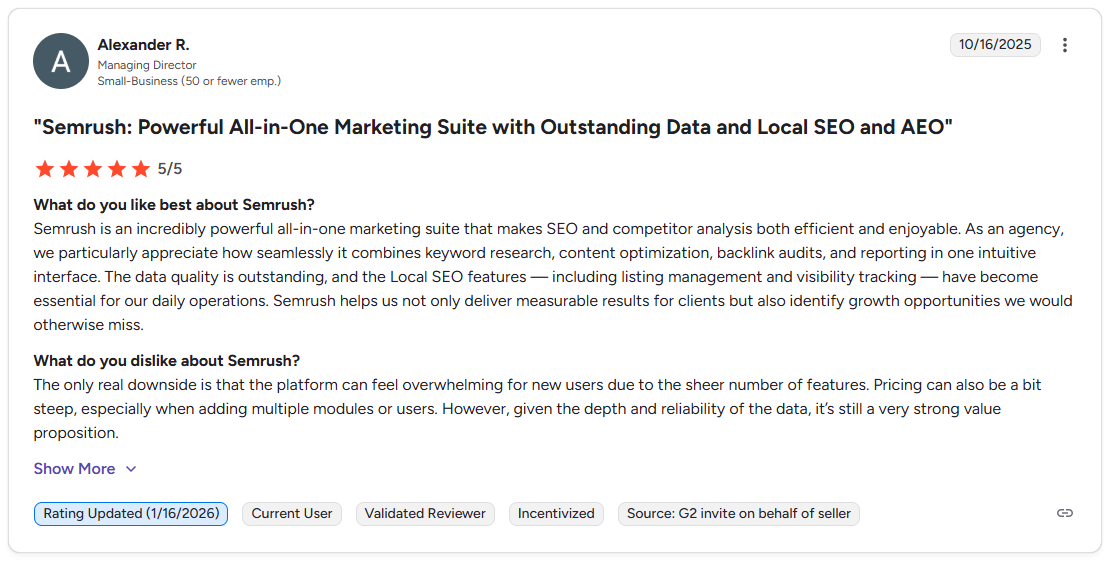
Alexander R. shared on G2 that Semrush is a powerful all-in-one suite that streamlines SEO and competitor analysis, with strong data quality, essential local SEO tools, and reporting that helps his agency deliver results and spot new growth opportunities.
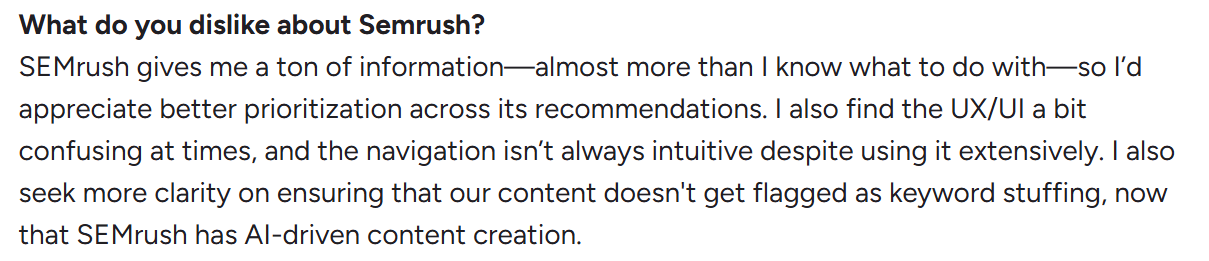
Kendal R., Brand and Content Director, said on G2 that Semrush can feel overwhelming and hard to navigate, and she wants clearer prioritization and guidance to avoid keyword stuffing when using its AI content features.
6. Peec AI: Best for Prompt-Led AI Search Analytics
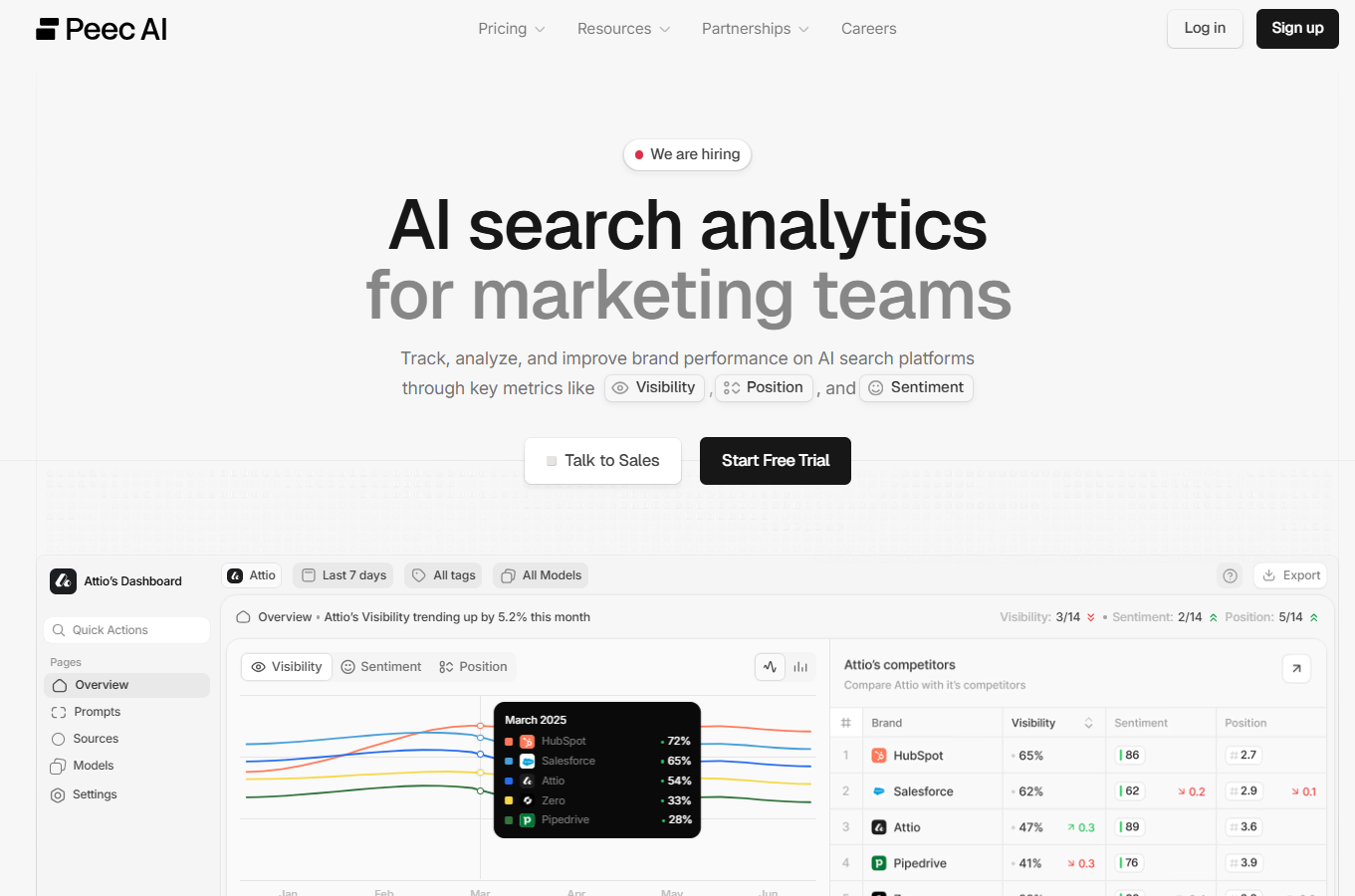
Built for AI-driven search analytics, Peec AI helps you identify the prompts that matter, monitor your brand’s visibility in AI answers, and compare performance against competitors.
Prompt setup and tracking are central, so teams can see where they appear and how that changes over time across models in one dashboard.
Read our deep-dive Peec AI review to see how it limits data-to-action gaps
7. ZipTie: Best for Screenshot-Backed AI Overviews Tracking
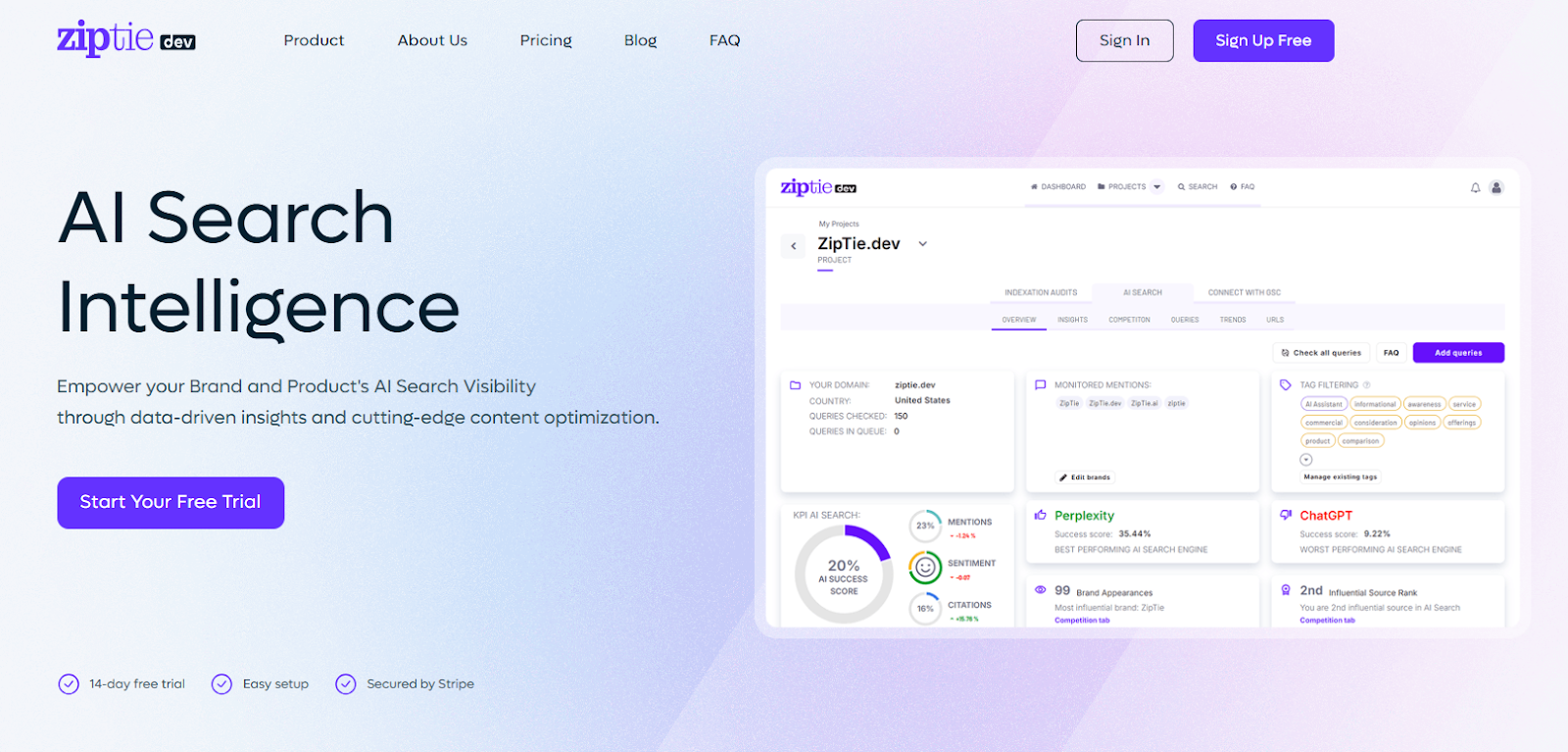
If you need proof of what users actually see, ZipTie tracks Google AI Overviews plus answers in ChatGPT and Perplexity, often with downloadable screenshots.
The platform focuses on live-result monitoring, visibility analytics, and guidance on where to improve, making AI search changes easier to explain to stakeholders in weekly reports.
8. BrightEdge: Best for Enterprise AI Visibility Inside A Legacy SEO Platform
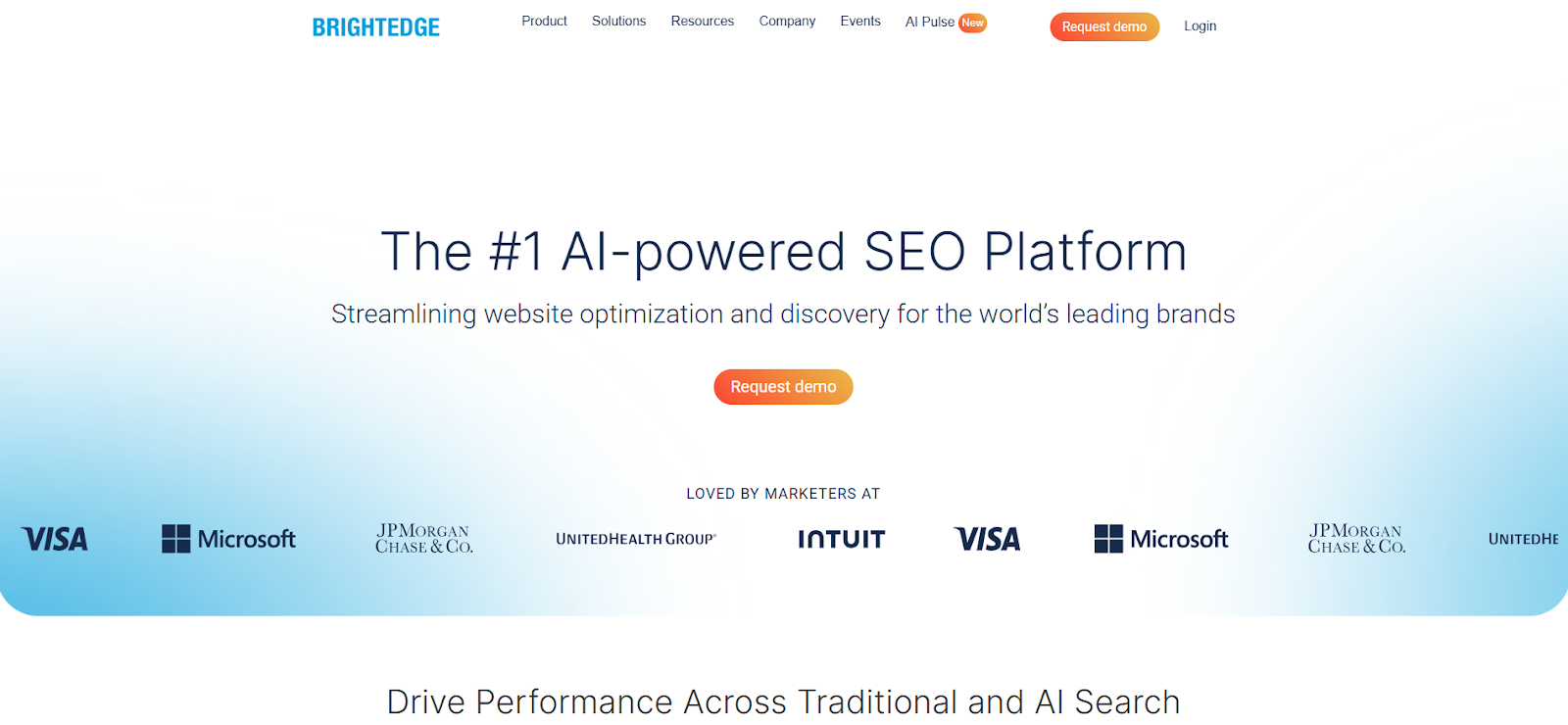
For large sites already running enterprise SEO, BrightEdge adds AI visibility through AI Catalyst, covering presence and sentiment across AI search engines like Google AI Overviews, ChatGPT, and Perplexity.
Unified reporting helps teams connect AI results to existing optimization workflows, enabling them to prioritize pages and prove impact across key markets.
9. Writesonic: Best for AI Visibility Tracking With Built-In Actions
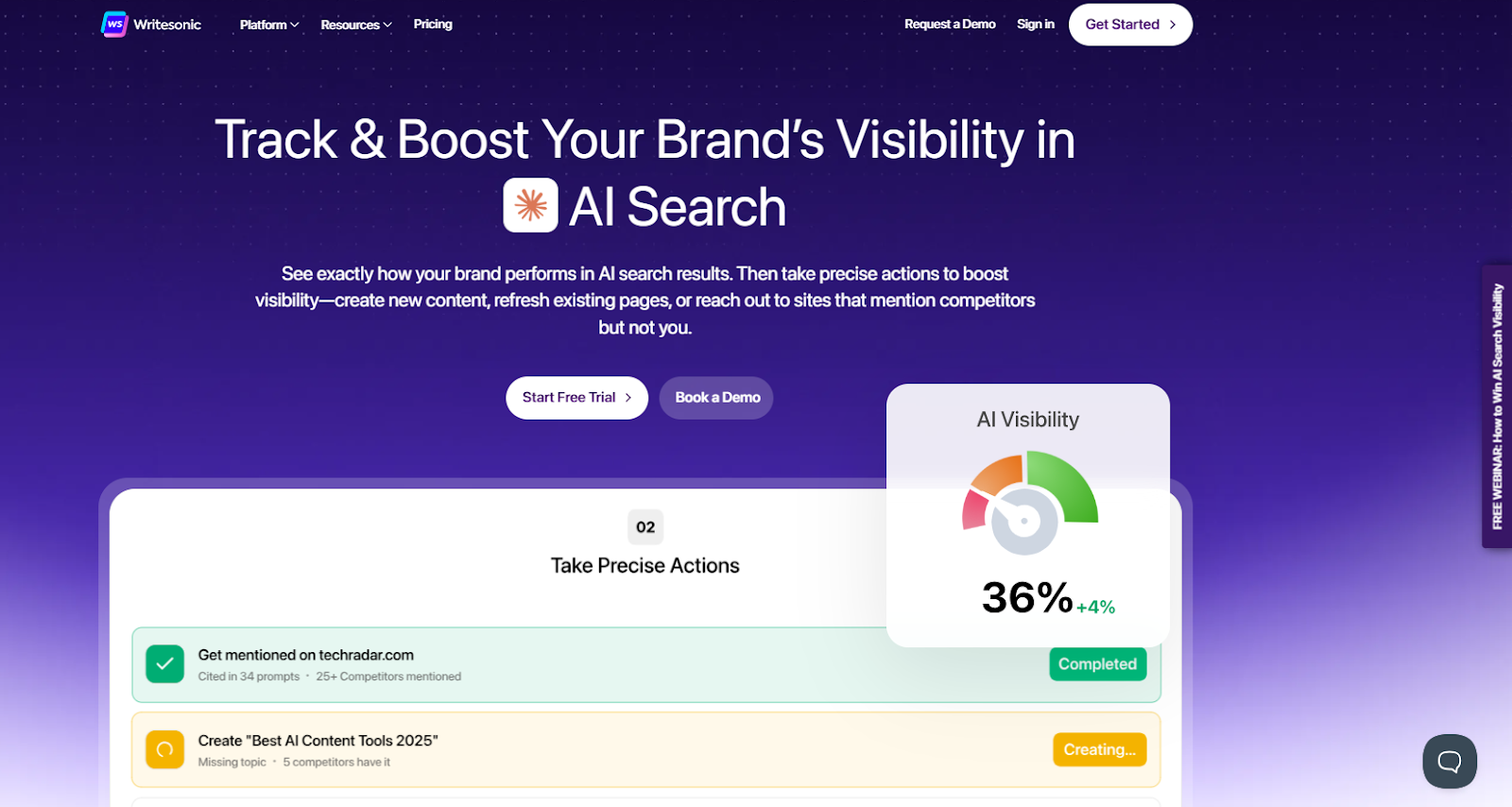
Rather than stopping at tracking, Writesonic pairs AI visibility monitoring with actions to improve citations and mentions.
You can watch visibility scores, sentiment, and citations across platforms like ChatGPT, Gemini, and Perplexity, then use built-in workflows to refresh content and close citation gaps without switching tools or rebuilding your process.
How to Choose the Best AI Overviews Monitoring Tool
Here’s how to choose an AI Overviews tool that gives you clearer insights for decision-making.
1. Choose a Tool Built for More Than AI Overviews
Do not choose a tool that only tracks Google AI Overviews if you are likely to expand into tracking visibility across platforms like ChatGPT, Claude and other AI-powered search engines.
WorkDuo is positioned around multi-platform AI visibility, which makes it easier to grow coverage without switching tools later.
2. Track More AI Answers for the Price
Choose a tool that gives you enough tracked AI responses to spot patterns quickly, not one that charges a lot while limiting usage. This is especially critical when comparing AI analytics tools for ecommerce since online stores often need to monitor hundreds of daily search variations across diverse categories.WorkDuo’s entry plan tracks 20 AI responses per day, giving you useful visibility from the start.
3. Look for Global-Native Coverage
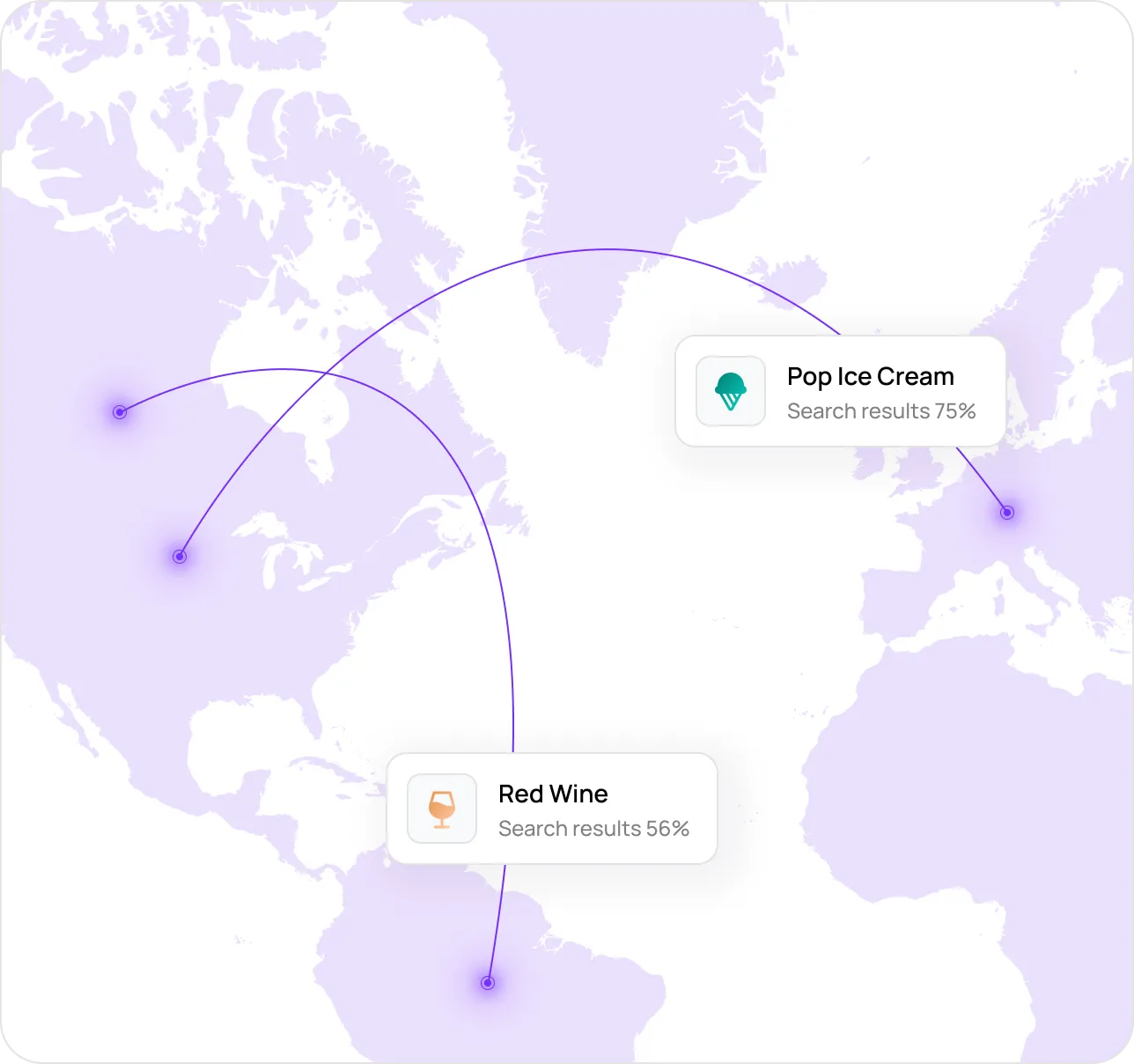
AI results can vary by market, region, and language, so your tool should reflect what users actually see across different regions and languages. WorkDuo helps global brands and agencies track AI search visibility across regions for a more accurate view.
4. Pick a Tool With Alerts and Trend Tracking
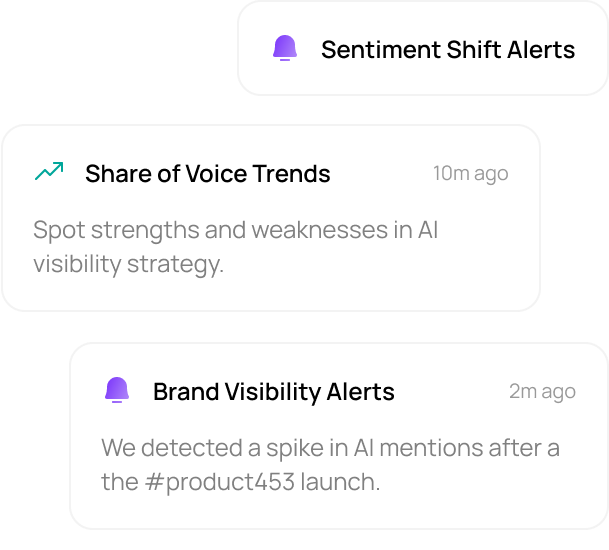
The best tools do more than show rankings, because they also help you catch changes early before they affect visibility or revenue. WorkDuo includes brand visibility alerts, share-of-voice tracking, and sentiment-based alerts to help you stay ahead.
Stop Guessing. Start Tracking AI Overviews with WorkDuo
AI Overviews change fast, and guessing is not a strategy. WorkDuo helps you monitor visibility, spot shifts early, and track how your brand appears across AI answers and markets. Turn scattered insights into action with a platform built for growing needs.
Get your free trial and start tracking with confidence.
Fiona is the Co‑Founder of WorkDuo AI, where she helps brands optimize their AI search visibility. Previously, she co‑founded SHOPLINE, a smart commerce platform in Asia, and led its successful exit to a NASDAQ‑listed company in 2022. With deep expertise in scaling tech businesses and working with global investors, Fiona now advises startups on growth and data-driven decision-making, while leading WorkDuo’s mission to improve how brands are represented in AI-driven search.

Ready to try our product?
Sign up for a free consultation with our experts.


Follow Us on Social Media
Follow our profiles for daily updates, behind-the-scenes content, and more.


More articles