9 Best AI Search Analytics Tools for Ecommerce in 2026
.png)
- WorkDuo is an AI search analytics platform for ecommerce brands and agencies that need product-level visibility tracking, competitor benchmarking, source analysis, and reporting built around AI-driven product discovery.
- AI search analytics for ecommerce is no longer just about website visibility. Teams now need to understand how AI platforms surface products, categories, variants, and offers during shopping and recommendation journeys.
- Different ecommerce AI search tools solve different problems. Azoma focuses on shopping agent visibility, Zoovu supports on-site product discovery, Profound adds AI shopping analytics, and Ecomtent is more focused on product listing optimization.
- Broader platforms like Semrush, Similarweb, AthenaHQ, and BrightEdge connect ecommerce AI search analytics with wider SEO, traffic analysis, optimization, and enterprise reporting workflows.
- When choosing an ecommerce AI search analytics tool, teams should compare product-level tracking, how the data is collected, user access, and reporting flexibility, especially if multiple teams or client accounts need to use the platform.
Ecommerce teams used to optimize for rankings and ads. Now they also need to understand what happens when shoppers ask AI what to buy. With generative AI traffic to retail sites up 4,700% YoY and AI-driven shoppers converting about 4X higher (12.3% vs 3.1%), tracking AI visibility is quickly turning into a revenue lever.
This article compares 9 AI search analytics tools for ecommerce, covering what each tool measures, how they track product and category visibility, competitor comparisons, and which options fit different team sizes and catalog complexity.
1. WorkDuo: Best for AI Search Analytics and Competitive E-Commerce Insights

WorkDuo is an AI search analytics platform that helps e-commerce brands and agencies see how their products appear across AI search and recommendation experiences.
It is especially useful for teams that need to measure product visibility, track competitor presence, and understand how AI-generated answers influence product discovery and buying decisions.
Key Features
Product-Level AI Visibility
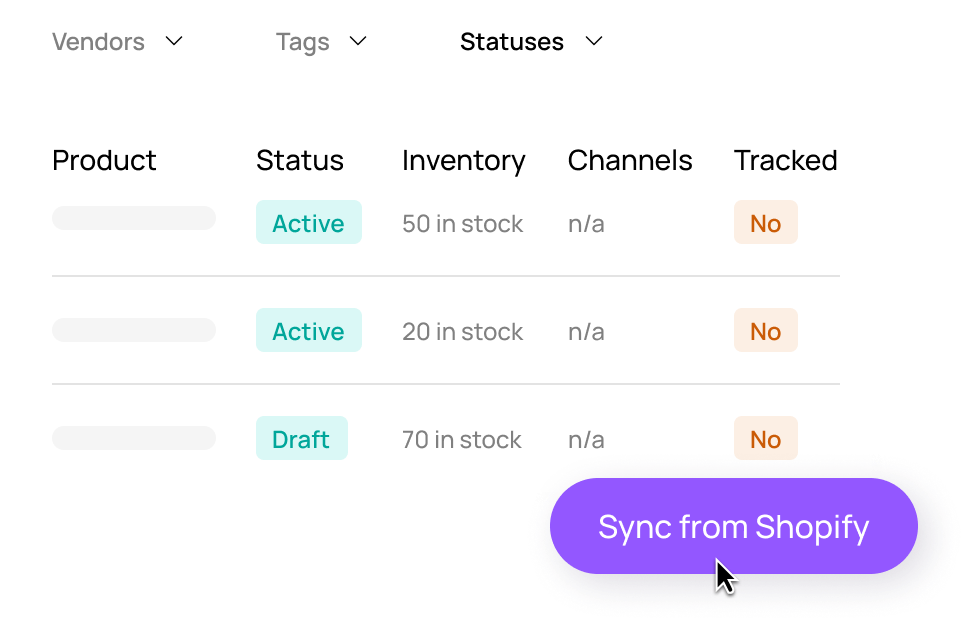
WorkDuo helps teams see which products are mentioned or recommended in AI-generated results. It also shows when competing products appear instead, giving e-commerce teams a clearer view of product-level performance.
Competitive Context Inside AI Answers
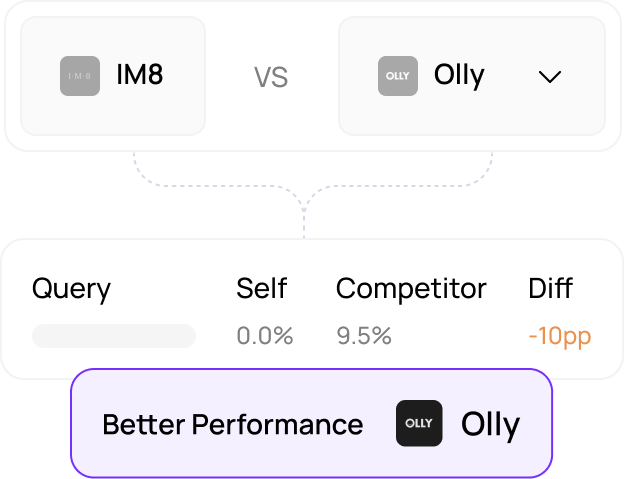
The platform shows how products are framed when AI tools compare options. This helps teams understand where competitors are gaining visibility, how their own brand is positioned, and what may be influencing purchase decisions
Source and Sentiment Intelligence
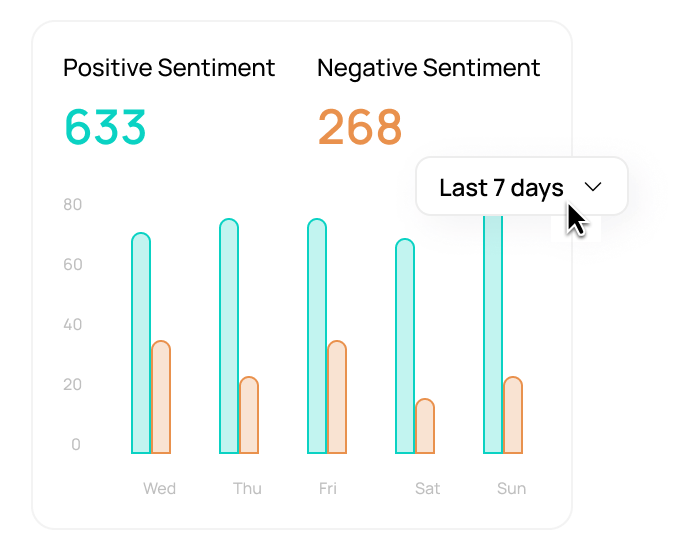
WorkDuo helps teams identify the sources AI platforms use and how products are described in generated answers. This makes it easier to find weak sources, messaging gaps, and positioning issues that could affect product performance.
Commerce-First Visibility Tracking
WorkDuo is built around commercial discovery, product recommendations, and competitive comparisons. This makes it a stronger fit for e-commerce analytics than tools that only track broad brand mentions.
Query-Level Response Analysis
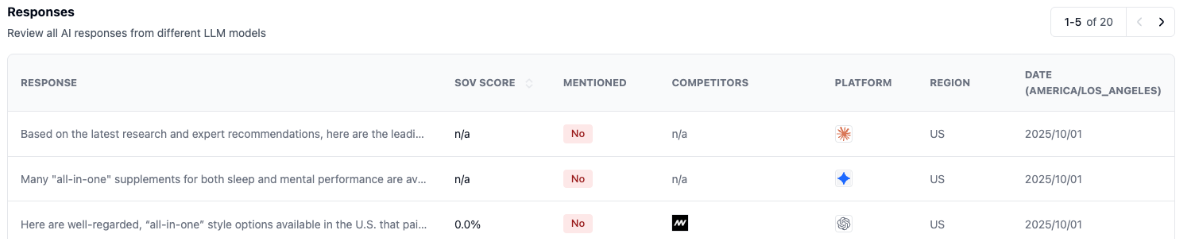
Teams can review individual prompts to see whether their products appear, which competitors are included, and how results change across different queries. This gives teams more context than summary visibility scores alone.
For a deeper look at platforms optimized specifically for Anthropic's model, check out our evaluation of the top Claude SEO tracker tools currently leading the market.
Agency-Ready Reporting and Benchmarking
WorkDuo supports client-ready dashboards, benchmarking, API access, and white-label workflows. This helps agencies manage reporting across multiple e-commerce clients more easily.
Where WorkDuo Shines
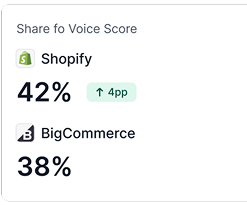
- Competitive benchmarking: Teams can compare visibility, share of voice, and product positioning across competitors more clearly.
- Real-time tracking: Its browser-based tracking gives teams a closer view of live AI search results than tools that rely mainly on API outputs.
- Agency partner support: Client-ready dashboards, benchmarking features, and partner-first support make it easier to manage multiple retail accounts.
- Better value for the price: WorkDuo offers strong tracking capacity at a more accessible entry point than some higher-priced alternatives.
- Alerts and trends: Teams can monitor shifts in AI recommendations before they affect traffic, conversions, or revenue.
- AI product fit readiness: Its upcoming product-fit readiness features are designed to help teams align product data and schema with how AI ecosystems interpret and recommend catalog.
Where WorkDuo Falls Short
- Not built for content creation: WorkDuo focuses on AI search tracking and analytics, not generating product descriptions, landing pages, or other written content.
- Not a publishing tool: It does not publish updates directly to product pages, category pages, or e-commerce storefronts.
Who WorkDuo Is Best For
- E-commerce brands: Best for teams that want to understand how AI platforms surface, recommend, and compare their products.
- Agencies with retail clients: A strong fit for agencies managing multiple e-commerce accounts and reporting on AI search visibility.
- Growth and merchandising teams: Useful for teams that need clearer insight into how AI search affects product discovery and buying behavior.
2. Azoma: Best for Product-Level AI Search Analytics Across Shopping Agents
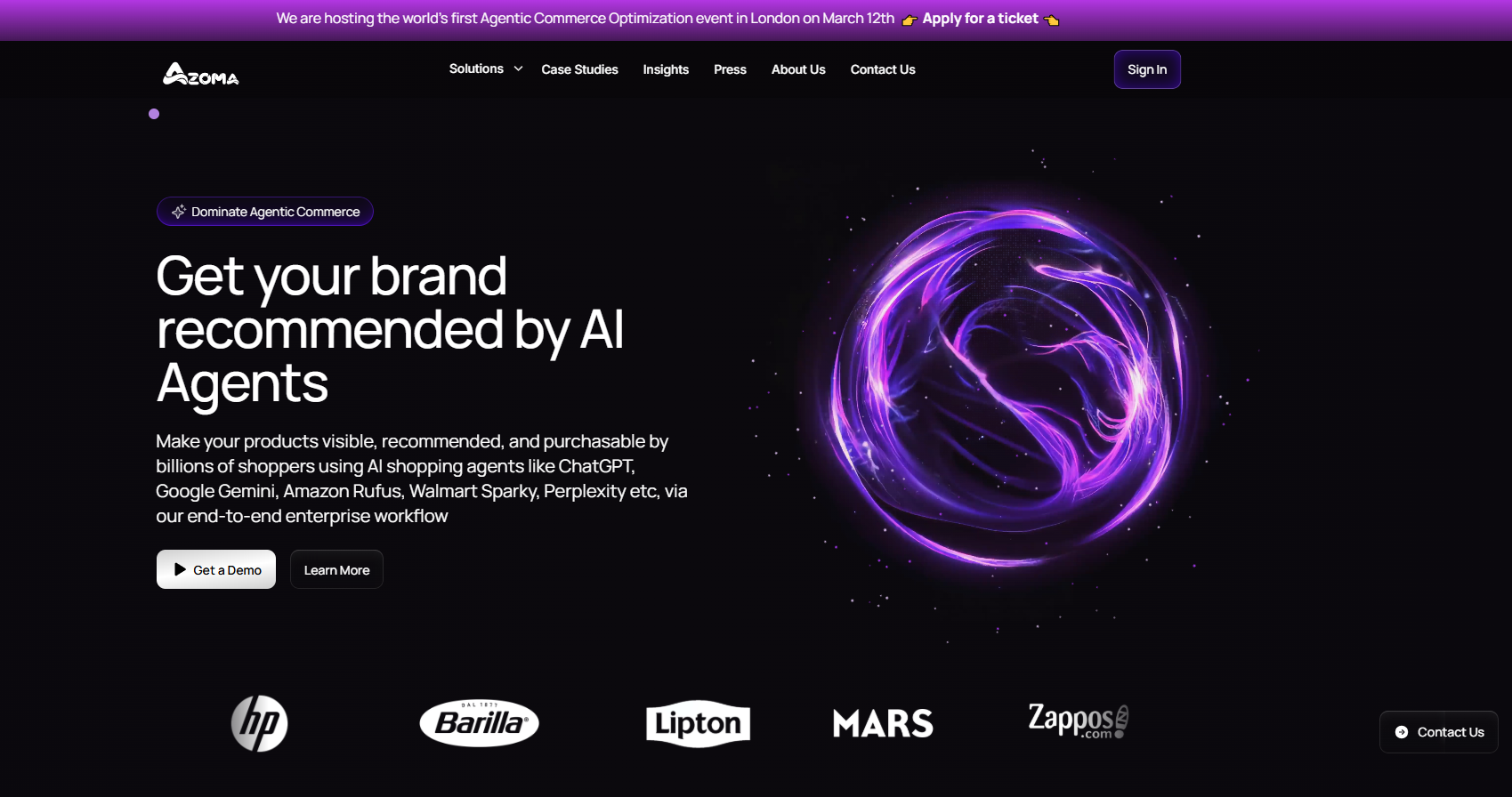
Azoma is a commerce-focused AI search analytics platform built around agentic shopping discovery. It helps brands understand how their products are found, recommended, compared, and purchased across ChatGPT, Gemini, Google AI Mode, Amazon Rufus, and other shopping agents.
What makes Azoma relevant for ecommerce teams is that it goes beyond basic mention tracking. It covers product ranking, share of voice, citation tracking, attribution, content generation, and syndication workflows built for product-led teams.
Key Features
- Shopping agent visibility: Tracks how AI shopping agents discover, evaluate, and recommend your products across different buying journeys.
- Product ranking and share of voice: Shows which products appear, how often they surface, and how they compare against competing products.
- Citation tracking and content syndication: Reveals which sources AI agents cite and helps teams distribute optimized content to those sources.
Pricing
- Contact them for tailored pricing.
Where Azoma Shines
- Very commerce-specific: It is built for sellers, retailers, and brands trying to improve AI shopping discovery.
- Strong product-level workflow: It tracks visibility at the product and prompt level, not only at the brand level.
- Useful end-to-end setup: Monitoring, optimized content generation, and publishing workflows sit within the same system.
Where Azoma Falls Short
- Enterprise-first posture: Its public materials are more focused on enterprise ecommerce workflows.
- Commerce-only scope: It is less relevant for publishers or non-product businesses.
- Lighter public review depth: G2 currently shows only a small number of reviews.
- Still an emerging platform: It has strong momentum, but it is newer than broader SEO suites.
Customer Reviews
A founder shared on SourceForge that Azoma.ai goes beyond basic visibility tracking by monitoring real-time brand mentions across AI shopping platforms and helping teams create and publish optimized content.
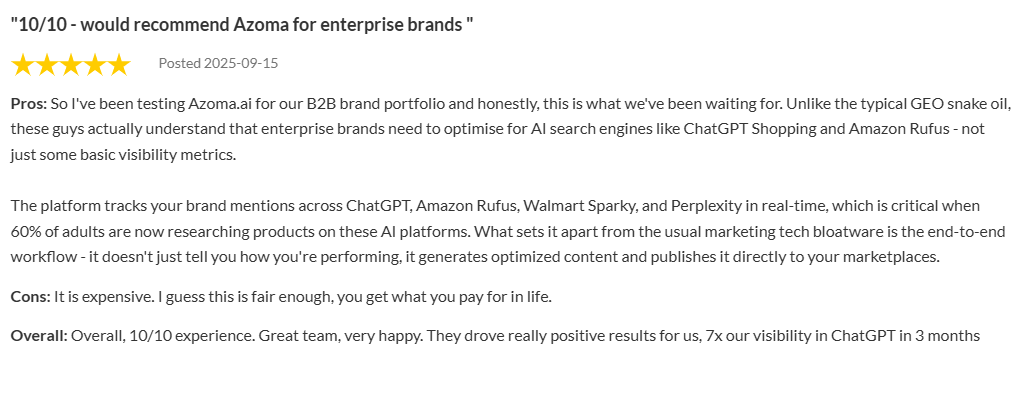
Ben K. noted on G2 that Azoma.ai’s focus on retail complexity makes it more specialized than broader alternatives, which he sees as a strength.

Who Azoma Is Best For
- Enterprise ecommerce teams: Best for brands that need to influence AI shopping recommendations across multiple engines.
- Retail and CPG brands: A strong fit when product-level rankings, citations, and AI shopping visibility matter more than traditional SEO reporting.
3. Zoovu: Best for On-Site AI Search Analytics and Guided Product Discovery
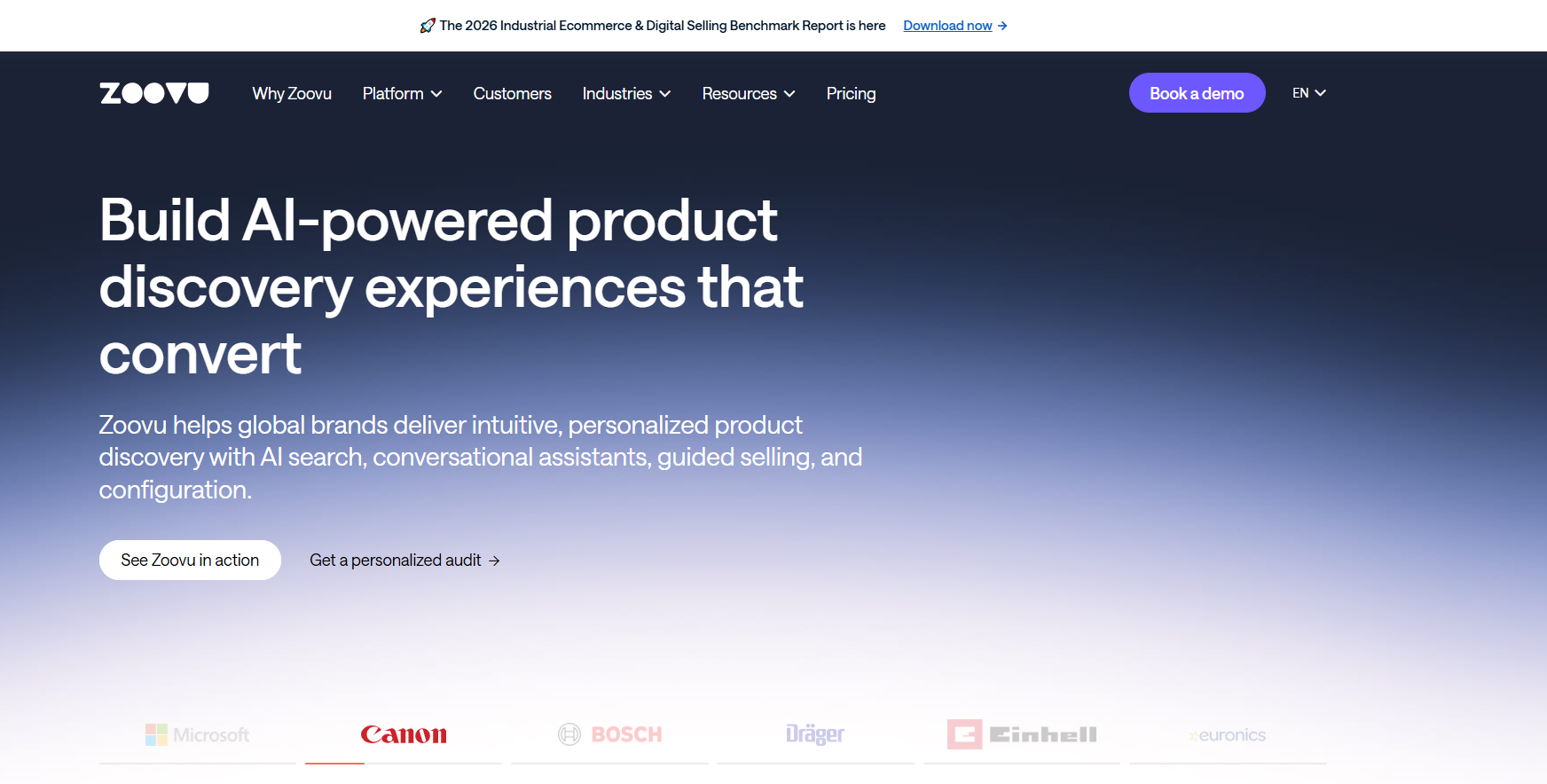
Zoovu earns its place because it is strongly focused on ecommerce product discovery. Instead of only tracking off-site AI visibility, it helps retailers and brands improve how shoppers find the right products through AI search, guided selling, shopping assistants, configuration, and enriched product data.
This makes Zoovu especially relevant for ecommerce teams that want to connect AI-driven discovery with better on-site buying journeys and conversion experiences.
Key Features
- AI-powered product discovery: Combines AI search, conversational assistants, and guided selling to help shoppers find suitable products faster.
- Commerce experience stack: Brings together search, product finders, configurators, bundling, and recommendations in one commerce experience layer.
- Product data enrichment: Connects with systems like PIM, ERP, and CRM to help structure and enrich product information.
Pricing
- Contact their advisors for tailored pricing.
Where Zoovu Shines
- Strong on-site commerce focus: It works well for brands improving discovery and conversion on their own store experience.
- Built for complex catalogues: Guided selling and configurators help shoppers narrow down options more easily.
- Good usability and support feedback: G2 and Capterra reviewers often praise its ease of use and customer support.
Where Zoovu Falls Short
- Less direct on off-site AI visibility: Its strongest use case is on-site discovery, not pure AI citation tracking.
- Pricing concerns come up: G2 reviewers mention cost as a drawback.
- Backend learning curve: Some reviewers say the backend takes time to get used to.
- Customization can need work: Reviewers mention fit and tailoring issues for certain use cases.
Customer Reviews
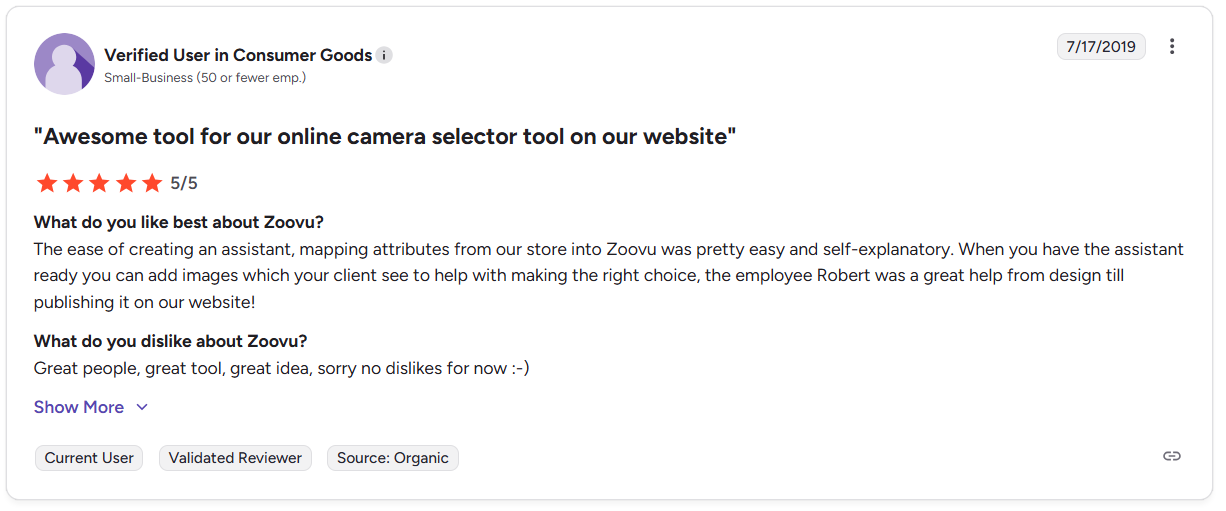
A verified user said Zoovu was easy to set up and customize, with strong support during the design and publishing process.
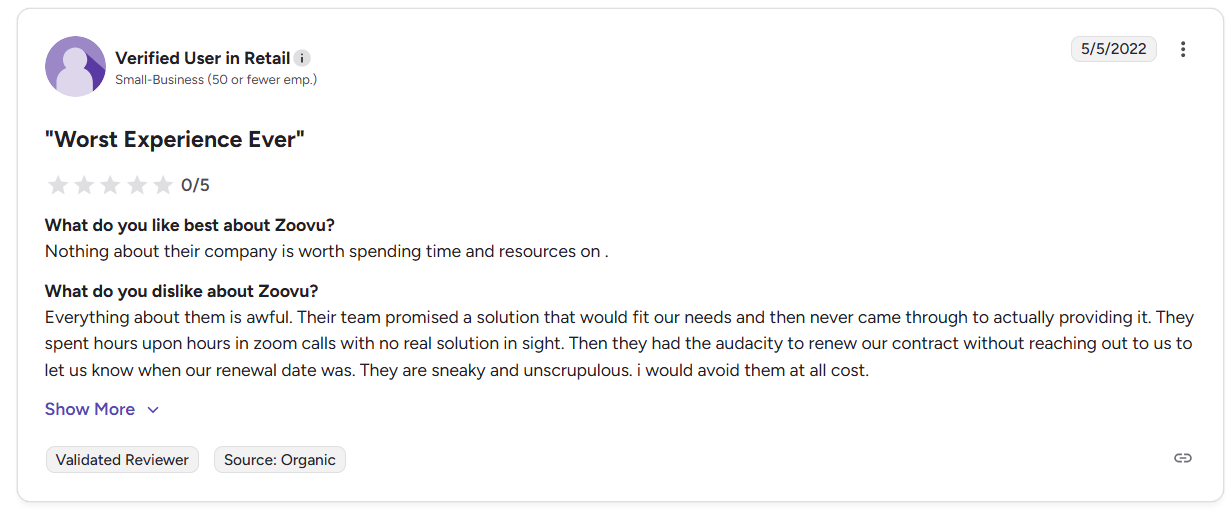
A verified retail user said Zoovu was frustrating to use, with unmet promises, long unresolved support calls, and a poorly handled contract renewal process.
Who Zoovu Is Best For
- Retailers and manufacturers: Best for teams that want stronger product discovery, guided selling, and conversion support.
- Brands with large or technical catalogues: A strong fit when shoppers need help comparing products before buying.
4. Profound: Best for AI Shopping Analytics Across Answer Engines
Profound has a stronger commerce angle than many general AI visibility platforms. Its shopping features help brands understand how products appear, rank, and get described inside AI-powered shopping experiences.
For ecommerce teams, Profound is useful because it goes beyond top-level visibility. It supports prompt intelligence, placement tracking, competitive comparisons, and product-level presentation analysis.
Key Features
- AI shopping visibility: Tracks how products appear across AI-powered shopping environments.
- Keyword and prompt intelligence: Helps teams understand which prompts influence product exposure.
- Placement tracking: Monitors how often products are surfaced and how visibility changes over time.
Pricing
Where Profound Shines
- Strong AI-shopping depth: It gives commerce brands more than brand-level mention tracking.
- Helpful optimization workflow: Prompt intelligence helps teams decide which product and content signals to improve.
- Well-reviewed analytics and support: G2 reviewers often highlight its data depth and customer support.
Where Profound Falls Short
- Learning curve: Users say the platform takes time to learn.
- Heavier than some commerce teams need: Its depth may be more than smaller brands require.
- Not commerce-only: Teams focused mainly on product content creation may want a more execution-led tool.
- May require a separate core SEO stack: It is stronger in AI visibility than full SEO operations.
Customer Reviews
Manuela B. said Profound is easy to set up, offers useful Claude MCP visibility tracking, gives helpful weekly AI summaries, and provides strong team support.

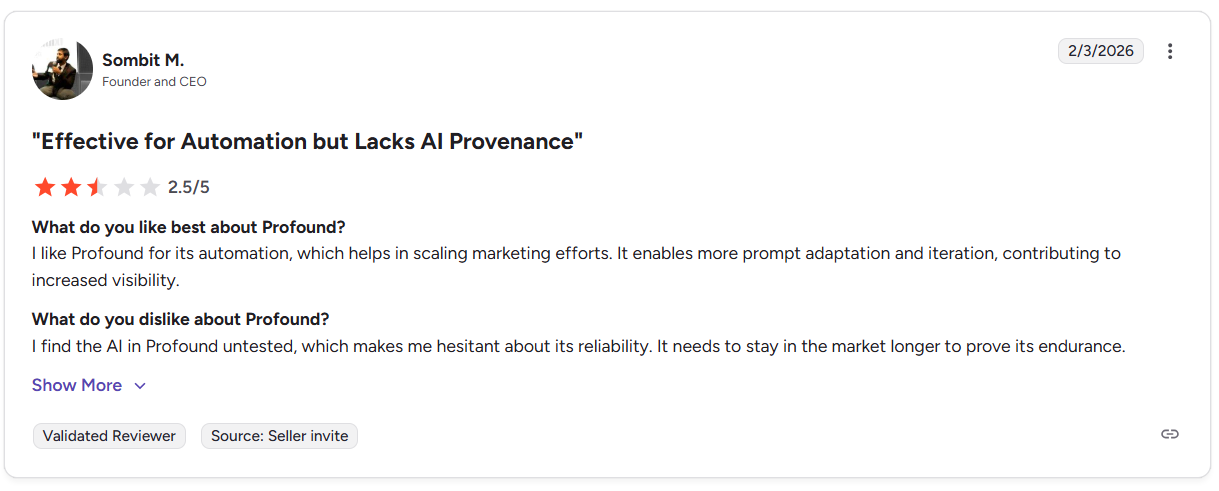
Sombit M. said Profound is useful for automation, but its AI feels unproven and needs more time in the market to prove its reliability.
Who Profound Is Best For
- Large commerce brands: Best for teams that want to monitor and improve product visibility in AI shopping environments.
- SEO, ecommerce, and brand teams: Useful when ChatGPT and AI shopping visibility need to inform broader optimization decisions.
5. Ecomtent: Best for AI Search Content Analytics and Product Listing Optimization

Ecomtent is one of the clearest commerce-native tools in this group. Its focus is not only on tracking, but also on helping brands create and refresh product listing content, images, infographics, and copy for AI-powered shopping environments.
For ecommerce teams that need faster execution on product content, Ecomtent is a practical option. It is especially relevant for teams working across ChatGPT Search, Google Gemini, Amazon Rufus, and related marketplaces.
Key Features
- AI product listing optimization: Generates optimized copy, images, infographics, and A+ content for ecommerce listings.
- AI search optimization for commerce: Positions product content for ChatGPT Search, Gemini, Rufus, and other AI-powered shopping surfaces.
- Performance and refresh workflow: Supports ongoing listing refreshes based on trends and keywords.
Pricing
Where Ecomtent Shines
- Very execution-focused: It helps teams create the product content needed to compete in AI shopping.
- Strong for creative scale: Images, infographics, copy, and listing content sit in one workflow.
- Positive early user feedback: G2 reviewers praise ease of use, implementation, and support.
Where Ecomtent Falls Short
- UI still needs polish: A G2 reviewer specifically mentions room for a smoother interface.
- More listing-focused than visibility-focused: It is stronger for optimized commerce assets than broad AI visibility analysis.
- Marketplace-heavy orientation: It is more tied to listing and catalogue workflows than sitewide SEO strategy.
- Light public review depth: Review volume is still limited compared with older platforms.
Customer Reviews
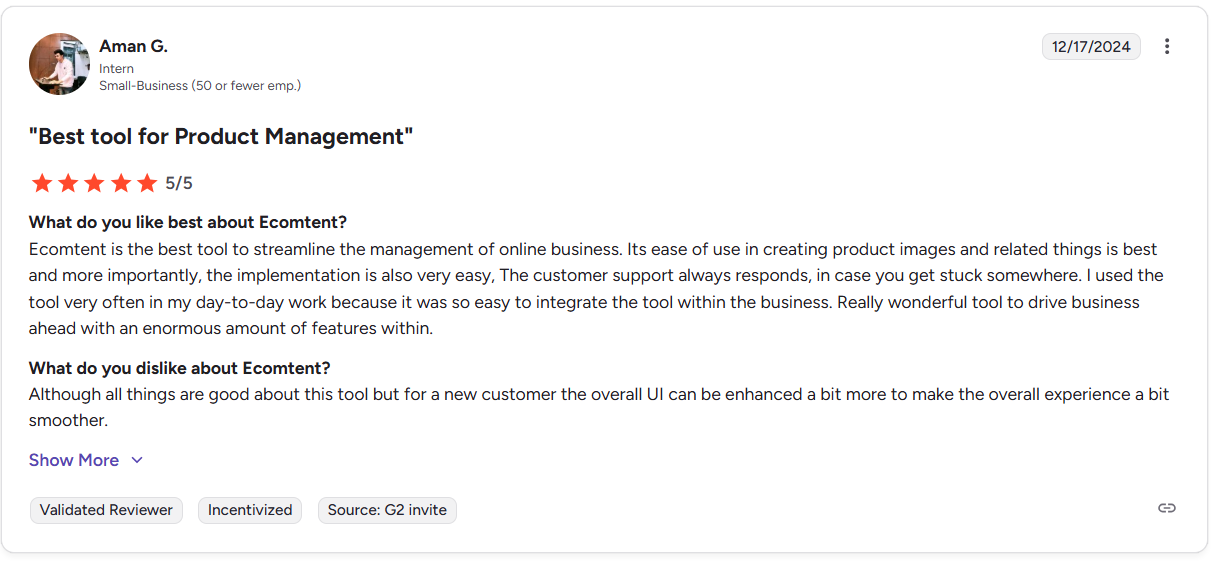
Aman G. said Ecomtent is easy to use and implement, with helpful support, strong daily usability, and useful product image creation features.
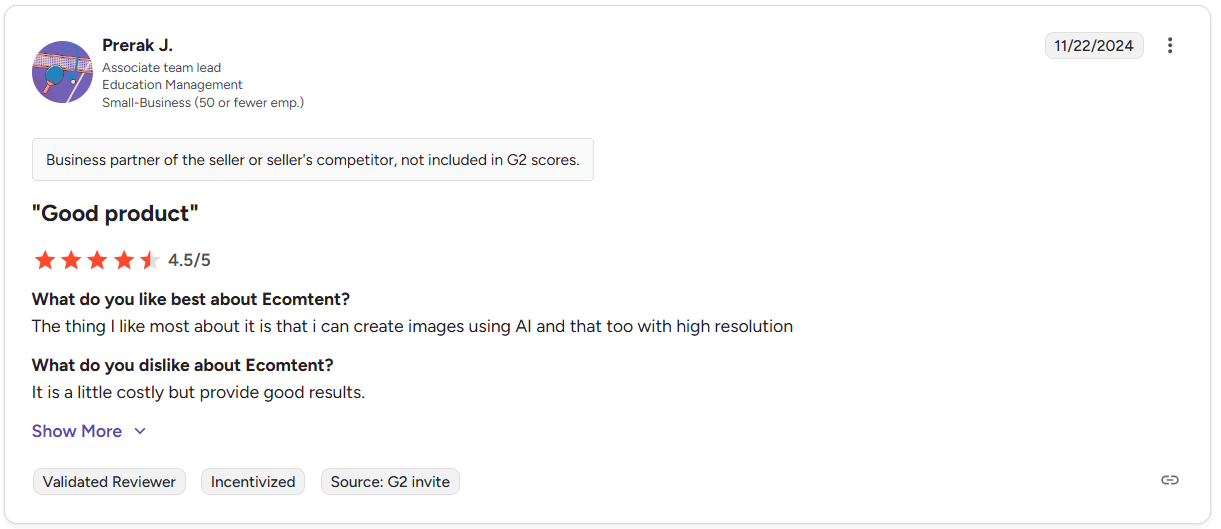
Prerak J. said Ecomtent is a little costly, but still delivers good results.
Who Ecomtent Is Best For
- Amazon sellers and ecommerce brands: Best for teams that want faster AI-driven product listing optimization.
- Lean commerce teams: A strong fit when the main bottleneck is producing and refreshing product content quickly.
6. Semrush: Best for AI Shopping Analytics Inside a Broader Search Stack
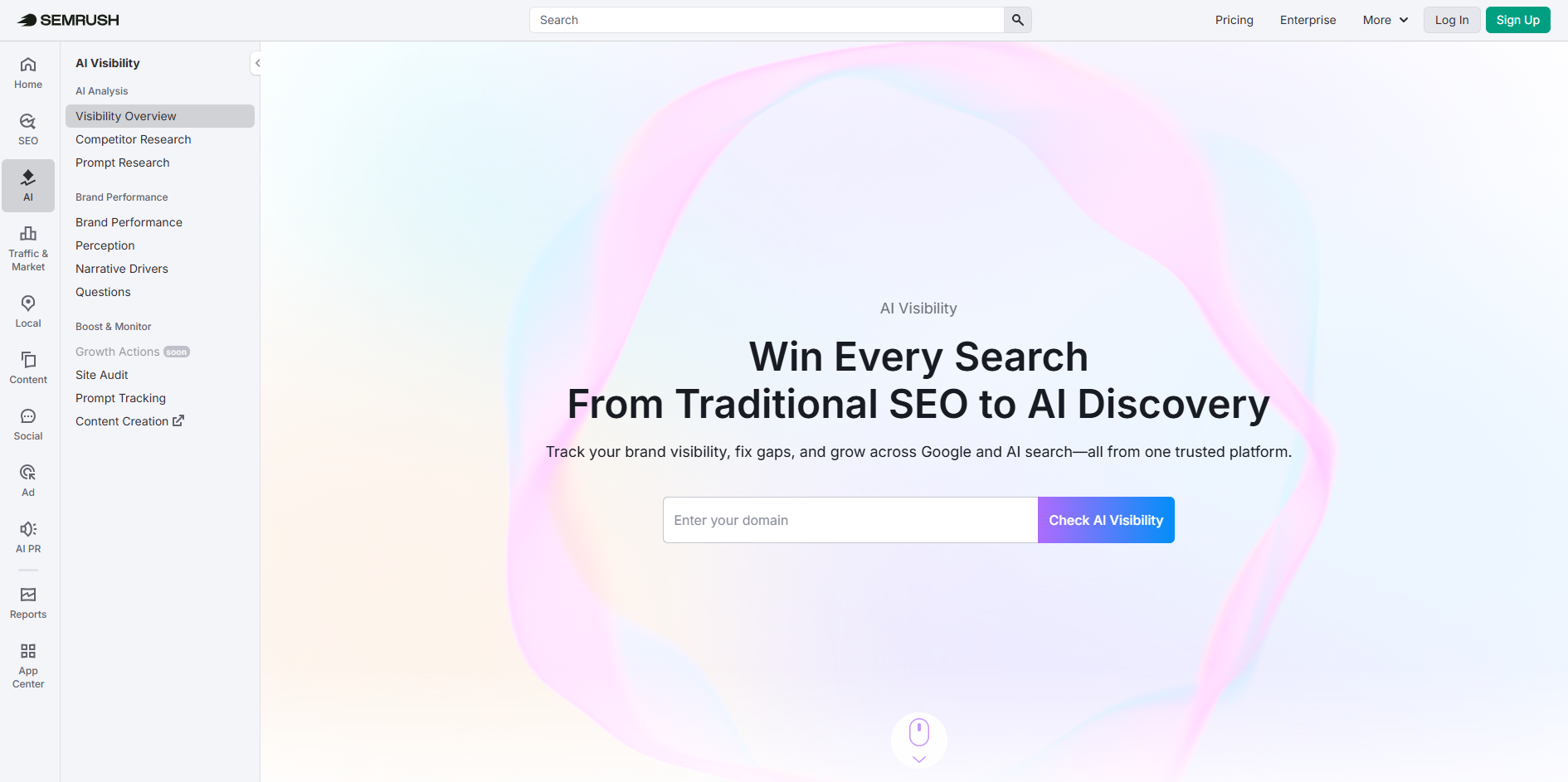
Semrush is broader than the tools above, but it still fits this list because its enterprise AI Shopping report tracks how products appear across ChatGPT Shopping and Google AI Mode Shopping.
This makes Semrush useful for commerce teams that want to monitor product recommendations, rankings, prompt triggers, and merchant visibility. It is a better fit for brands that want commerce-focused AI search analytics connected to wider SEO, competitor research, and reporting.
7. Similarweb: Best for AI Search Traffic Analytics and High-Intent Ecommerce Journeys
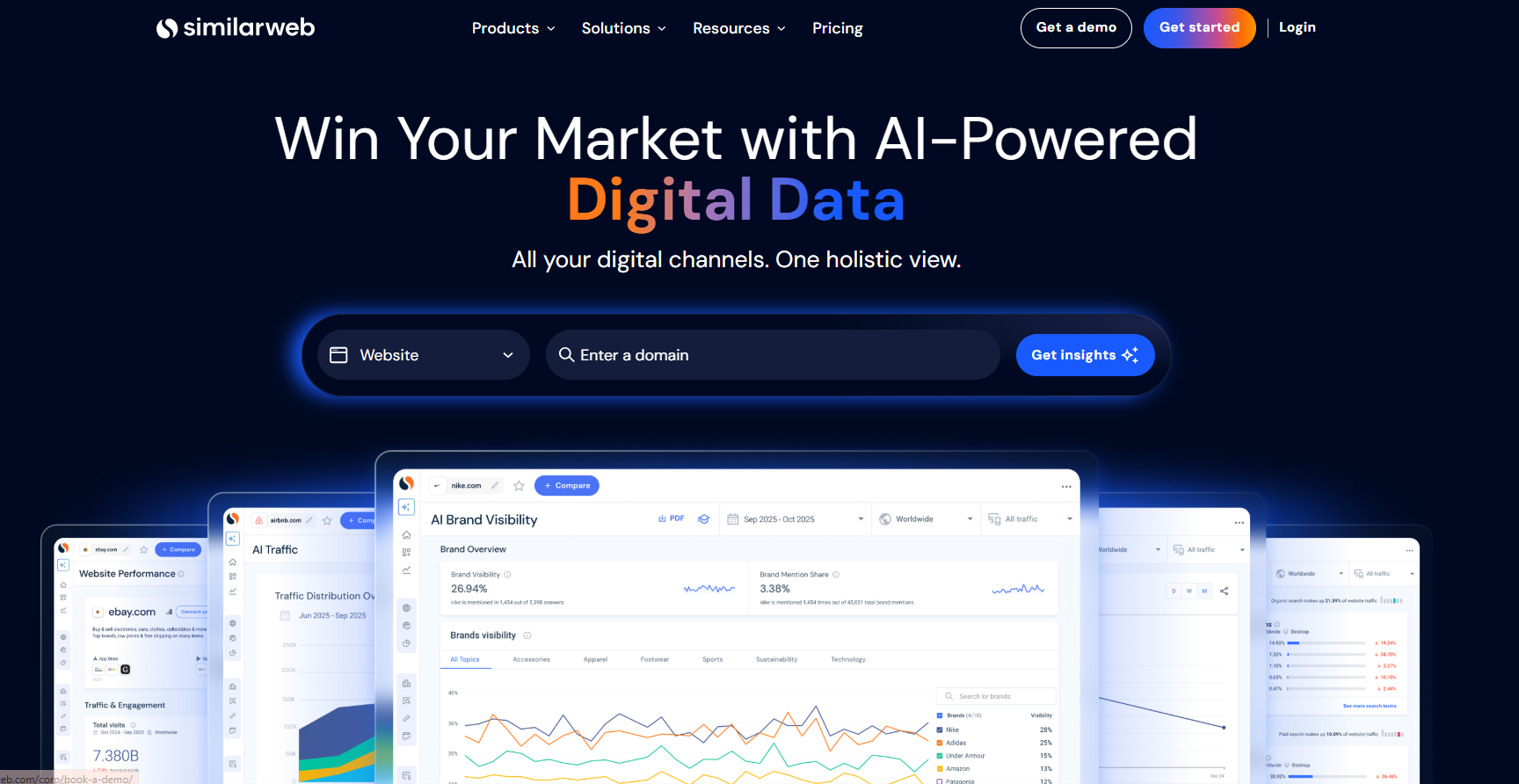
Similarweb brings a traffic-focused angle to ecommerce AI search analytics. Instead of only tracking brand mentions, its AI Search Intelligence helps teams understand which pages receive visits from AI-driven discovery.
It also shows which prompts and journeys lead users to click through, and how that traffic compares with competitors. For ecommerce teams, this helps identify which product pages, buying guides, and category pages deserve more investment.
8. AthenaHQ: Best for Cross-Platform AI Search Analytics and Optimization Recommendations

AthenaHQ is not as commerce-native as Azoma or Zoovu, but it still supports ecommerce use cases. It positions itself as an end-to-end AEO and GEO platform with cross-platform AI visibility tracking, automated content optimization recommendations, and citation source analysis.
This makes AthenaHQ a good middle-ground option for commerce brands. It is useful for teams that want to improve how AI systems describe their products and categories without needing a shopping-agent-only workflow.
9. BrightEdge: Best for Enterprise AI Search Analytics Inside a Large SEO Platform
BrightEdge is the most enterprise-heavy option in this list. Its AI Catalyst tracks presence and sentiment across AI engines, supports prompt research, and helps teams optimize visibility across multiple AI-driven environments.
For ecommerce teams, BrightEdge is relevant because of its ecommerce AI citation analysis and shopping-focused research. It is not as specialized for product-level AI shopping workflows as Azoma, but it works well for large retailers already using an enterprise SEO stack.
How to Choose the Best AI Search Analytics Tool for Ecommerce
These are the main things to check when comparing AI search analytics tools for ecommerce.
1. Make Sure It Tracks Products, Not Just Websites
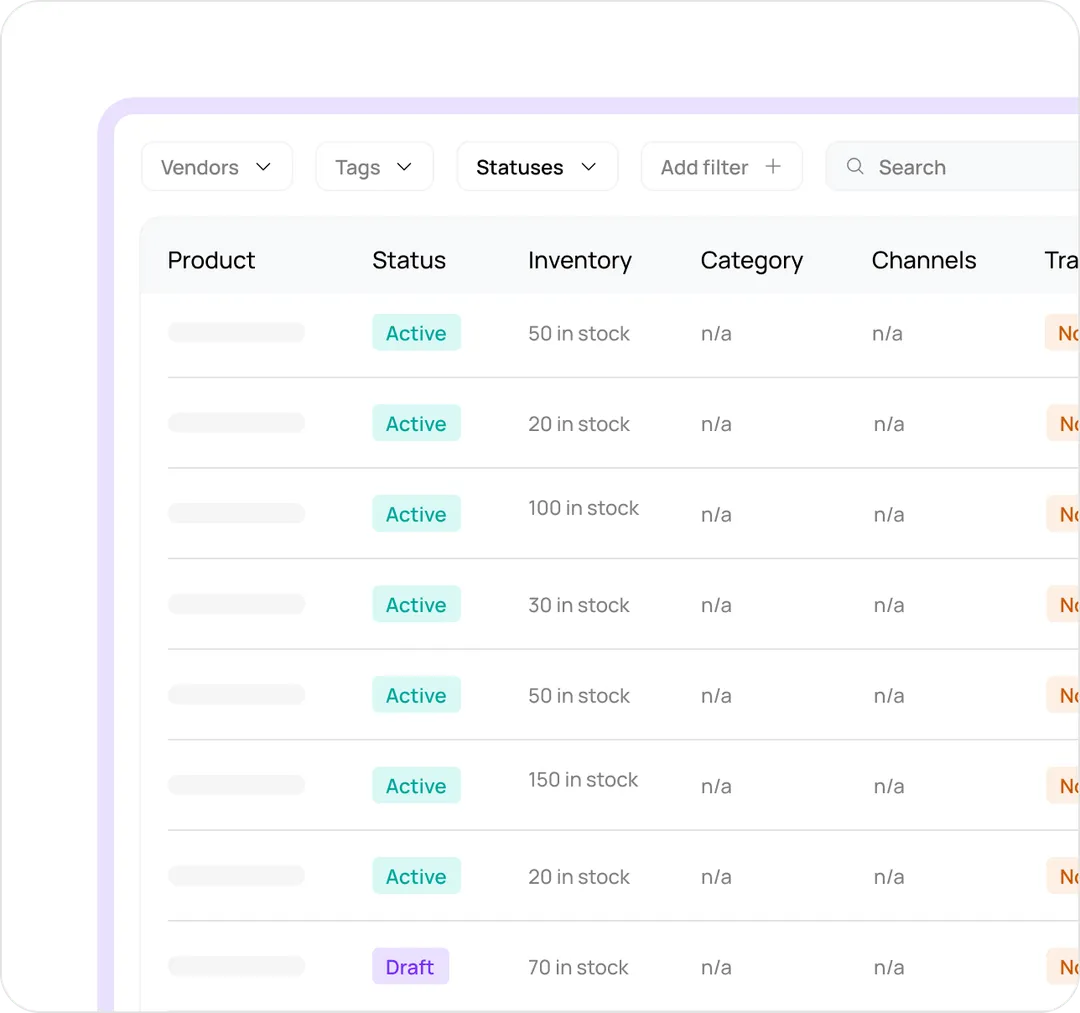
Your tool should show more than whether your website appears in AI-generated answers. You also need to know which products, categories, variants, or offers are being surfaced.
This matters even more if you manage a large catalogue or several product lines. WorkDuo helps here by tracking visibility at the product, variant, category, and offer level, so teams can see what AI engines are actually recommending.
2. Check How the Data Is Gathered
How a tool collects AI search results affects how reliable the insights are. Real-time, browser-based tracking usually gives a closer view of what shoppers actually see.
API-only results may not always reflect the live AI search experience. WorkDuo uses browser-based tracking to capture prompt results as they appear in real environments.
3. Look for Flexible or Unlimited User Access
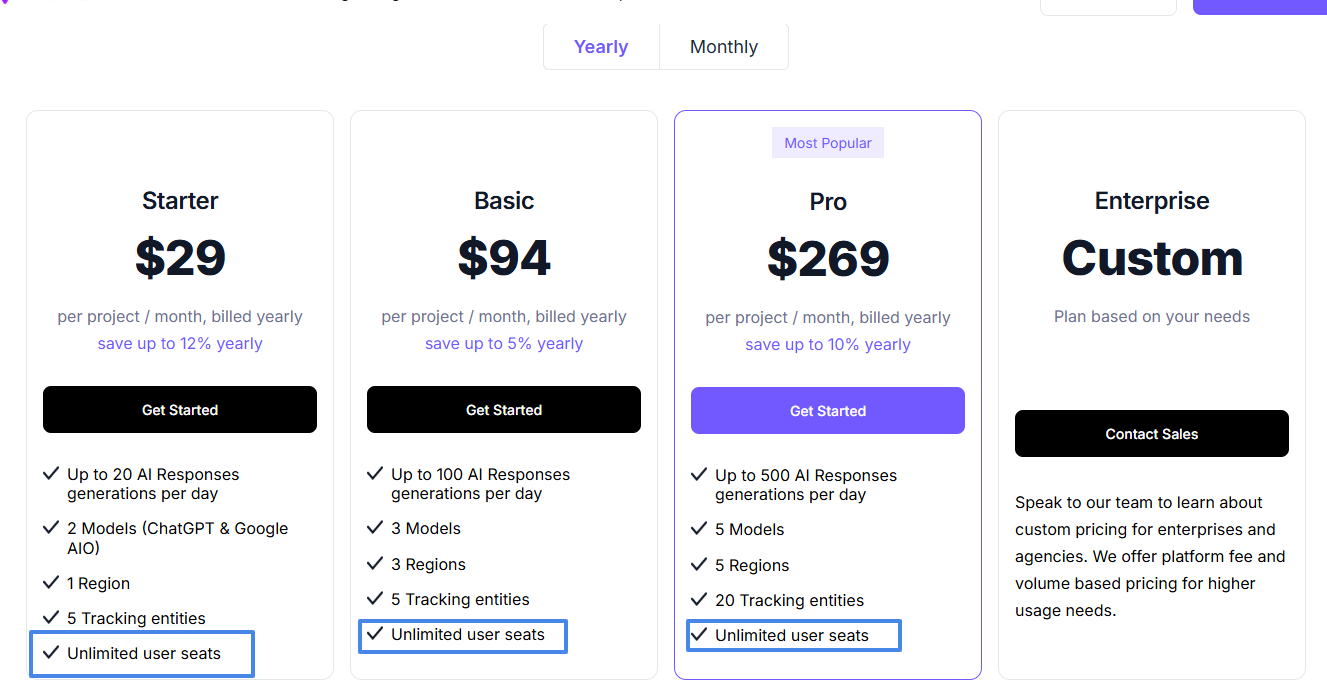
AI search analytics often involves more than one team. SEO, content, merchandising, and brand teams may all need access to the same visibility data.
Restrictive seat limits can slow collaboration or increase costs as your team grows. WorkDuo includes unlimited user seats across its plans, making it easier for teams to work together without extra seat fees.
4. Check for White-Label Reporting if You Work With Clients
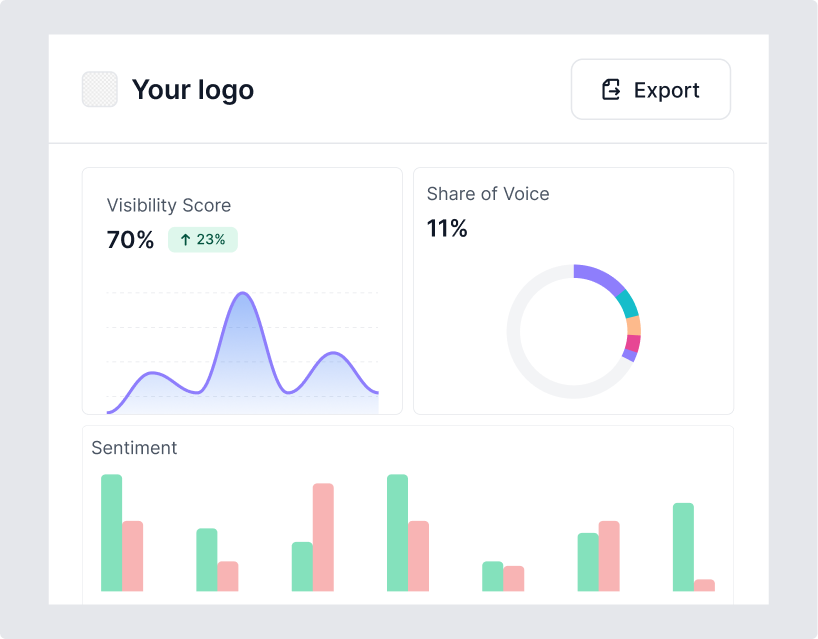
Agencies should pay close attention to reporting options. White-label dashboards and exports can save time and make AI search analytics reports look more polished.
WorkDuo supports white-label reporting, which helps agencies deliver client-ready outputs under their own brand without adding extra manual work.
Take Control of How AI Platforms Talk About Your Brand With WorkDuo
AI search platforms are already shaping how shoppers discover your brand, products, and competitors. WorkDuo helps you see what AI platforms are saying, where your products appear, and what needs to improve across high-intent buying moments.
Bring more clarity to your ecommerce AI search analytics strategy and get started with WorkDuo today.
Fiona is the Co‑Founder of WorkDuo AI, where she helps brands optimize their AI search visibility. Previously, she co‑founded SHOPLINE, a smart commerce platform in Asia, and led its successful exit to a NASDAQ‑listed company in 2022. With deep expertise in scaling tech businesses and working with global investors, Fiona now advises startups on growth and data-driven decision-making, while leading WorkDuo’s mission to improve how brands are represented in AI-driven search.

Ready to try our product?
Sign up for a free consultation with our experts.


Follow Us on Social Media
Follow our profiles for daily updates, behind-the-scenes content, and more.




More articles