Generative AI in Ecommerce: 5 High ROI Use Cases (in 2026)
.png)
- The real value of generative AI in ecommerce is not just automation, but scale: it helps brands produce and optimise content faster, strengthen product discovery, and turn merchandising effort into clearer ROI.
- Best use cases: Personalized journeys, faster ads/emails/creative, product catalog scaling with localization, 24/7 support with handoffs, inventory alerts, and reorder guidance.
- Implement fast and safely: Start with one pilot, ground outputs in approved sources, add a review workflow, and track KPIs like CVR and AOV.
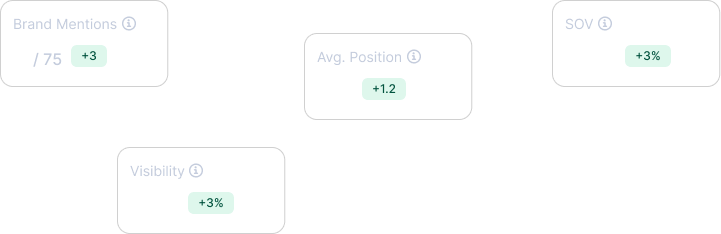
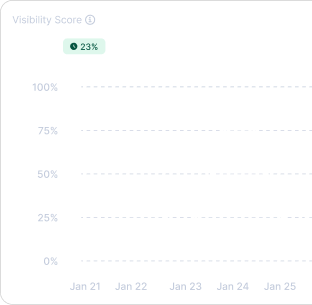
- Measuring outcomes now also means tracking AI visibility: how often and how well your brand and products appear in AI-generated answers, not just in traditional search results. Tools like WorkDuo help ecommerce teams see which specific products AI recommends, which competitors are shown instead, how the brand is framed, and why those choices may be happening.
Every ecommerce team is under pressure to “do something with AI,” but not every use case is worth your time.
The real advantage goes to teams that pick a few high-impact generative AI plays and execute them well.
In this article, we will look at how generative AI fits into an ecommerce stack, high-ROI use cases and examples, and a practical roadmap for implementation.
We will also cover risks, compliance, and governance, plus how to turn generative AI into measurable ecommerce growth with an AI visibility tool.
What Is Generative AI In Ecommerce?
Generative AI in ecommerce means models that create new content (text, images, summaries, recommendations) by learning patterns from data and generating outputs on demand.
In day-to-day ecommerce, it’s less about “cool content” and more about:
- Faster product discovery
- Cleaner listings at scale
- Quicker customer support
- More relevant product recommendations
- Smarter pricing and stock decisions.
Not all AI in ecommerce is the same. Traditional AI predicts or classifies using historical data and rules, while Generative AI creates new, unseen content and responses.
That means “winning” is not only about on-site conversions, but also about whether your products and categories show up in the answers at all. This shift in discovery is why understanding SEO vs GEO has become a core requirement for modern ecommerce teams.
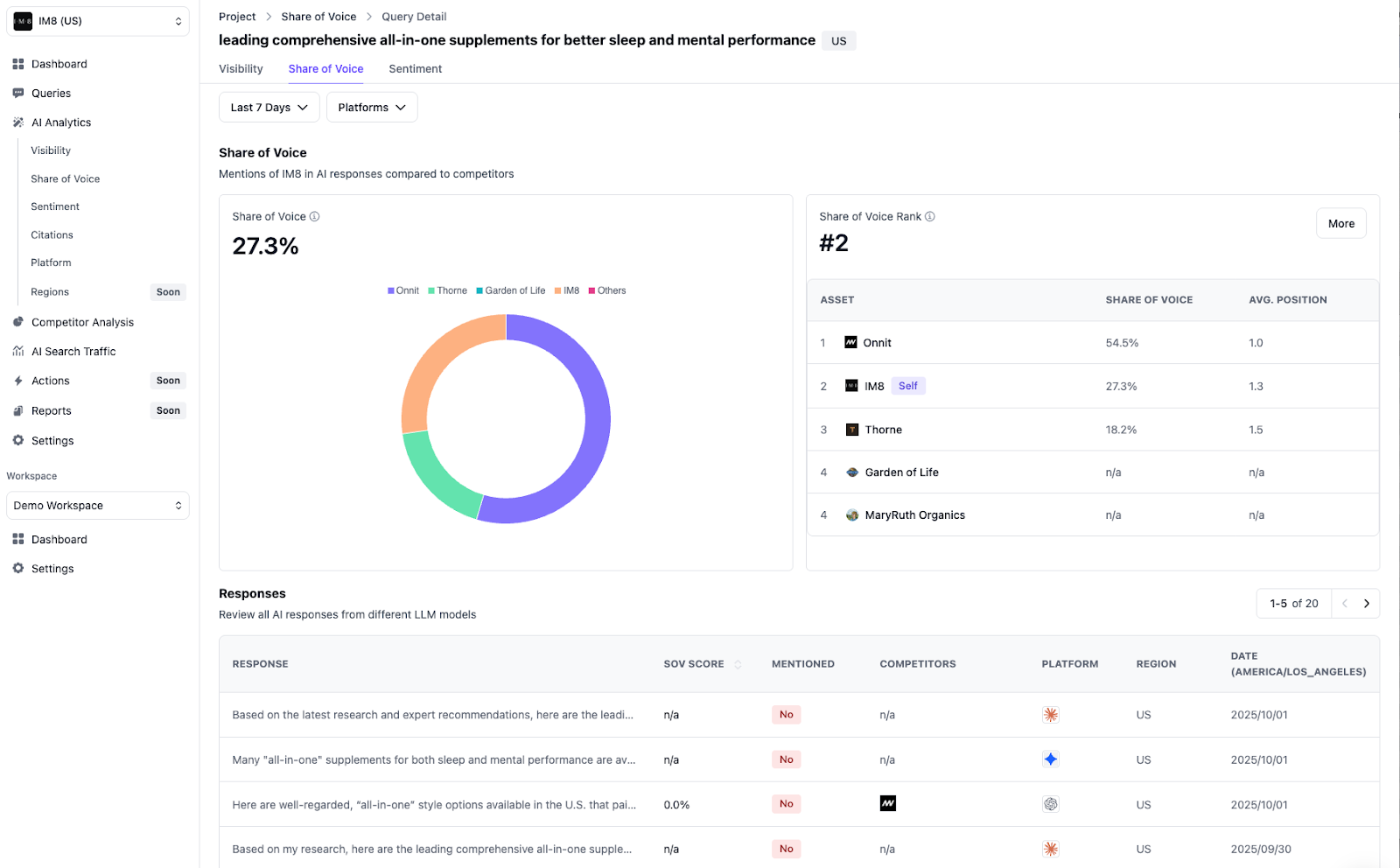
WorkDuo helps you track product-level and category-level visibility across multiple Large language models (LLMs), By tracking brand mentions in AI search, you can see which brands dominate key comparisons and where your products are missing from the conversation.
How Generative AI Works in an Ecommerce Stack
Here’s how to map generative AI to your current ecommerce systems, so you can see what feeds it and where outputs go.
1. Data Layer And Source Systems
This is the “source of truth” your AI pulls from.
- Product information management (PIM)/catalog: Product names, specs, variants, pricing, inventory, attributes
- Customer relationship management (CRM): Customer profiles, preferences, lifecycle stage, past purchases
- Analytics: Onsite search terms, click paths & cart actions
- Help center/policies: Shipping, returns, warranty, promos, terms, FAQs, guides
- Reviews and Q&A: Real customer language, objections, sizing/fit notes, common issues
Why it matters: Approved, up-to-date sources improve accuracy, brand consistency, and governance.
2. Grounding And Retrieval Augmented Generation (RAG)
Before generating an answer, the AI pulls relevant facts from your approved sources:
- Retrieve: Snippets from catalog, policies, help center, reviews
- Generate: Responses using those snippets as the reference
- Verify: Add citations/internal links for quick review
Why it matters: More reliable outputs that stay current as policies, promos, and stock change.
3. AI Models Layer
This is the engine that generates the output.
- LLMs: Product detail page (PDP) ( copy, FAQs, comparisons, customer support replies
- Diffusion models: Generate or edit images (product backgrounds, lifestyle variations, creative assets)
Why it matters: Faster content and responses at scale, aligned to your rules.
4. Application Layer And Workflow Tools
This is how AI becomes usable inside everyday ecommerce work.
- Shopify/commerce platform: AI copy, on-page Q&A, recommendations
- Content management systems (CMS): Drafts, approvals, publishing workflows
- Email service provider (ESP): Campaign/lifecycle emails, subject lines, segmented messaging
- Help desk: Draft replies, ticket summaries, next-step suggestions
- APIs/connectors: Make features usable across tools
Why it matters: Faster execution with review and accountability built in.
5. Agents As Task Orchestrators With Human Approval
Agents are best treated as task orchestrators, not autopilots. They can draft, recommend, and queue actions across your tools.
When risk is high, they route to a human for approval.
Why it matters: Safer automation with measurable outcomes.
5 High-ROI Generative AI Use Cases in Ecommerce
Here are five high-ROI generative AI use cases in ecommerce that teams prioritize to drive measurable revenue:
1. Personalized Journeys Across Search, Recommendations, Bundles, And Messaging
Generative AI personalises discovery and decision-making by tailoring onsite search, recommendations, bundles, and lifecycle messaging inside your ecommerce platform and ESP.
That matters because shoppers respond strongly to relevance. In fact, 91% of consumers are more likely to shop with brands that recognise, remember, and provide relevant offers and recommendations.
- ROI lever: Revenue (higher conversion and AOV), speed (faster product discovery), risk (fewer irrelevant suggestions)
Here’s how it looks in practice: Your shoppers see a “just for you” experience that changes based on intent and behavior. This is particularly effective for ChatGPT shopping searches, where the AI acts as a digital personal shopper to guide users toward the right SKU.
- “Recommended for you” rows that adapt to browsing and past purchases
- Bundles built around a goal (for example, a full routine instead of one item)
2. Automated Content Creation For Ads, Emails, Landing Pages, And Visual Variations
Generative AI speeds up content production by drafting campaign copy and lightweight creative variations across your CMS, ESP, and paid channels.
That shift is already mainstream: HubSpot reports that 80% of marketers use AI for content creation, which helps explain why faster testing and shorter launch cycles are becoming a competitive advantage.
- ROI lever: Cost (lower production effort), speed (shorter launch cycles), revenue (more variations to test), risk (more consistent brand voice)
A few practical examples: Teams launch more variations without waiting for long creative cycles.
- Multiple ad angles for the same product (different hooks for different audiences)
- Quick product image background variations for marketplaces and promos
3. Catalog Scale With Consistent Titles, Attributes, Descriptions, Translation, And Localization
Generative AI standardizes product content at scale by turning PIM/catalog data into consistent PDP titles, bullet points, and descriptions, then localizing them for new markets within your CMS.
- ROI lever: Speed (faster SKU readiness), cost (less manual writing), revenue (clearer PDPs improve decisions), risk (fewer inconsistent descriptions)
In a typical ecommerce scenario: Thousands of SKUs become “listing-ready” faster, in every language you sell in.
- Titles and bullets were generated in a consistent format across categories
- Localized versions with correct language, units, and market phrasing
4. Customer Service Efficiency With 24/7 Answers And Agent Handoffs
This matters because fast, low-friction support is now an expectation. Salesforce found that 61% of customers would rather use self-service for simple issues, which makes instant answers and clean handoffs a practical way to reduce load without hurting the customer experience.
- ROI lever: Cost (lower ticket volume), speed (faster resolution), risk (more consistent policy answers), revenue (less cart abandonment)
What this looks like: Customers get fast answers, while agents focus on exceptions and edge cases.
- “Where’s my order?” answers that explain tracking and delivery windows
- Returns and exchange guidance based on your policy wording
5. Inventory Intelligence For Demand, Reorders, And Stockout Reduction
Generative AI improves inventory decisions by translating velocity, lead times, and promo plans into clearer reorder actions inside your inventory planning and analytics workflow.
- ROI lever: Revenue (fewer stockouts), cost (less overstock and markdowns), speed (faster planning), risk (fewer promo surprises)
Here’s how it shows up in ecommerce operations: Planners get early warnings and next-step recommendations instead of raw dashboards.
- Stockout risk alerts ahead of promotions or seasonal peaks
- Reorder suggestions based on sales velocity and supplier lead times
How To Adopt Generative AI In Ecommerce (Implementation Roadmap)
To adopt generative AI in ecommerce smoothly, follow this roadmap that takes you from solid foundations to tested use cases and safe scaling.
Step 1: Ship One Thin-Slice Win First
Pick one use case you can launch fast in “draft plus approval” mode, so you get results without taking big risks.
Keep scope tight: one channel, one category, one market.
- Owner: Ecommerce lead (decision), with marketing ops or customer experience (CX) ops (delivery).
- Tools/data: PIM/catalog, help center/policies, CMS, or help desk
- QA: Review 20-50 outputs, reject anything with wrong facts, wrong tone, or unsupported claims
- KPI proof: Time saved, output volume, edit/rejection rate, plus one outcome metric (conversion lift or ticket deflection)
Step 2: Lock Approved Sources and Clean Inputs
Define what the AI is allowed to use and fix gaps in those sources first. If your catalog or policies are messy, the AI will scale the mess.
- Owner: PIM owner (merch/ops), help center owner (CX), brand owner (marketing)
- Tools/data: PIM attributes, policy pages, FAQs/guides
- QA: Spot-check pricing rules, return windows, shipping timelines, and missing attributes
- KPI proof: Higher content completeness, fewer “missing info” flags, lower rework during review
Step 3: Design the Workflow and Guardrails (Draft, Review, Publish)
Decide where AI output lands and who approves it before anything goes live. The workflow is what turns AI into a reliable operation.
- Owner: Marketing ops or CX ops (process), with channel owners (final approval)
- Tools/data: CMS approval workflow, help desk macros/queues, ESP draft mode
- QA: Require human approval for pricing/promos, policy language, and product claims. Standardise output format.
- KPI proof: Approval cycle time, rework rate, compliance rate (outputs following rules)
Step 4: Ground Outputs With RAG
Make the AI pull from your approved sources before it answers.
- Owner: Ecommerce/marketing technology owner (implementation), with ops lead (requirements).
- Tools/data: Searchable source set from PIM, policies, help center, FAQs, with citation or source-link support
- QA: Test 50-100 real questions, compare answers against sources, log failure patterns, block risky prompts
- KPI proof: Higher accuracy pass rate, lower hallucination rate, fewer policy-related escalations
Step 5: Pilot, Measure, Then Scale One Variable at a Time
Launch, measure weekly, then expand gradually (new category, new channel, new market). Scaling is repeating the same playbook, not adding everything at once.
- Owner: Channel owner (marketing, ecommerce, or CX), with ops lead (rollout)
- Tools/data: Analytics dashboard, experiment tags, help desk reporting, or CMS change logs
- QA: Daily review in week one, weekly thereafter. Roll back fast if the error rate spikes.
- KPI proof: One primary KPI and two supporting KPIs (support: deflection, CSAT, escalation, PDP: conversion, returns, engagement, email: click, CVR, unsubscribes)
To connect results to revenue, add one AI-discovery check alongside your onsite metrics.
- Build a short prompt set for your priority categories (“best”, “vs”, “alternatives”)
- Track who gets recommended and which pages get cited
- Update the cited PDPs, category pages, and FAQs, then re-check the prompts
This matters because performance is no longer measured only by what happens on your site. You also need visibility into how your brand and products appear in AI-generated recommendations before the click.
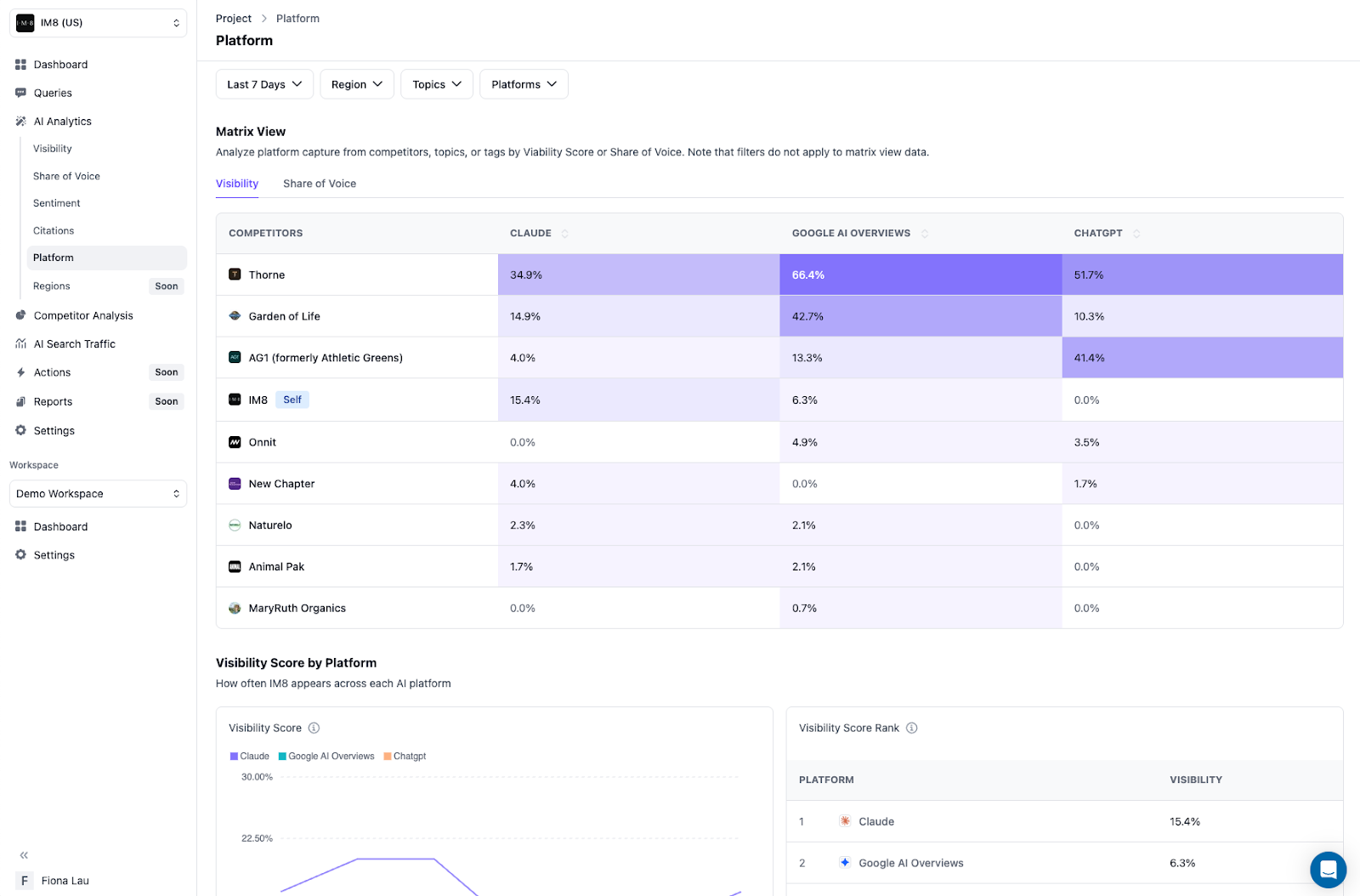
WorkDuo automates this by showing where you appear across LLMs, what competitors dominate, and which citations to prioritize first.
Risks, Compliance & Governance (Avoiding Mistakes)
Before you scale AI across teams, put guardrails in place to avoid compliance issues, brand drift, and costly mistakes.
Turn Generative AI Into Ecommerce Growth You Can Measure with WorkDuo
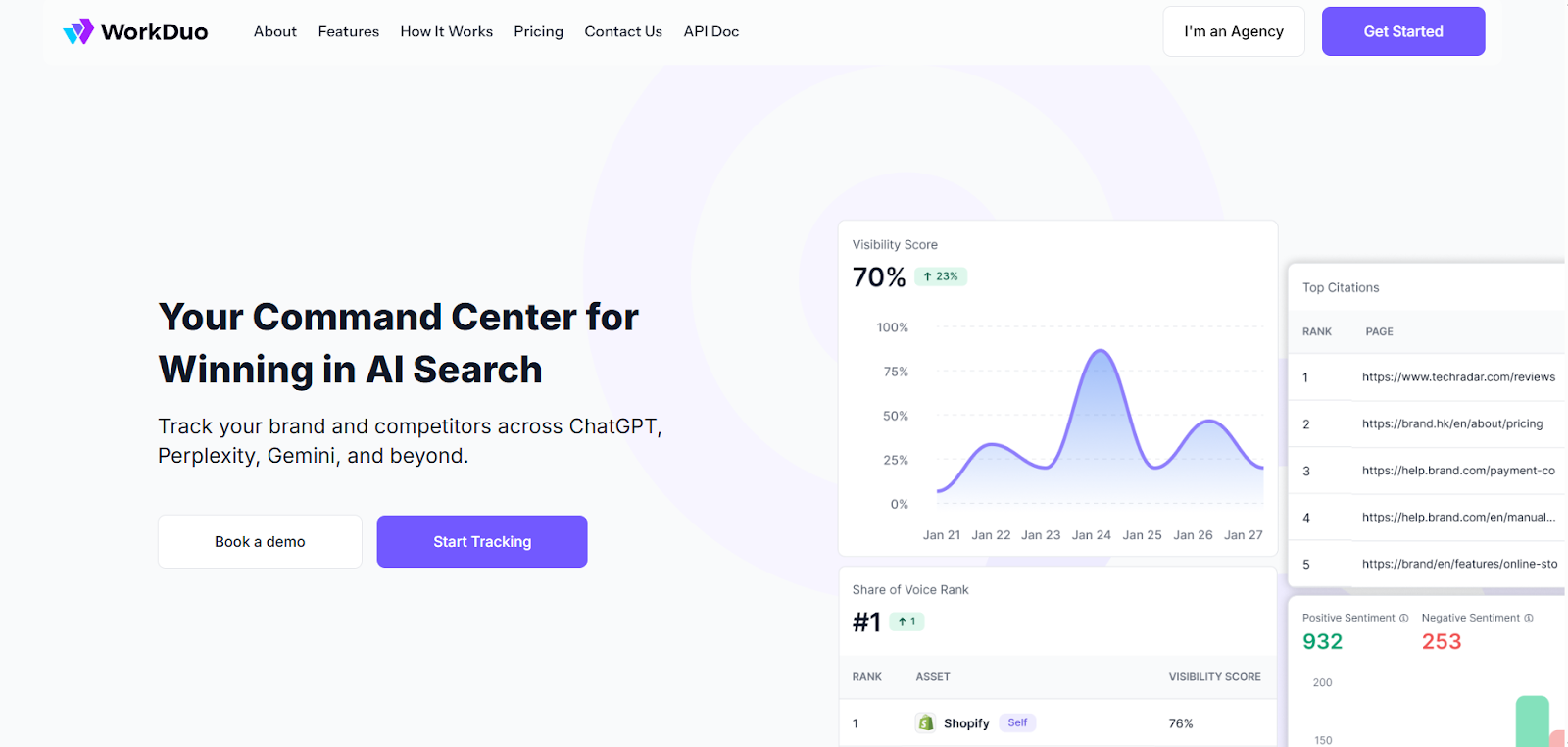
AI answers now shape product discovery before the click. WorkDuo shows where your brand appears across major AI platforms, how you compare to competitors, and what the narrative sounds like.
Track visibility, share of voice, position, and sentiment, then follow the citations to the pages that need updating so your AI wins turn into revenue.
See where your brand appears in AI answers and track your visibility with Workduo today.
Fiona is the Co‑Founder of WorkDuo AI, where she helps brands optimize their AI search visibility. Previously, she co‑founded SHOPLINE, a smart commerce platform in Asia, and led its successful exit to a NASDAQ‑listed company in 2022. With deep expertise in scaling tech businesses and working with global investors, Fiona now advises startups on growth and data-driven decision-making, while leading WorkDuo’s mission to improve how brands are represented in AI-driven search.

Ready to try our product?
Sign up for a free consultation with our experts.


Follow Us on Social Media
Follow our profiles for daily updates, behind-the-scenes content, and more.




More articles